
Patience. Diligence. Bought.
- Sold
- $2,235,000
- Listed
- $2,500,000
- vs. ask
- −10.6% from original list · −2.6% via pre-contract engineering-inspection negotiation
- Closed
- May 21, 2021
The brief
This is a buy-side at 1020 Park Avenue #10C — a substantial corner apartment at the post-war Carnegie Hill cooperative on Park Avenue between 85th and 86th Streets — closed on May 21, 2021 at $2,235,000 against an original list of $2,500,000.
The headline structure: a $265,000 total reduction from the original list price (10.6%) — including a $60,000 reduction in the pre-contract negotiation (2.6%), achieved through a deliberately patient buy-side strategy in the depths of the COVID-era Manhattan residential market and an engineering-inspection-informed pre-contract negotiation that identified specific apartment-level conditions justifying the additional concession before the deal moved to contract.
Two threads define the engagement:
-
Patient market-watching through three price reductions before engaging. We did not move at the initial list. We did not move at the first reduction. We watched the seller's pricing posture move through the deep-COVID market, and we engaged when the apartment was finally at the price our analysis supported.
-
Engineering-inspection-informed pre-contract negotiation. Engaging at the published $2,295,000 ask was the structural commitment to the apartment, not to the price. We commissioned a full engineering inspection before signing the contract — and the findings produced specific apartment-level observations that we used to negotiate the price down by an additional $60,000 to $2,235,000 before contract. That $2,235,000 was the price the contract was signed at and the price that recorded at closing.
The result was a clearing price approximately 10.6% below the seller's original ask in a market window where most buyers were either pausing entirely or paying full ask to secure inventory in trophy buildings. The buy-side framework that produced the outcome was patient market-watching and rigorous diligence — not opportunistic timing.
The apartment
#10C at 1020 Park Avenue is a substantial post-war corner apartment with Park Avenue exposure through large casement windows, substantial scale across the living-and-dining footprint, prewar-style architectural register (crown molding, hardwood flooring, generous ceiling heights), and the contemporary-finish updates that an active design-led owner had layered into the apartment over the prior ownership window.
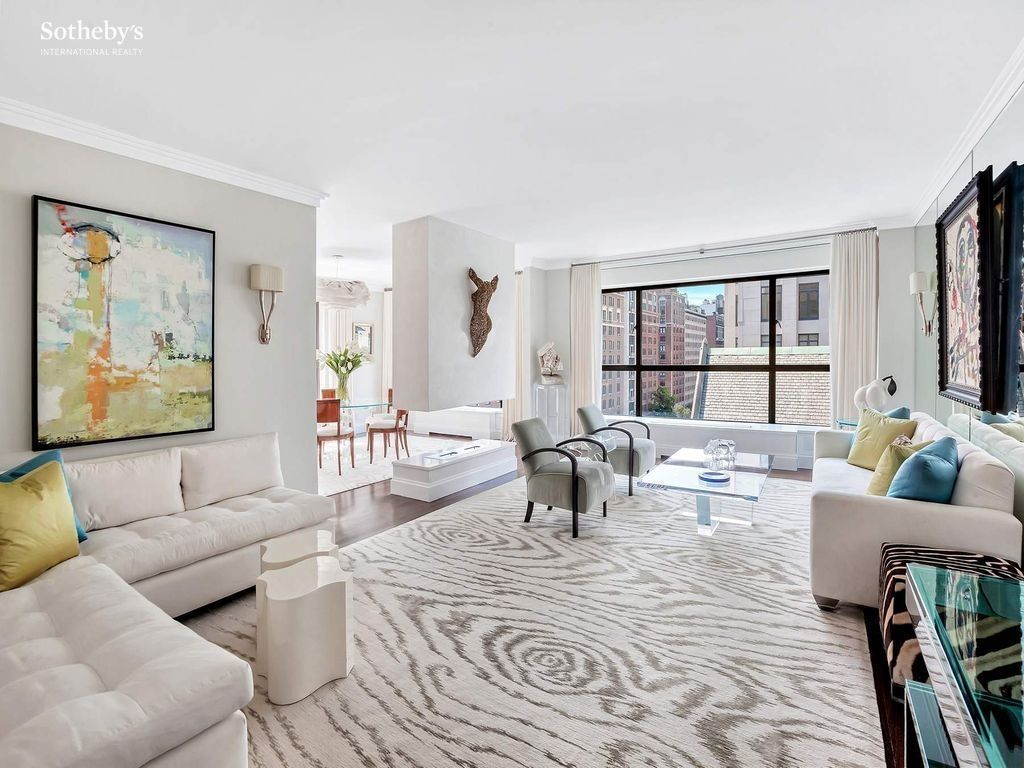
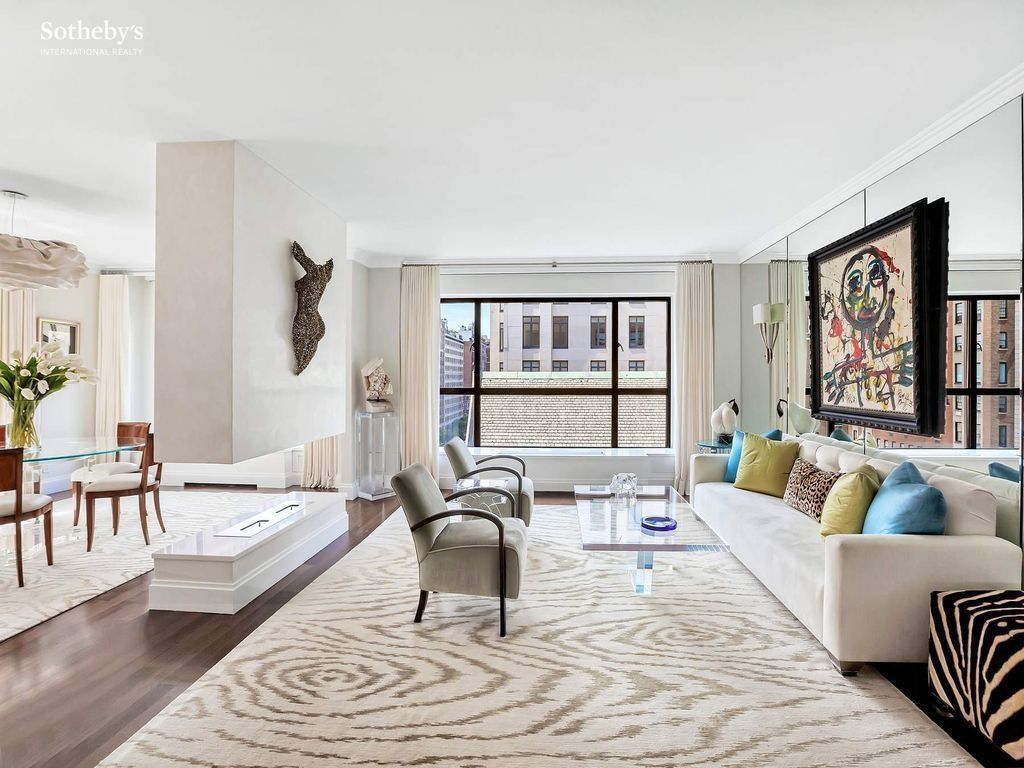
The living room runs at substantial scale — an open flow that connects to the dining area and supports both daily-living configuration and entertaining-program use. Park Avenue exposure through three casement-window banks delivers substantial natural light through the entire main living space.
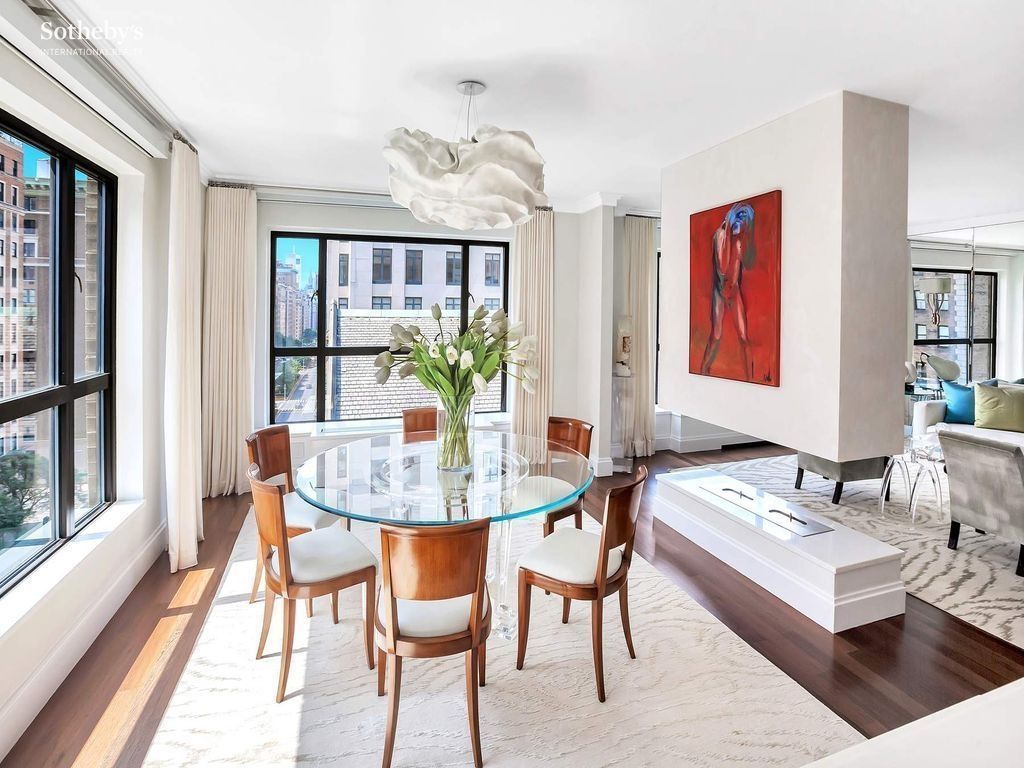
A second view of the living-and-dining flow shows the apartment's substantial scale and the architectural register of the post-war Carnegie Hill cooperative cohort.
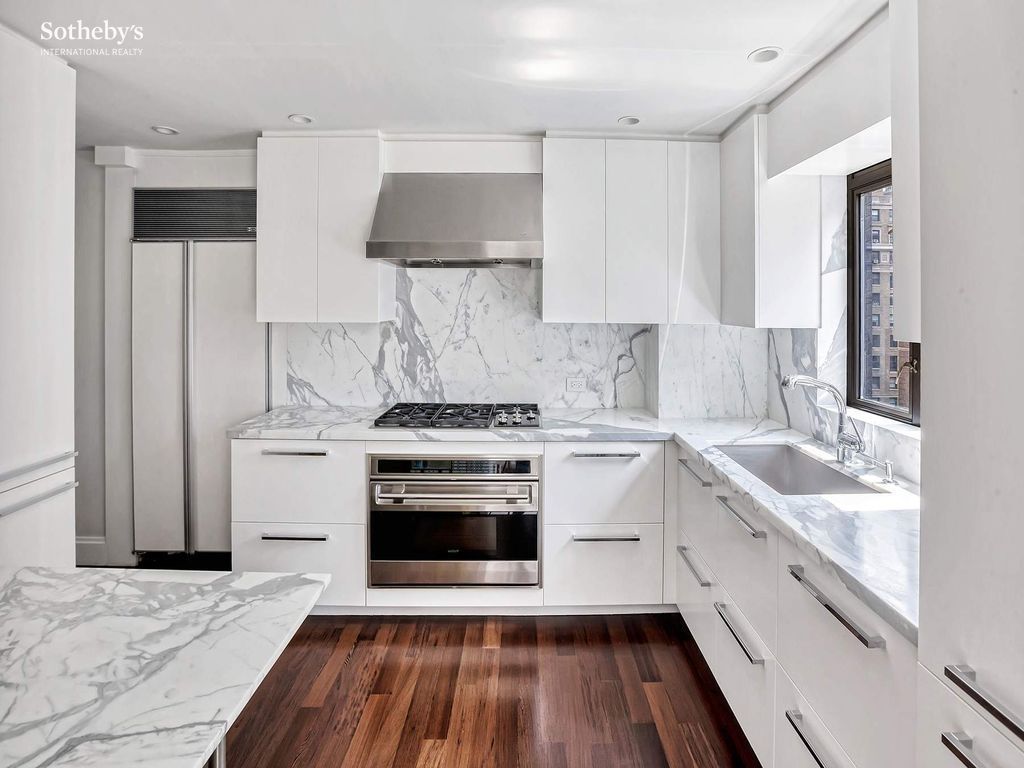
The renovated kitchen carries the contemporary-finish register the prior owners had layered into the apartment — stainless appliances, custom cabinetry, the open-plan integration that defines the contemporary upper-tier Manhattan cooperative kitchen program.
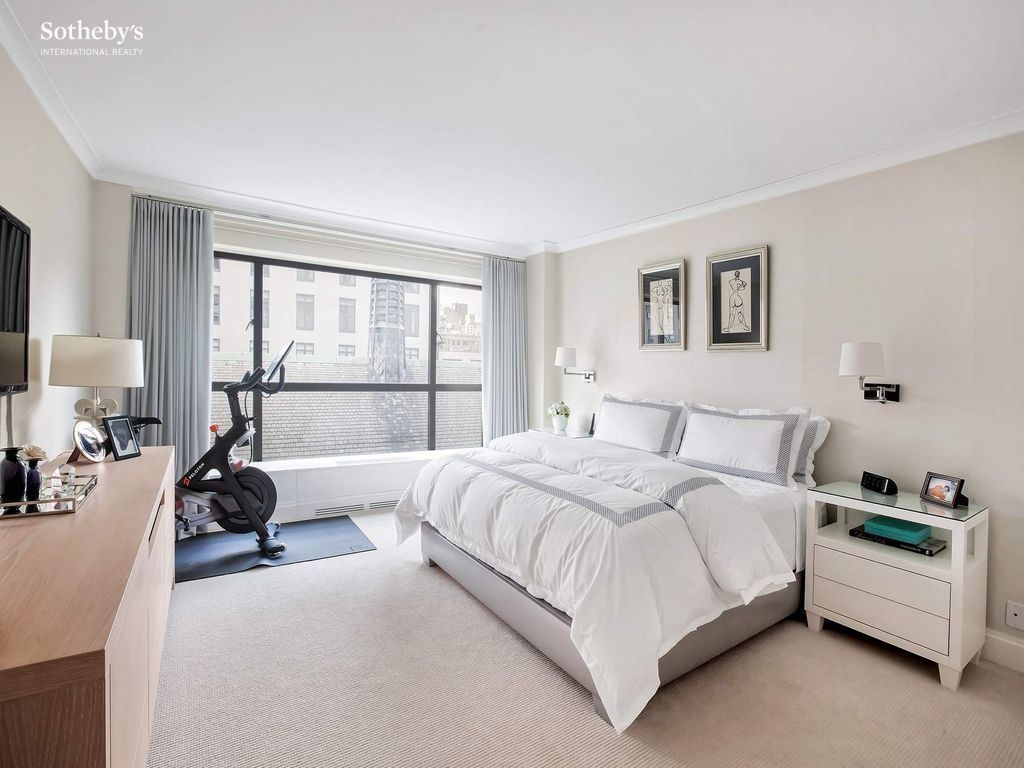
The primary bedroom delivers substantial scale, two-exposure light from the corner-line configuration, and the prewar-style architectural register that defines the apartment's broader feature set.
For the full building dossier — Wechsler & Schimenti 1962 construction, 53 units across 21 stories, the 5 ground-floor professional spaces generating approximately $411K in annual commercial rental income to the cooperative corporation, AKAM-style operational baseline, the Carnegie Hill / Lenox Hill border positioning, the comp record against the surrounding pre-war Park Avenue cooperative cohort — see 1020 Park Avenue.
The pricing arc — patience rewarded
The published price record:
| Date | Price | Movement |
|---|---|---|
| November 17, 2020 | $2,500,000 | List repositioned (+9%) |
| December 29, 2020 | $2,400,000 | −4% (first published reduction) |
| January 12, 2021 | $2,295,000 | −4% (second published reduction) |
| Pre-contract negotiation | $2,235,000 | −2.6% (engineering-inspection-informed; contract signed at this price) |
| May 21, 2021 | $2,235,000 | Closed at the contract price |
The published-list-to-closed-price reduction across the full arc was $265,000 — a 10.6% net discount from the seller's repositioned $2,500K ask through to the recorded closing.
The patient buy-side framework worked. The seller's initial pricing posture assumed a normal-market buyer pool that no longer existed at the apartment's specific price tier. Each reduction reflected the seller's progressive recalibration to the actual market environment underneath the listing. We engaged when our analysis supported it — and our analysis was tied to the actual buyer pool at the Park Avenue cooperative cohort at the specific point in the COVID cycle, not to the comp record from the pre-COVID period the seller's initial list was written against.
The engineering-inspection-informed pre-contract negotiation
Engaging the apartment at the published $2,295,000 ask was the structural commitment to the apartment. It was not the structural commitment to the price. Rather than deferring the engineering inspection to the standard post-contract contingency window — the way most New York cooperative transactions sequence the diligence work — we brought the inspection forward and ran it before signing the contract.
The inspection produced specific apartment-level findings — the kind of condition observations that, at the Carnegie Hill post-war cooperative tier, justify a meaningful price adjustment before the deal moves to contract.
We presented the findings to the seller's counsel, framed against the apartment's overall condition and the broader comp record, and negotiated the price down by $60,000 to $2,235,000 — the price the contract was then signed at, and the price that recorded at closing on May 21, 2021.
The strategic frame: rigorous diligence before contract is a real lever. Walking into the contract with the engineering inspection already complete — and the findings already framed into the price — produces a meaningfully better buy-side outcome than deferring the inspection to the contract-to-close contingency window. The contract crystallizes the price; the diligence determines what that price should be. Doing the diligence work first, before the price is locked, is the higher-leverage sequence.
The strategic frame
The 1020 Park Avenue #10C buy-side validates a thesis the Roebling Team applies on every buy-side engagement: patience is a real lever, and rigorous diligence is a real lever. Both compound. Neither requires opportunistic timing or unusual market conditions to deliver value.
The patient market-watching worked because the deep-COVID Manhattan market was actively re-pricing inventory through Q4 2020 and Q1 2021. The right call was not to chase the apartment at the seller's initial price. The right call was to wait until the seller's pricing posture recalibrated to the actual market environment underneath the listing — and then engage when the analysis supported the move.
The rigorous diligence worked because completing the engineering inspection before contract preserved the buy-side negotiating position at the point in the transaction where price is still genuinely negotiable. The right call was not to defer the inspection to the standard post-contract contingency window. The right call was to execute the diligence rigorously up front, identify specific findings, and frame those findings defensibly against the broader transaction structure — and then negotiate the contract price by the supported delta before signing.
Both threads ran across the same buy-side engagement. The compound outcome — $265,000 in total negotiated value across the published-list-to-closed-price arc — reflects the framework rather than the market conditions. The framework is repeatable across the broader Park Avenue and Upper East Side cooperative inventory.
Considering a Park Avenue or Upper East Side cooperative purchase?
The patient-watching + rigorous-diligence framework applied at 1020 Park Avenue #10C is the framework we use on every buy-side engagement. It is calibrated apartment-by-apartment and building-by-building, with the specifics evolving against the apartment's particular feature set, the building's particular financial profile, the corridor's particular comp record, and the market's particular state at the engagement window.
If you're considering a purchase at a Park Avenue cooperative, an adjacent Carnegie Hill or Lenox Hill cooperative, or a comparable Upper East Side cooperative or condominium, a 30-minute consultation is the right starting point. We'll work through the specific apartment, the specific building, the specific corridor, and the specific market dynamics your transaction will run inside — and the buy-side strategic frame that gets the deal done at the right outcome.
For the building's full dossier, see 1020 Park Avenue.
The presentation set.
Selling at 1020 Park Avenue — or comparable inventory?
A 30-minute pricing-and-strategy review is the right starting point. We bring the building-level analytics, the recent comp record, and the marketing-and-board calibration your situation requires.
