
Central Park West
Central Park West is Manhattan's great west-side parkfront corridor, lined with prewar co-ops from 59th to 110th Street and anchored by Emery Roth's twin-towered Art Deco landmarks.
What Central Park West is selling for
Movement of the annual median — not adjusted for transaction mix. Which apartments happened to trade (size, floor, condition, line) moves these as much as value does; the sample behind each is shown beneath it.
Two markets, one neighborhood. Since 2016, Central Park West condos are down 8% and co-ops up 6% on paper — but after inflation, −31.6% and −21% in real terms.
Movement of the annual median — not adjusted for transaction mix. Which apartments happened to trade (size, floor, condition, line) moves these as much as value does; the sample behind each is shown beneath it.
Method & coverage
Method. Condos are measured per square foot, co-ops per room (room counts from listing data; sales without a usable room count are excluded). The percentages are movement of the annual median — not a constant-quality or repeat-sale index — so transaction mix moves them as well as value. Real-terms figures deflate that same median by CPI.
Coverage. 3,411 recorded sales. Before the figures above, 73 non-arms-length transfers (nominal estate, gift, or intra-family deeds and mis-recorded bulk filings) and 67 duplicate records of the same deed (a combined apartment or penthouse recorded under more than one unit label) were removed. Corridors may overlap — a sale can appear in both a neighborhood set and a narrower avenue set. Recorded transfers via NYC Department of Finance, enriched by The Roebling Research Library.
The Park-facing residential spine of the Upper West Side — the prewar cooperative tradition that produced the city's most architecturally distinctive twin-tower apartment houses, the buyers — in the arts, music, and film — who have shaped the corridor for nearly a century, and the buildings that shaped how Americans picture a New York luxury apartment, from The Dakota north to The Eldorado.
The Central Park West argument
Central Park West is the residential corridor in Manhattan that combines direct Central Park frontage — along the entire western face of the park, from Columbus Circle north to 110th Street — with a residential architectural tradition substantially distinct from the Park-and-Fifth tradition one mile east. Where Park Avenue's residential standing derives from the planted median and the institutional cooperative governance tradition, and Fifth Avenue's standing derives from the Park frontage and the Museum Mile context, Central Park West's standing comes from a different set of things: the twin-tower tradition behind its most-recognized buildings (the San Remo, the Eldorado, the Majestic, the Century); a more varied, more idiosyncratic architecture than Park or Fifth (anchored by The Dakota, the 1884 Hardenbergh building that started the New York luxury apartment house); a more accommodating, more creatively minded co-op culture, open to buyers the East Side boards often aren't; and a buyer base rooted in the arts, film, and music that has shaped the corridor for a century.
For Manhattan residential buyers, the Central Park West versus Fifth Avenue choice is the principal corridor comparison after the Park Avenue versus Fifth Avenue question. The two Park-facing corridors trade at broadly similar price registers on equivalent vintage and tier, draw substantially different buyers (Fifth Avenue from finance and philanthropy, Central Park West from the arts and entertainment), and run cooperative cultures that differ in tone and substance. The distinctions that matter are the architectural vocabulary (CPW's twin-tower tradition versus Fifth Avenue's more traditional prewar floor-plate tradition), who else lives there (which sets the social and cultural tone of the building), and how the board runs (which shapes both the application and daily life as a shareholder).
The buyer who chooses Central Park West is choosing a specific combination of structural features. The Park view from a Central Park West apartment with eastern exposure is, like the Fifth Avenue equivalent on the opposite face of the park, one of the most-recognized residential views in the United States — but the western-park view has its own visual character (the morning sun over Central Park, the seasonal play of light across Sheep Meadow, the Bethesda Terrace and Strawberry Fields perspectives) that is structurally different from the Fifth Avenue equivalent. The architectural variety of the corridor — from Hardenbergh's Dakota at the southern end to Roth's three towers (Beresford, San Remo, Eldorado), to Chanin's Majestic and Century, to Stern's 15 CPW at the southern end — produces a residential register more visually heterogeneous and architecturally interesting than any other Manhattan corridor. The boards, serious as they are at the tier-one CPW buildings, are more open to creative careers and non-traditional profiles than Park Avenue's.
The trade-offs are also recognizable. Central Park West does not have the planted median that gives Park Avenue its visual coherence or the Museum Mile institutional density that gives Fifth Avenue its cultural infrastructure. The corridor's pricing has historically run at a meaningful discount to the equivalent Park Avenue and Fifth Avenue inventory, though the differential has compressed substantially across the past two decades as the corridor's creative-buyer demographic has acquired the wealth concentration that supports tier-one pricing. The Upper West Side school and institutional context is different from the Upper East Side equivalent — the corridor's school cluster (Trinity, Collegiate, Calhoun, Trevor Day, the West Side independent schools) is meaningful but less dense than the Carnegie Hill equivalent, and the cultural-institutional cluster (Lincoln Center, the American Museum of Natural History, the New-York Historical Society) sits in different proximity to the residential addresses than the Museum Mile cluster does to Fifth Avenue.
The boundaries and what defines the residential corridor
The Central Park West residential corridor occupies the stretch from approximately West 59th Street (Columbus Circle) north to approximately West 110th Street (Frederick Douglass Circle and Cathedral Parkway) — a fifty-one-block band along the western edge of Central Park that contains the densest concentration of Park-facing apartment buildings on the western side of the city. South of 59th Street, Central Park West transitions into the commercial Eighth Avenue (one block south, the same street under different name); north of 110th Street, the corridor continues into Morningside Heights with a different residential character.
Within the corridor, three sub-bands organize the residential inventory.
The 60s — the Lincoln Square / Columbus Circle stretch — contain the corridor's most recently developed inventory. The Time Warner Center (2004), the 15 CPW building (Robert A.M. Stern Architects, 2008), and the broader Lincoln Square redevelopment have added substantial new-construction condominium inventory to the corridor's southern end, complementing the older buildings (The Century at 25 CPW, the Trump International Hotel and Tower at 1 CPW) in this band.
The 70s and 80s — the corridor's residential heart — contain the densest concentration of tier-one prewar cooperative inventory. The Dakota at 72nd, the Majestic at 71st–72nd, the San Remo at 74th–75th, the Kenilworth at 75th–76th, the Langham at 73rd, the Beresford at 81st, and the comparable buildings anchor the corridor's most architecturally significant prewar tier.
The upper 80s, 90s, and 100s — the corridor's northern extension — contain The Eldorado at 90th–91st and continued cooperative inventory through the 90s and 100s at more accessible price points. The corridor's northern segments accommodate a substantial cooperative inventory and a growing condominium-conversion inventory.
The corridor's cross-streets — the side streets between Central Park West and Columbus Avenue, and between Columbus and Amsterdam — produce their own pricing and character variations. The brownstone-and-townhouse side-street inventory in the 70s, 80s, and 90s — particularly between CPW and Columbus — anchors a substantial residential population in single-family and small multi-family inventory adjacent to the corridor's residential spine.
The Dakota and the origins of New York luxury apartment living
The Dakota at 1 West 72nd Street (Henry Janeway Hardenbergh, 1880–1884) is the founding building of the Manhattan luxury apartment tradition and the first building constructed specifically as a luxury apartment house for the upper-class residential market in the city. Edward Clark, the Singer Sewing Machine co-founder who commissioned the building, located it at the then-undeveloped western edge of Central Park — a site so far from the established residential neighborhoods of the time that the building was reputedly named "The Dakota" because of its perceived remote location, "out in the Dakotas."
Hardenbergh's design — German Renaissance Revival with substantial Romantic-eclectic elements, in brick with sandstone-and-terracotta trim, with the elaborate dormered roof and corner turrets that have become structurally iconic — created an architectural vocabulary that no subsequent New York apartment building has matched. The building's interior — with original ceiling heights of approximately 14 feet, the substantial proportions of the apartment configurations, the unusual deep-set windows facing the Park, and the building's elaborate decorative program — established a luxury-apartment standard that the subsequent generation of prewar architects would calibrate their work against.
The Dakota's history across nearly a century and a half has made it the most culturally significant individual apartment building in the United States. It was the location of Roman Polanski's Rosemary's Baby (1968), the residence of John Lennon at the time of his murder outside the building on December 8, 1980 (Yoko Ono has continued to reside in the building since), and the residence across multiple generations of a continuous American creative-leadership roster including Leonard Bernstein, Lauren Bacall, Boris Karloff, Roberta Flack, Judy Garland, Rosemary Clooney, Rudolf Nureyev, and the broader arts, theater, and music demographic that has anchored the building's character.
The Dakota's cooperative culture is, by the standards of Manhattan tier-one cooperatives, distinctive — the building's substantive resident-history continuity, its physical and architectural uniqueness, and the board's selectivity have all combined to produce a cooperative-life register that the rest of the corridor measures itself against. Buying into The Dakota is not the equivalent of buying into a Park Avenue tier-one cooperative; the board weighs a different set of things, leaning toward demonstrated cultural and creative standing alongside financial qualification.
The Emery Roth twin-tower tradition: San Remo, Beresford, Eldorado
The single architectural feature most distinctive to Central Park West is the twin-tower apartment-house typology — the Manhattan adaptation of the Beaux-Arts and Italian Renaissance twin-bell-tower vocabulary, applied at residential scale, to produce the corridor's most-recognized silhouettes. The architect who defined this typology was Emery Roth, the Hungarian-born architect whose 1929–1931 work on Central Park West produced three of the corridor's most-iconic buildings.
The San Remo at 145–146 Central Park West (Roth, 1929–1930) was the first twin-tower apartment house built on Central Park West and the building that established the corridor's signature architectural register. The 27-story building contains 122 cooperative apartments distributed across the two towers and the connecting podium, with the twin-tower silhouette visible from substantial portions of Central Park and from much of the surrounding Upper West Side. The San Remo's resident roster across the past half-century has included a substantial portion of the Manhattan arts, music, and entertainment demographic.
The Beresford at 211 Central Park West (Roth, 1929) is the corridor's three-tower variation on the typology. The 22-story building, located at the corner of 81st Street directly across CPW from the American Museum of Natural History, contains 156 cooperative apartments. The Beresford's three-tower silhouette — visible from the museum, from Central Park's western face, and from substantial portions of the Upper West Side — is one of the most-recognized Manhattan apartment-building forms.
The Eldorado at 300 Central Park West (Roth in association with Margon & Holder, 1929–1931; historically also written "El Dorado") is the corridor's northern twin-tower anchor, spanning the 90th–91st Street blockfront. The 31-story building contains approximately 200 cooperative apartments distributed across the two towers and the podium, with the twin-tower silhouette punctuating the corridor's northern segment. The Eldorado's slightly later completion — running through 1931, into the Depression-era market — produced a building completed at the bottom of the prewar luxury cycle.
The twin-tower vocabulary extends beyond Roth's three: Chanin's Majestic and Century carry the same silhouette in an Art Deco register, and the tradition has shaped how Americans visualize a New York luxury apartment building in ways that no Park Avenue or Fifth Avenue equivalent has matched.
The other tier-one prewar buildings
Beyond Hardenbergh's Dakota and Roth's three towers, the corridor's tier-one prewar cooperative inventory includes several additional architecturally and culturally significant buildings.
The Majestic at 115 Central Park West (Irwin S. Chanin in association with Margon & Holder, 1930–1931) is the corridor's principal Art Deco apartment-house anchor and one of the most architecturally significant Art Deco residential buildings in the United States. The 31-story twin-tower building, located at the corner of 71st–72nd Street adjacent to The Dakota, contains 240 cooperative apartments. The Majestic's Art Deco vocabulary — distinct from the more historicist register of the Roth twin-towers a few blocks north — anchors the corridor's modernist-residential register.
The Century at 25 Central Park West (Irwin S. Chanin, 1931) is the corridor's southern Art Deco twin-tower anchor, at the corner of 62nd–63rd Street. The 31-story building contains approximately 416 apartments and — unusually among the corridor's prewar towers — operates as a condominium, the result of a late-1980s conversion from rental ownership. That status makes the Century a structurally different purchase from its co-op neighbors: standard condominium governance rather than a proprietary-lease board process. Architecturally, the Century, like The Majestic, represents the late-prewar Art Deco residential tradition that ran through the early 1930s as the prewar luxury cycle wound down.
The Kenilworth at 151 Central Park West (Townsend, Steinle & Haskell, 1908) is one of the corridor's older Beaux-Arts apartment houses, predating the Roth twin-tower era by two decades. The Kenilworth's 12-story Beaux-Arts exterior anchors the corridor's older apartment-house tradition.
The Langham at 135 Central Park West (Clinton & Russell, 1907) is comparable in vintage and architectural register to the Kenilworth, with Beaux-Arts and Italian Renaissance exterior details and a substantial residential history.
The Brentmore, The Prasada, and a number of additional prewar and early-postwar buildings round out the corridor's residential inventory.
The cumulative effect: a corridor with substantially more architectural variety than the Park Avenue or Fifth Avenue equivalent, anchored by a small number of architecturally extraordinary individual buildings (Dakota, Majestic, San Remo, Beresford, Eldorado, Century) rather than by a coherent architect-and-vintage cluster.
15 Central Park West and the new-construction tradition
The corridor's modern era is anchored by 15 Central Park West at the corner of 61st Street (Robert A.M. Stern Architects, 2008), the limestone-clad condominium that effectively reset the corridor's pricing dynamics on opening and that has become the most-recognized new-construction Manhattan residential building of the past two decades. The building's combination of Stern's neo-prewar architectural vocabulary, the substantial Park-facing exposure, the full-service hotel-grade amenity package, and the building's resident roster — including Sting, Bob Costas, Denzel Washington, Mark Wahlberg, Robert De Niro, Howard Lutnick, and a broader arts-finance-and-corporate-leadership cluster — has anchored the corridor's most consequential modern residential development.
15 CPW is a condominium throughout. The building's two-part composition — the "House" fronting Central Park West and the taller "Tower" set behind it toward Broadway — is an architectural division, not an ownership one; both components sit under a single condominium regime. That pairing was precisely the point of the development: prewar limestone presence and proportions, with none of the co-op board constraints of the corridor's older inventory — which is what opened the building to the international, pied-à-terre, and privacy-minded demand that the traditional CPW cooperatives structurally exclude.
15 CPW's success has shaped subsequent new-construction development on the corridor and across Manhattan; the building has become the architectural reference point for the "neo-prewar" register that has dominated subsequent luxury residential development. Adjacent recent inventory — the Time Warner Center at 10 Columbus Circle (2004) and the smaller buildings developed in the corridor's southern segments — accommodate the international and pied-à-terre demographic that the corridor's traditional cooperative inventory does not accommodate at the same scale.
Cultural-institutional anchors: American Museum of Natural History, Lincoln Center, New-York Historical Society
The Central Park West corridor's principal cultural-institutional anchors sit on or adjacent to the corridor itself, providing the daily-life cultural infrastructure that the Museum Mile does for Fifth Avenue.
The American Museum of Natural History at 79th Street and Central Park West (founded 1869, current building complex begun 1869 with continuing additions through the 21st century) is the corridor's most-recognized cultural institution and one of the largest natural history museums in the world. The museum's substantial CPW frontage — anchored by the 1936 New York State Theodore Roosevelt Memorial entrance — defines the corridor's character in the 77th–81st Street stretch. The recent Richard Gilder Center for Science, Education, and Innovation addition (Studio Gang, 2023) on the museum's Columbus Avenue side extended the institution's footprint into the broader Upper West Side.
For residents, the AMNH is part of the weekly rhythm — museum membership, the Hayden Planetarium, the education and research programs, and the events the museum hosts are a recognizable part of life on the corridor.
Lincoln Center for the Performing Arts — the 16-acre cultural complex spanning Columbus Avenue to Amsterdam Avenue from 62nd to 66th — sits one block south of the corridor's southern stretch (the corridor begins at 59th Street; Lincoln Center begins at 62nd) and constitutes the corridor's principal performing-arts infrastructure. The complex's institutional anchors — the Metropolitan Opera, the New York Philharmonic, the New York City Ballet, the New York Public Library for the Performing Arts, the Juilliard School, the Vivian Beaumont Theater, the Mostly Mozart and the broader programming calendar — draw the corridor's deep base of arts-and-performing-arts buyers.
The New-York Historical Society at 170 Central Park West (founded 1804, current building 1908) is the city's oldest museum and one of the country's principal historical archives. The institution's Robert and Anita Singer building, with its substantial CPW frontage at 76th–77th, anchors the corridor's historical-and-archival cultural register.
The Upper West Side school context
The corridor's adjacency to the Upper West Side school cluster draws a meaningful number of family buyers, though the school density is lower than Carnegie Hill on the Upper East Side.
The principal independent schools accessible from the corridor include: Trinity School (139 West 91st Street, K–12, co-ed), one of the city's oldest independent schools and the principal Upper West Side tier-one option; Collegiate School (301 Freedom Place South, K–12, all-boys), the oldest independent school in the United States; Calhoun School (433 West End Avenue at 81st, K–12, co-ed); Trevor Day School (1 West 88th Street, K–12, co-ed); Solomon Schechter School of Manhattan (Jewish day school); and a number of additional independent schools throughout the broader Upper West Side.
The corridor's public school anchors include PS 199 (270 West 70th Street, K–5); PS 87 (160 West 78th Street, K–5); and the citywide specialized public high schools accessible from the corridor.
For buyer families weighing Central Park West against alternative residential locations, the school adjacency is one real consideration. The corridor's school pipeline is meaningful but less dense than the Carnegie Hill equivalent; family buyers prioritizing the densest possible school-walk-radius typically orient toward the Upper East Side. Family buyers prioritizing the broader Upper West Side cultural-and-residential environment — with the AMNH adjacency, Lincoln Center, the cross-park access to Carl Schurz Park alternatives, and the West Side's distinct neighborhood character — orient toward Central Park West.
Transit and daily-life infrastructure
The Central Park West corridor is served by the B and C trains running directly beneath Central Park West — the corridor's principal subway access — with stations at 59th Street–Columbus Circle (A/B/C/D/1), 72nd Street (B/C), 81st Street–Museum of Natural History (B/C), 86th Street (B/C), 96th Street (B/C), 103rd Street (B/C), and 110th Street–Cathedral Parkway (B/C). The 1, 2, and 3 trains run beneath Broadway two blocks west, with their own UWS stations.
The Central Park West subway access — with stations beneath the corridor itself rather than two blocks east as on Fifth Avenue — is a real transit advantage the Park Avenue and Fifth Avenue corridors don't match. CPW residents reach the subway from their own avenue, without the cross-street walk Upper East Side residents make.
The corridor's daily-life retail infrastructure clusters on Columbus Avenue (the primary commercial spine, one block west of CPW, with restaurants, retail, services, and the daily-life infrastructure from the 60s through the 90s), on Amsterdam Avenue (the secondary spine, two blocks west, with casual retail and broader commercial register), and on Broadway (the principal UWS commercial corridor, with grocery and major retail at Zabar's, Citarella's UWS location, Fairway Market, and the broader commercial inventory). The cross-streets contain residential and institutional uses.
The corridor's parks include Central Park along the eastern boundary (the city's principal park, with substantial CPW frontage including the West Side entrances at 72nd, 81st, 86th, 96th, and 110th Streets), and Riverside Park along the Hudson River three blocks west (the city's principal Hudson-facing park, accessible from the corridor via the cross-streets).
Pricing tiers
Central Park West trades across a wide range, reflecting how varied its buildings and buyers are. Tier-one prewar cooperatives on the corridor — the Dakota, Majestic, San Remo, Beresford, Eldorado — trade at the upper register of the Manhattan cooperative market, with the most-recognized buildings reaching prices comparable to the Park Avenue and Fifth Avenue equivalents on a per-square-foot basis. The corridor's tier-one condominiums — the Century among the prewar towers, 15 CPW in the modern era — trade against the citywide condominium register, where the buyer pool is broader and the governance lighter. The corridor's mid-tier prewar cooperatives trade at meaningful discount to the equivalent Park-and-Fifth tier, reflecting the cooperative culture and demographic differences that have historically structured the corridor's pricing.
The general pricing logic: tier-one CPW prewar cooperatives with eastern (Park-facing) exposure trade in the $2,000–$4,500 per square foot range for typical inventory, with trophy apartments at the Dakota, San Remo penthouses, the Majestic top-floor inventory, and the comparable 15 CPW units reaching $5,000–$10,000+ per square foot. Mid-tier prewar CPW cooperatives trade in the $1,400–$2,200 range. Cross-street and postwar inventory adjacent to the corridor trades in the $1,000–$1,800 range.
Within the corridor, five things move price: (1) the building's tier and architecture, with the Dakota, the Roth twin-towers, the Majestic, and 15 CPW at the top of the range; (2) exposure — eastern Park-facing light commands the strongest premium, western exposure trades well below it, north and south fall in between; (3) floor — high floors command real premiums for the Park view above the tree line; (4) the apartment's layout and condition; (5) the building's own co-op culture and policies.
Compared to Fifth Avenue across the Park, Central Park West trades at a modest discount on the top tier and a meaningful one on the mid-tier — though the gap has narrowed sharply over the past two decades as the corridor's creative buyers have grown wealthier.
Who buys here
Central Park West draws one of the most distinct buyer bases of any Manhattan corridor — rooted for a century in the arts, music, film, and theater in a way few others match.
Arts, music, and entertainment leadership. The corridor has historically attracted — and continues to attract — the most senior tier of the city's arts, music, film, theater, and entertainment industries. The Dakota, the San Remo, the Beresford, the Eldorado, and the Majestic have each anchored multiple generations of arts-and-entertainment residents. The boards, serious as they are at the tier-one buildings, are generally more open to non-traditional financial profiles and creative careers than Park Avenue's.
Creative-leadership and intellectual-professional populations. Writers, editors, academics, designers, and architects anchor much of the corridor's mid-tier and prewar inventory. Lincoln Center, the AMNH, the New-York Historical Society, and the wider Upper West Side cultural life draw them in particular.
Family buyers with West Side school orientation. Families whose children attend Trinity, Collegiate, Calhoun, Trevor Day, or the broader Upper West Side school cluster concentrate on the corridor and on the cross-street inventory adjacent to it.
International and pied-à-terre buyers (in the new-construction and condominium-portion inventory). 15 CPW, the Time Warner Center, and the broader new-construction inventory take the international and pied-à-terre buyers the traditional CPW cooperatives don't.
Multi-generational corridor families. The cooperative continuity at the tier-one CPW buildings supports multi-generational buyers, much like Park Avenue and Fifth.
Central Park West suits buyers who want the arts-and-creative crowd, the variety and drama of the prewar twin-tower buildings, the more accommodating boards relative to Park Avenue, and Lincoln Center and the AMNH next door. Buyers who want the finance-and-philanthropy world, the planted-median boulevard, or the Museum Mile should look to Park Avenue or Fifth instead.
Run the numbers
Related guides
- The Dakota — Building Guide — the corridor's founding building
- The San Remo — Building Guide — the corridor's first twin-tower
- The Beresford — Building Guide — the corridor's three-tower variation
- The Eldorado — Building Guide — the corridor's northern twin-tower
- Emery Roth — the architect of the corridor's twin-tower tradition
- Walking Tour: Central Park West — the architectural walking tour of the corridor
- Park Avenue — Corridor Guide — the alternative tier-one cooperative corridor
- Fifth Avenue — Corridor Guide — the other Park-facing corridor
- Co-op vs Condo in Manhattan — relevant for the corridor's condominium inventory (the Century, 15 CPW) against its prewar co-op majority
- The Co-op Board Interview: A Buyer's Preparation Guide — substantively relevant for any CPW cooperative purchase
This page reflects publicly available information and The Roebling Team transaction experience. The Roebling Team at Compass does not represent the buildings, schools, museums, or other institutions referenced herein. Architect attributions, building details, and institutional information have been verified against public sources; readers should confirm current status independently at the time of decision. © 2026 The Roebling Team at Compass.
Buildings on Central Park West


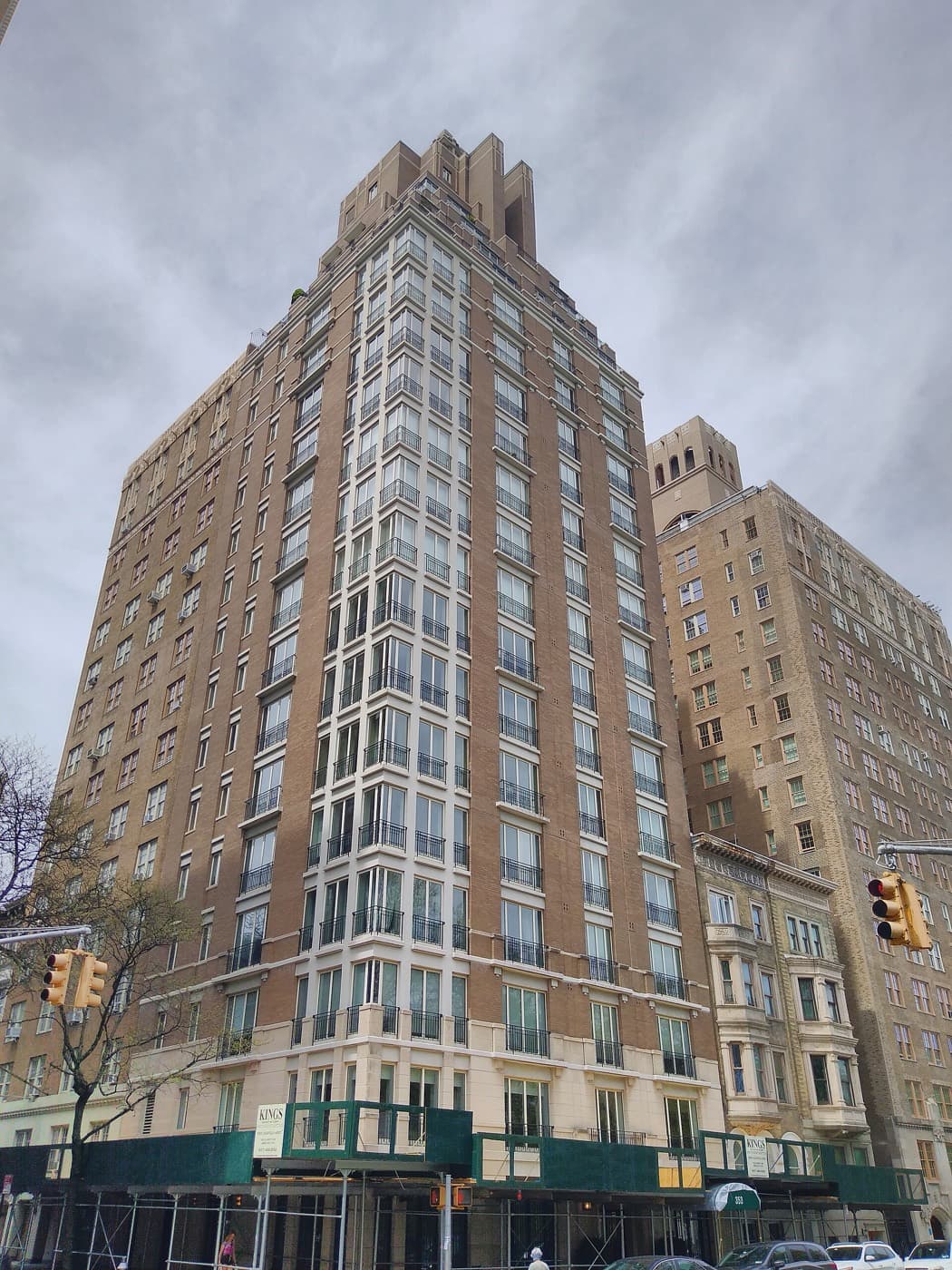
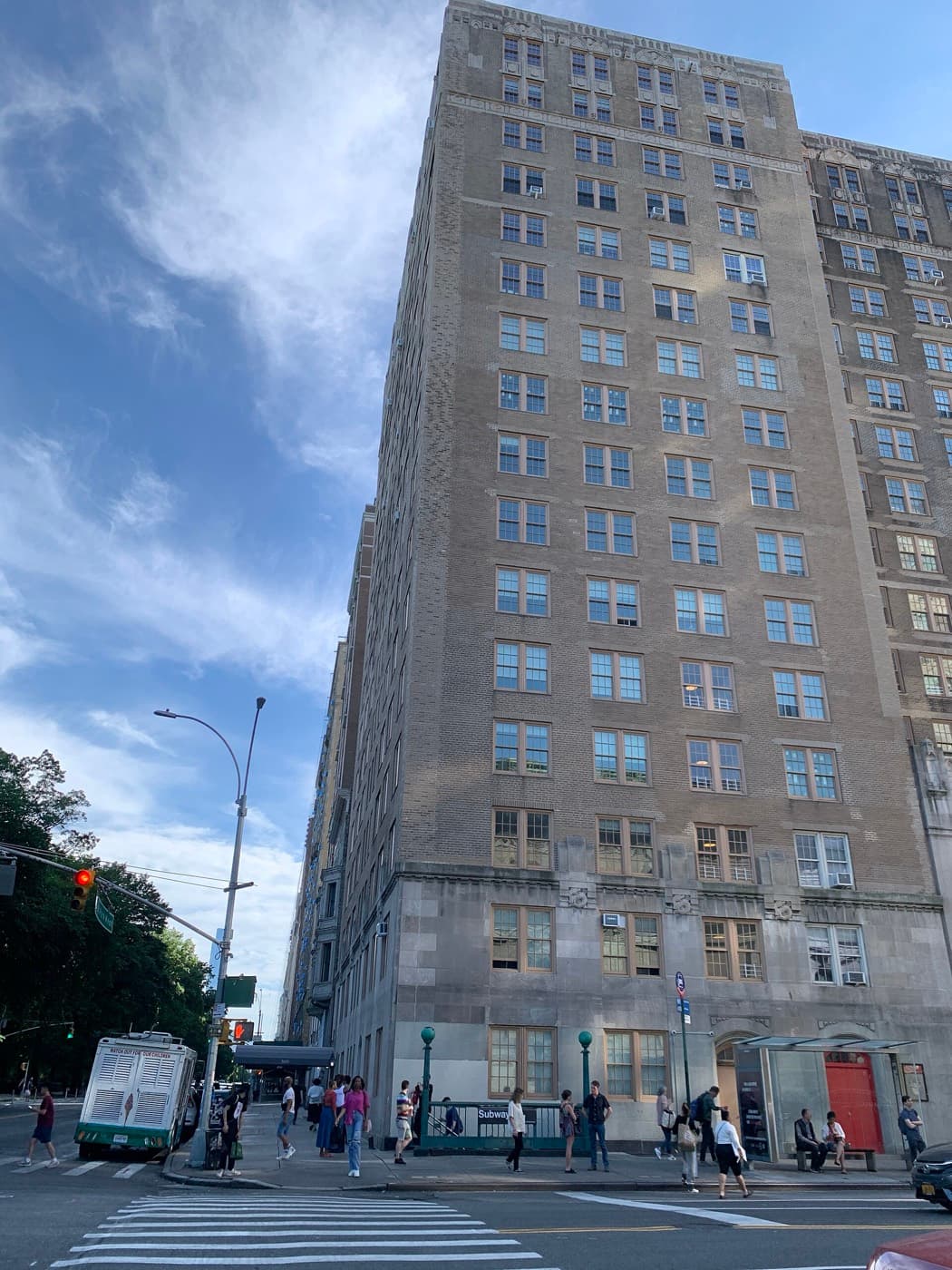
Tell us what you are looking for and the Roebling Research Desk will send building matches across Central Park West, with pricing and diligence on each.
Get building matches sent to you →Get the corridor read on your building.
See how your apartment stacks up against the rest of Central Park West, or get a market update tuned to this stretch — sent to you directly.