
Fifth Avenue
Fifth Avenue is the classic east-side Central Park corridor, defined by limestone and brick prewar co-ops, the J.E.R. Carpenter portfolio, and the enduring Gold Coast standard for Manhattan apartment living.
What Fifth Avenue is selling for
Movement of the annual median — not adjusted for transaction mix. Which apartments happened to trade (size, floor, condition, line) moves these as much as value does; the sample behind each is shown beneath it.
Two markets, one neighborhood. Since 2016, Fifth Avenue condos are up 6% and co-ops down 12% on paper — but after inflation, −21.4% and −34.7% in real terms.
Movement of the annual median — not adjusted for transaction mix. Which apartments happened to trade (size, floor, condition, line) moves these as much as value does; the sample behind each is shown beneath it.
Method & coverage
Method. Condos are measured per square foot, co-ops per room (room counts from listing data; sales without a usable room count are excluded). The percentages are movement of the annual median — not a constant-quality or repeat-sale index — so transaction mix moves them as well as value. Real-terms figures deflate that same median by CPI.
Coverage. 1,675 recorded sales. Before the figures above, 30 non-arms-length transfers (nominal estate, gift, or intra-family deeds and mis-recorded bulk filings) and 29 duplicate records of the same deed (a combined apartment or penthouse recorded under more than one unit label) were removed. Corridors may overlap — a sale can appear in both a neighborhood set and a narrower avenue set. Recorded transfers via NYC Department of Finance, enriched by The Roebling Research Library.
The Park-facing residential spine of the Upper East Side and Carnegie Hill — Fifth Avenue's tier-one prewar cooperative inventory, the Museum Mile cultural context, and the buildings that anchor the corridor from the Pierre Hotel and its residences at 61st Street north through the Carnegie Hill prewar cluster at 1040 Fifth.
The Fifth Avenue argument
Fifth Avenue is the residential corridor in Manhattan that combines the city's most-recognized park frontage with the most-recognized concentration of cultural-institutional infrastructure and a prewar cooperative tradition equal in architectural pedigree to the Park Avenue corridor running one block east. Where Park Avenue's residential standing derives from the planted median, the cooperative governance tradition, and the institutional buyer class that has occupied the corridor for a century, Fifth Avenue's standing derives from three different and complementary structural features: the direct Central Park frontage (the western face of every Fifth Avenue residential building looks across the avenue into Central Park), the Museum Mile cultural-institutional anchor (the Met, the Guggenheim, the Neue Galerie, Cooper-Hewitt, the Jewish Museum, Museum of the City of New York, and El Museo del Barrio all sit on the corridor or one block from it), and the same architect roster — Rosario Candela, J.E.R. Carpenter, Emery Roth, Cross & Cross, Schwartz & Gross, McKim Mead & White — that produced the Park Avenue cooperative tradition.
For Manhattan residential buyers, the Fifth Avenue versus Park Avenue choice is the single most-asked corridor comparison. The two corridors trade at broadly similar price registers for equivalent vintage and tier, draw from a substantially overlapping buyer demographic, and operate cooperative cultures of comparable institutional character. The distinctions that matter are the Park frontage (a structural amenity unique to Fifth Avenue), the Museum Mile proximity (an institutional context that defines the corridor's daily-life character), and the building-by-building variation in exposure, view, and cooperative culture that distinguishes specific Fifth Avenue addresses from specific Park Avenue addresses. The detailed comparison between the two corridors is the subject of our Park vs Fifth Avenue comparison guide; this corridor page is the standalone Fifth Avenue framing.
The buyer who chooses Fifth Avenue is choosing a specific combination of structural features. The Central Park view from a Fifth Avenue apartment with western exposure is one of the most-recognized residential views in the United States — the kind of structural amenity that holds price stability across market cycles and that supports the corridor's century-long buyer demand. The Museum Mile anchor turns the corridor's cultural infrastructure into a daily-life environment — the Metropolitan Museum across the street, the Guggenheim at 89th, the Neue Galerie at 86th, the Cooper-Hewitt at 91st — that few other residential corridors in the country can match. The cooperative character — built in the same 1925–1931 prewar peak that produced the Park Avenue inventory, governed by boards of comparable institutional substance — locates the corridor within the Manhattan luxury cooperative tradition without compromise.
The trade-offs are recognizable. Fifth Avenue lacks the planted median that gives Park Avenue its visual coherence as a residential boulevard; Fifth Avenue is, in urban-design terms, a busy commercial-cultural corridor on its eastern side with a park on its western side. The traffic and pedestrian density of the corridor, particularly in the museum-adjacent blocks, is meaningfully greater than the equivalent stretches of Park Avenue. And the Fifth Avenue cooperative inventory is, building for building, slightly less concentrated than the equivalent Park Avenue inventory — the corridor's residential character is supplemented by the hotel-residence inventory (the Pierre, the Sherry-Netherland, the Carlyle, the Plaza Residences) and by the institutional and cultural buildings that interrupt the residential continuity in ways the Park Avenue corridor does not experience.
The boundaries and what defines the residential corridor
The Fifth Avenue residential corridor occupies the stretch from approximately East 59th Street north to approximately East 96th Street — a thirty-seven-block band along the eastern edge of Central Park that contains the densest concentration of Park-facing prewar cooperative apartment houses in Manhattan. South of 59th Street, Fifth Avenue transitions into the commercial Fifth Avenue of Midtown (luxury retail, office buildings, the Plaza Hotel, Saks Fifth Avenue, Bergdorf Goodman, the iconic flagship retail concentration). North of 96th Street, the corridor continues with reduced residential density through the Carnegie Hill / Yorkville transition zone, with substantial cultural-institutional inventory (Museum Mile's northern extensions to El Museo del Barrio at 104th and Museum of the City of New York at 103rd) and a different residential register as the corridor approaches East Harlem.
Within the corridor, three sub-bands organize the residential inventory.
The 60s and lower 70s — the Lenox Hill stretch — contain the corridor's most amenity-rich and most international segment, anchored by the Pierre Hotel and its residences at 2 East 61st, the Sherry-Netherland at 781 Fifth Avenue, and the residential inventory adjacent to the Plaza at the southern terminus. The cooperative inventory in this band sits at the corridor's most accessible-to-international-buyer end, with several condominium-format hotel residences providing the structural alternative to traditional cooperative ownership.
The 70s and 80s — the corridor's residential heart — contain the densest concentration of tier-one prewar cooperatives. The buildings at 820 Fifth, 825 Fifth, 834 Fifth, and the Carpenter-and-Roth concentration through the 70s and 80s, anchor the corridor's most architecturally significant prewar inventory.
The upper 80s and 90s — the Carnegie Hill stretch — extend the prewar cooperative inventory northward through the museum-adjacent blocks. The corridor's most-recognized 80s and 90s addresses — 950 Fifth (Carpenter, 1925), 1030 Fifth (Carpenter, 1925), 1040 Fifth (Candela, 1929–1930, where Jacqueline Kennedy Onassis lived for the last thirty years of her life) — sit in this band, in proximity to the Museum Mile institutions and to the Carnegie Hill independent-school cluster.
The corridor's cross-streets — the side streets between Fifth and Madison — produce their own pricing variations. The cross-streets between Fifth and Madison in the 60s through the 80s are among the most-prized residential side streets in Manhattan, anchored by surviving townhouse-and-mansion inventory and by the prewar-tier cross-street cooperative buildings. These side streets, while not on the Fifth Avenue corridor proper, are part of the broader Fifth Avenue residential context and trade at premium price registers reflecting the adjacency.
The prewar cooperative inventory
The cooperative apartment buildings on Fifth Avenue between 60th Street and 96th Street were built almost entirely during the 1920s building cycle, in the seven-year peak that produced the broader Park-and-Fifth prewar cooperative tradition. The architects responsible for the corridor's most significant residential inventory — Rosario Candela, J.E.R. Carpenter, Emery Roth, McKim Mead & White, Cross & Cross — are the same architects responsible for the Park Avenue equivalents, working in the same architectural register, calibrating to the same prewar luxury floor-plate vocabulary.
J.E.R. Carpenter designed more of the Fifth Avenue cooperative inventory than any other architect. His Fifth Avenue work — including 580 Park (technically Park but in the Fifth Avenue residential register), 635 Park, 907 Fifth Avenue, 950 Fifth Avenue (1925), 1030 Fifth Avenue (1925), and several other addresses — defines the architectural character of the corridor in the 70s, 80s, and lower 90s. Carpenter's Fifth Avenue floor plates emphasize the corridor's structural amenity: the Park view, with primary living spaces oriented to capture the western exposure, and the room-to-room circulation that prewar luxury cooperative living required.
Rosario Candela — the dominant Park Avenue architect — also produced substantial Fifth Avenue work in the same 1925–1931 peak. 1040 Fifth Avenue (Candela, 1929–1930) is the corridor's most-recognized Candela building and the residence where Jacqueline Kennedy Onassis lived from 1964 until her death in 1994. The building's combination of Candela's prewar floor plates, the Park-facing exposure, and the resident-history association has anchored its position at the upper tier of the Fifth Avenue cooperative market.
Emery Roth designed multiple Fifth Avenue cooperatives. Roth's Fifth Avenue inventory tends to occupy the corridor's middle and lower tiers — substantial buildings with the architectural craft and structural integrity that anchored Roth's reputation, at slightly more accessible price points than the Candela or Carpenter peak tier.
Cross & Cross and Schwartz & Gross each produced Fifth Avenue cooperatives during the same prewar window, with characteristic stylistic identities (Cross & Cross's restrained Georgian and neoclassical exteriors; Schwartz & Gross's residential-usability emphasis) that round out the corridor's architectural register.
McKim, Mead & White — the Beaux-Arts firm whose civic and institutional work shaped Gilded Age New York — produced 998 Fifth Avenue (1912), the corridor's earliest tier-one apartment building and one of the first luxury cooperative apartment houses on Fifth Avenue. 998 Fifth's combination of McKim Mead & White's Renaissance Revival exterior, the building's substantive cooperative culture, and the Park-facing exposure has anchored its position at the upper tier of the corridor's pre-Candela inventory.
The cumulative effect of the cooperative inventory: a coherent prewar cooperative spine running from the Pierre at 61st through the Carnegie Hill cluster at 1040 Fifth, designed by a small group of architects working at the peak of the prewar luxury cycle, occupied for a century by buyers calibrated to the corridor's combination of Park view, museum adjacency, and prewar luxury character.
The Pierre and the hotel-residence inventory
Fifth Avenue's structural distinction from Park Avenue is the presence of major hotel-residence buildings within the corridor's residential inventory. The hotel-residence form — apartment ownership in a building that operates as a luxury hotel — provides a category of inventory that the Park Avenue corridor does not contain at scale.
The Pierre at 2 East 61st Street (Schultze & Weaver, 1930) is the corridor's most-recognized hotel-residence and one of the most-recognized luxury hotel buildings in the United States. The building combines the Taj Hotels-operated 189-room hotel with cooperative apartments occupying the upper floors of the 41-story tower. The Pierre Cooperative — operating as a traditional cooperative within the hotel building — has been one of Manhattan's most institutional and selective cooperative boards across its history.
The Sherry-Netherland at 781 Fifth Avenue at 59th Street (Schultze & Weaver, 1927) operates on a similar combined hotel-and-cooperative structure, with cooperative apartments occupying the upper floors of the 38-story tower above the historic hotel and the Cipriani Restaurant at the ground floor. The Sherry-Netherland has historically attracted an international and out-of-town buyer demographic.
The Plaza Residences at 1 Central Park South (technically at the southwestern corner of Fifth Avenue and 59th Street) is the residential component of the historic Plaza Hotel, converted to mixed cooperative-condominium ownership in 2008. The Plaza Residences accommodate a different ownership structure than the traditional cooperative pattern, with both cooperative apartments and a condominium component within the building.
The Carlyle at 35 East 76th Street (Bien & Prince, 1930), while one block east of Fifth Avenue, operates within the corridor's hotel-residence register. The Carlyle's cooperative apartments occupy the upper floors of the 35-story tower above the legendary hotel.
For buyers prioritizing the hotel-grade service register without the cooperative governance friction of traditional tier-one cooperatives — particularly out-of-town and international buyers — the Fifth Avenue corridor's hotel-residence inventory provides a category of address that the Park Avenue corridor does not offer.
Museum Mile: the corridor's defining cultural anchor
The stretch of Fifth Avenue from East 82nd Street north to East 105th Street — designated Museum Mile in 1979 — turns the corridor's eastern face into one of the densest cultural-institutional concentrations in the United States. The institutions, moving north along the corridor, are covered in our Upper East Side neighborhood guide; the structural point for the Fifth Avenue corridor specifically is that the Museum Mile institutions are not adjacent to the residential corridor — they are within the residential corridor. The Metropolitan Museum's main building occupies the Fifth Avenue frontage from East 80th to East 84th. The Guggenheim sits at the Fifth Avenue corner of East 89th. The Neue Galerie occupies the Fifth Avenue corner at East 86th. The Cooper-Hewitt occupies the Fifth Avenue corner at East 91st.
The implication for Fifth Avenue residents is that the corridor's cultural infrastructure is a structural feature of daily life. A Fifth Avenue resident in the 70s or 80s lives within a five-block walk of the Met, the Guggenheim, the Neue Galerie, and the Cooper-Hewitt — and within a longer walk of the Jewish Museum at 92nd, the Museum of the City of New York at 103rd, and El Museo del Barrio at 104th. The museums' member events, education programs, gallery talks, and cultural programming are calibrated to the residential demographic in ways that the institutions of less residential neighborhoods are not.
The Museum Mile context also shapes the corridor's pedestrian and traffic register. The blocks immediately adjacent to the Met, the Guggenheim, and the Cooper-Hewitt experience substantially greater pedestrian density — particularly on weekends and during major exhibition openings — than the equivalent stretches of Park Avenue one block east. For buyers prioritizing the residential quietude of the prewar cooperative tradition, this is a consideration; for buyers prioritizing the cultural-institutional adjacency, it is a structural feature.
The 2025 reopening of the Frick Collection at 1 East 70th Street — following the multi-year renovation that closed the historic Frick building in 2020 — restored the corridor's most architecturally distinguished private-collection institution to active operation. The Frick's reopening reestablished the cultural-institutional density of the lower museum mile (70th–80th Streets) at full intensity.
The Pierre, the Carlyle, and the corridor's hotel culture
The Fifth Avenue corridor's character is also shaped by its hotel inventory in ways the Park Avenue corridor's character is not. The Pierre, the Sherry-Netherland, the Plaza, the Carlyle, and the Mark form a continuous luxury-hotel spine that runs the length of the corridor's southern half (59th–77th Streets), supporting a substantial daily-life infrastructure of restaurants, bars, and meeting venues calibrated to both hotel guests and residents.
The Carlyle Restaurant, Café Carlyle, and Bemelmans Bar at the Carlyle Hotel (35 East 76th Street) constitute one of the corridor's principal dining-and-entertainment anchors. The Pierre's restaurants and Two East Sixty First lounge anchor the corridor's southern segment. The Mark Restaurant by Jean-Georges at the Mark Hotel (25 East 77th Street, one block from Fifth) is among the corridor's most-recognized hotel-restaurant destinations. Cipriani at the Sherry-Netherland (781 Fifth) anchors the corridor's southern hotel-restaurant cluster.
For Fifth Avenue residents specifically, the corridor's hotel infrastructure provides a daily-and-evening dining-and-entertainment register that supplements the Madison Avenue restaurant inventory one block east. The hotel culture also shapes the corridor's visitor and event traffic — major fundraising galas, cultural-institutional events, and high-profile social occasions cluster in the Fifth Avenue hotel inventory in ways that the Park Avenue corridor does not experience.
Schools and the family-buyer pipeline
The Fifth Avenue corridor's adjacency to the Carnegie Hill independent-school cluster — covered in the Upper East Side neighborhood guide and the NYC private schools guide — supports a family-buyer demographic that concentrates particularly in the upper 80s and 90s.
The schools on or adjacent to the Fifth Avenue corridor itself include: Convent of the Sacred Heart (1 East 91st Street, in the Burden Mansion on Fifth Avenue, all-girls, JK–12), Marymount School of New York (1026 Fifth Avenue at East 84th, all-girls, K–12), and the broader Carnegie Hill school cluster within a one-to-two-block walking radius of Fifth Avenue. The school cluster's adjacency to the Fifth Avenue corridor is one of the structural reasons family buyers concentrate on the upper 80s and 90s of the corridor — the daily walk-to-school logistics for school-age children are calibrated to this residential band.
Restaurants and dining
The Fifth Avenue corridor's restaurant infrastructure clusters in three locations: on Madison Avenue one block east (the principal restaurant-and-retail spine), within the Fifth Avenue hotel inventory itself (the hotel restaurants), and at the museums (Café Sabarsky at the Neue Galerie, the Met's restaurants, the dining infrastructure at the Cooper-Hewitt). The corridor itself contains limited ground-floor commercial restaurant inventory, consistent with its overwhelmingly residential character.
Café Sabarsky at the Neue Galerie (1048 Fifth Avenue at East 86th) is the most-recognized Viennese café in New York and a structural mid-day anchor for the Carnegie Hill segment.
The Met's Cantor Roof Garden Bar (seasonal, May through October, weather permitting) is one of the most-recognized seasonal rooftop venues in the city, with direct views into Central Park and the Manhattan skyline.
Daniel (60 East 65th Street, one block east of Fifth, between Madison and Park) is the corridor's most-recognized fine-dining institution. The Madison Avenue restaurant spine — Sant Ambroeus at 1000 Madison, Via Quadronno at 25 East 73rd, Yura on Madison, the broader Madison-and-cross-street restaurant inventory — provides the daily-life dining infrastructure within a one-to-three-block walking radius of any Fifth Avenue address.
Transit and daily-life infrastructure
The Fifth Avenue corridor is served principally by the Lexington Avenue subway line (4 express, 5 express, 6 local) two blocks east of Fifth Avenue, with the corridor's most-relevant stations at 59th Street (4/5/6/N/R/W), 68th Street–Hunter College (6), 77th Street (6), 86th Street (4/5/6), and 96th Street (6). The 4 and 5 express trains stop at 59th and 86th within the corridor; the 6 local stops at every station.
The Q Train Second Avenue Subway (opened January 1, 2017) added a parallel subway corridor along Second Avenue, with stations at 72nd, 86th, and 96th. The Q provides cross-Park-and-Midtown connectivity for Fifth Avenue residents on the eastern blocks, particularly in the 70s and 80s.
The Fifth Avenue corridor itself does not have a subway. The corridor's transit accessibility from the western face of the avenue depends on the Lexington Avenue line two blocks east and the Central Park access (Fifth Avenue bus, M1 / M2 / M3 / M4 / M104, and pedestrian access to the park's various entrances).
For Fifth Avenue residents, the practical transit pattern is: subway from Lexington Avenue, bus from Madison or Fifth, taxi or car service for most off-corridor trips. The Lexington Avenue line is the densest north-south subway corridor in the United States by daily ridership; the corridor's transit profile is, despite the residents' often-stated preference for taxi and car service, among the strongest in Manhattan.
Pricing tiers
Fifth Avenue trades at the structural top tier of any Manhattan residential corridor on a per-square-foot basis on the Park-facing prewar cooperative inventory, with western-exposure apartments commanding a meaningful premium for the Park view that is unique to the corridor.
The general pricing logic: tier-one prewar Fifth Avenue cooperatives with western (Park-facing) exposure trade in the $2,500–$5,500 per square foot range for typical inventory, with the most-recognized trophy apartments at 998 Fifth, 1040 Fifth, 950 Fifth, and the comparable buildings reaching $6,000–$10,000+ per square foot for high-floor full-Park-view configurations. Eastern-exposure (non-Park-facing) apartments in the same buildings trade at meaningful discount — typically 25–40 percent below the equivalent western-exposure unit in the same building. Mid-tier prewar Fifth Avenue cooperatives trade in the $1,500–$2,500 range. The Pierre, the Sherry-Netherland, and the hotel-residence inventory trade in the $3,000–$7,000 range depending on building, floor, exposure, and configuration.
Within the corridor, pricing tiers compress around five structural variables: (1) the building's cooperative tier, with the Candela-Carpenter-McKim peak buildings commanding the structural premium; (2) the exposure — western Park-facing exposure commanding the corridor's most substantial premium, with eastern exposure at meaningful discount and northern or southern exposure at intermediate values; (3) the floor — high floors commanding meaningful premiums for the view-above-the-tree-line effect and the elevated Park perspective; (4) the apartment's specific configuration and condition; (5) the building's pied-à-terre, subletting, and financing policies.
Compared to Park Avenue one block east, Fifth Avenue trades at a modest premium for the Park frontage on equivalent vintage and tier — the comparison detail is the subject of our Park vs Fifth Avenue comparison guide — but the corridors function more as complements than as substitutes for most tier-one cooperative buyers.
Who buys here
The Fifth Avenue buyer demographic substantially overlaps with the Park Avenue buyer demographic — institutional finance, industrial, philanthropic, and multi-generational family wealth — with several structural differences that favor specific buyer clusters at Fifth Avenue specifically.
Cultural-institutional and museum-adjacent leadership. The Museum Mile concentration on Fifth Avenue produces a stronger pull toward the corridor for major-donor families anchored to the Metropolitan Museum, the Guggenheim, the Frick (reopened 2025), the Neue Galerie, and the broader cultural-institutional cluster than the equivalent Park Avenue concentration. Trustees, members, and substantive donors at the Museum Mile institutions concentrate disproportionately on Fifth Avenue.
Park-view-prioritizing buyers. The structural premium of the Park view supports a buyer demographic specifically prioritizing the Central Park frontage as a residential amenity. Buyers for whom the view is the deciding factor cluster on Fifth Avenue in ways they do not cluster on Park Avenue.
International and out-of-town buyers. The corridor's hotel-residence inventory (the Pierre, the Sherry-Netherland, the Plaza Residences) provides accessible ownership structures for international and out-of-town buyers that the traditional Park Avenue cooperative inventory does not match. This buyer demographic concentrates particularly in the corridor's 60s and lower 70s.
Multi-generational corridor families. The cooperative continuity of the Fifth Avenue prewar inventory — many apartments have remained in family ownership for two or three generations — supports a multi-generational buyer demographic comparable to the Park Avenue equivalent.
Carnegie Hill family buyers. Family buyers with school-age children attending the Carnegie Hill independent-school cluster concentrate disproportionately on the upper 80s and 90s of the corridor, in proximity to Convent of the Sacred Heart, Spence, Nightingale-Bamford, Marymount, and Saint David's.
Fifth Avenue is the right corridor for buyers prioritizing the structural Park-view premium, the museum-mile cultural-institutional adjacency, the hotel-residence option (in the southern segments), and the prewar cooperative tradition at its most architecturally and culturally significant. Buyers prioritizing the Park Avenue cooperative tradition specifically, the planted-median residential environment, or the central-corridor residential coherence should orient toward Park Avenue instead.
Run the numbers
Related guides
- Park Avenue — Corridor Guide — the parallel cooperative corridor one block east
- Park vs. Fifth Avenue Comparison Guide — the detailed structural comparison
- Upper East Side — Neighborhood Guide — the broader neighborhood context
- Carnegie Hill — Corridor Guide — the corridor's northern Fifth Avenue extension
- Rosario Candela — the architect whose Fifth Avenue work includes 1040 Fifth
- J.E.R. Carpenter — the corridor's most prolific prewar architect
- Emery Roth — the prewar architect of substantial corridor inventory
- Co-op vs Condo in Manhattan — relevant for buyers considering hotel-residence condominium alternatives within the corridor
- The Co-op Board Interview: A Buyer's Preparation Guide — substantively relevant for any Fifth Avenue cooperative purchase
- NYC Private Schools Park Perimeter Guide — relevant for family buyers prioritizing the Carnegie Hill school cluster
This page reflects publicly available information and The Roebling Team transaction experience. The Roebling Team at Compass does not represent the buildings, hotels, schools, museums, or other institutions referenced herein. Architect attributions, building details, and institutional information have been verified against public sources; readers should confirm current status independently at the time of decision. © 2026 The Roebling Team at Compass.
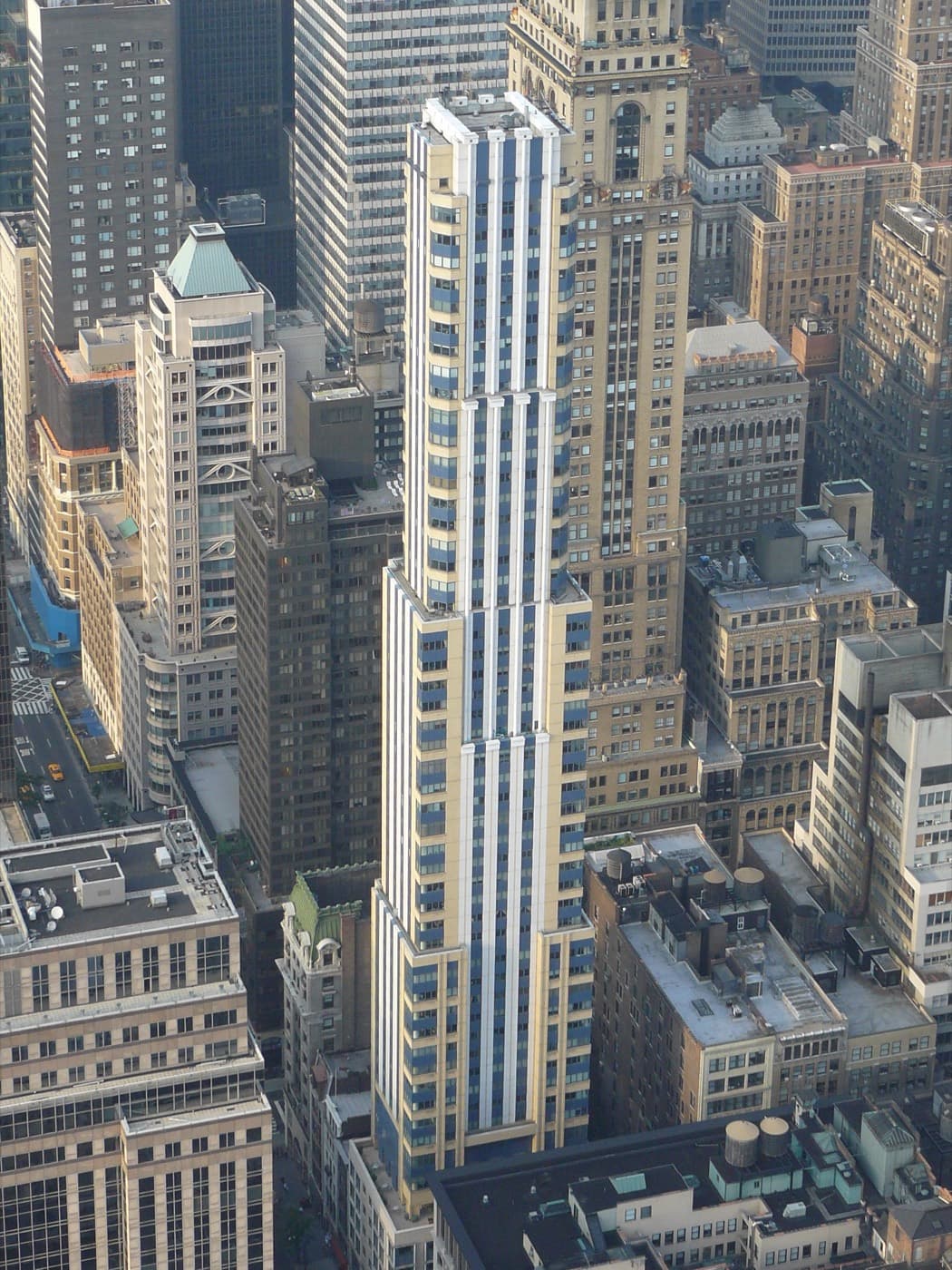
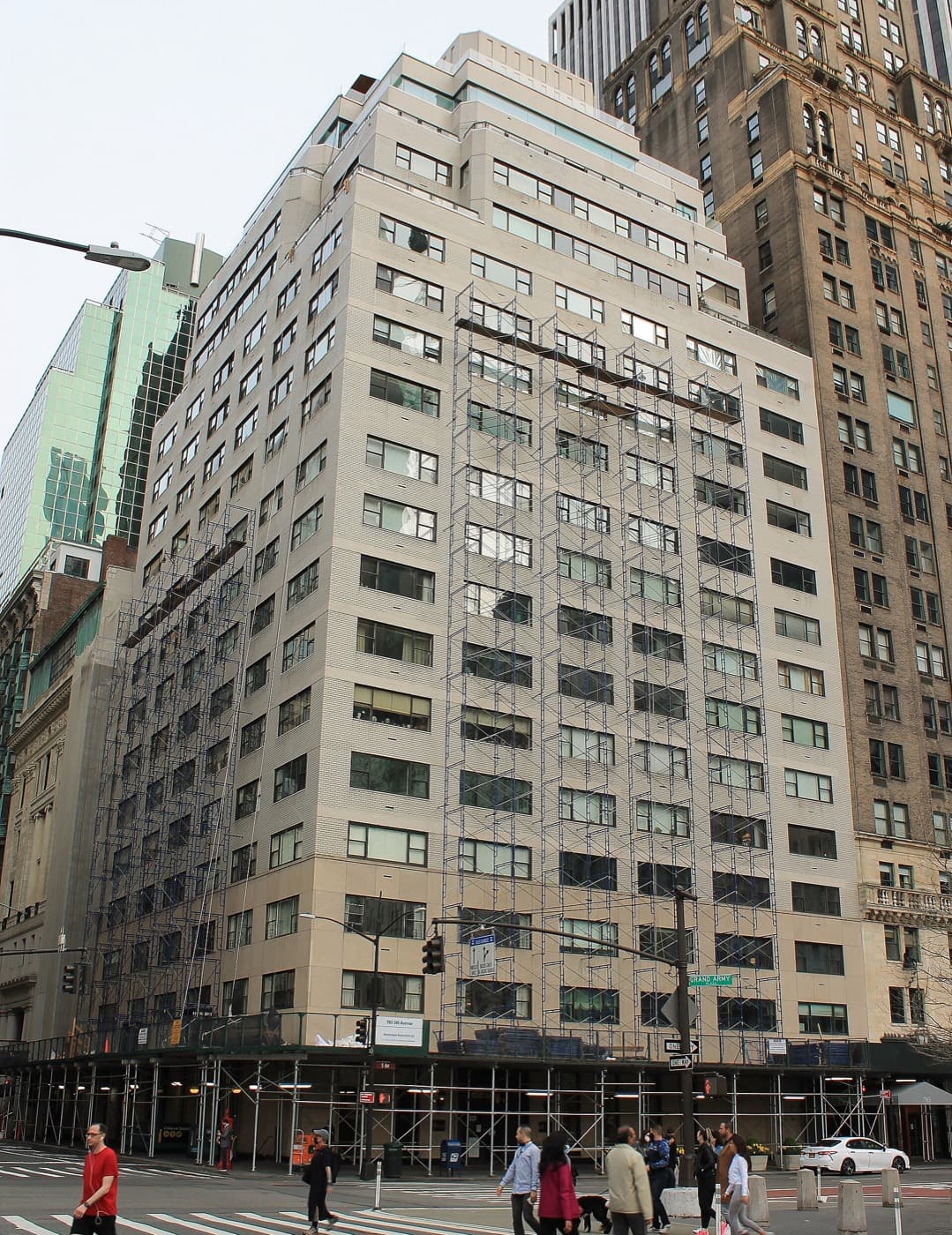
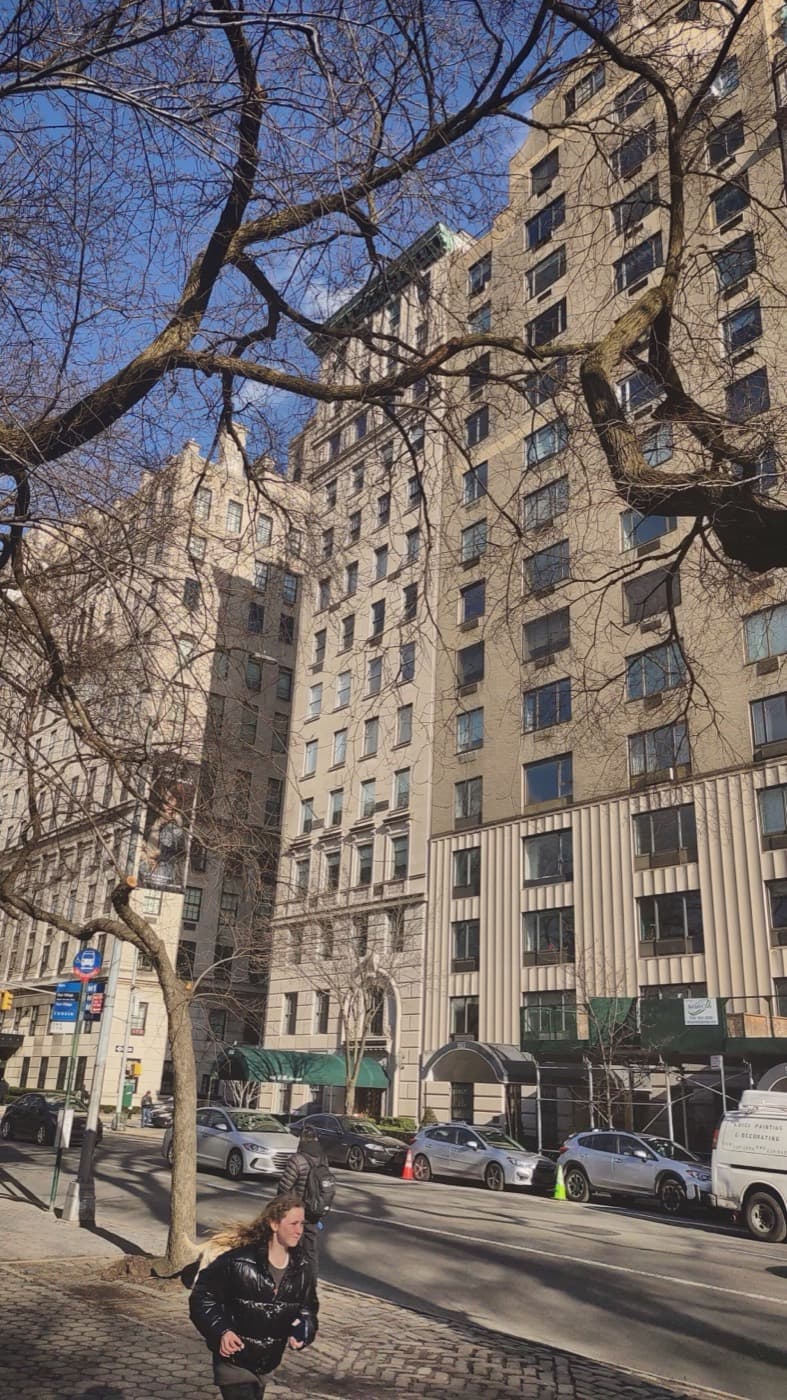
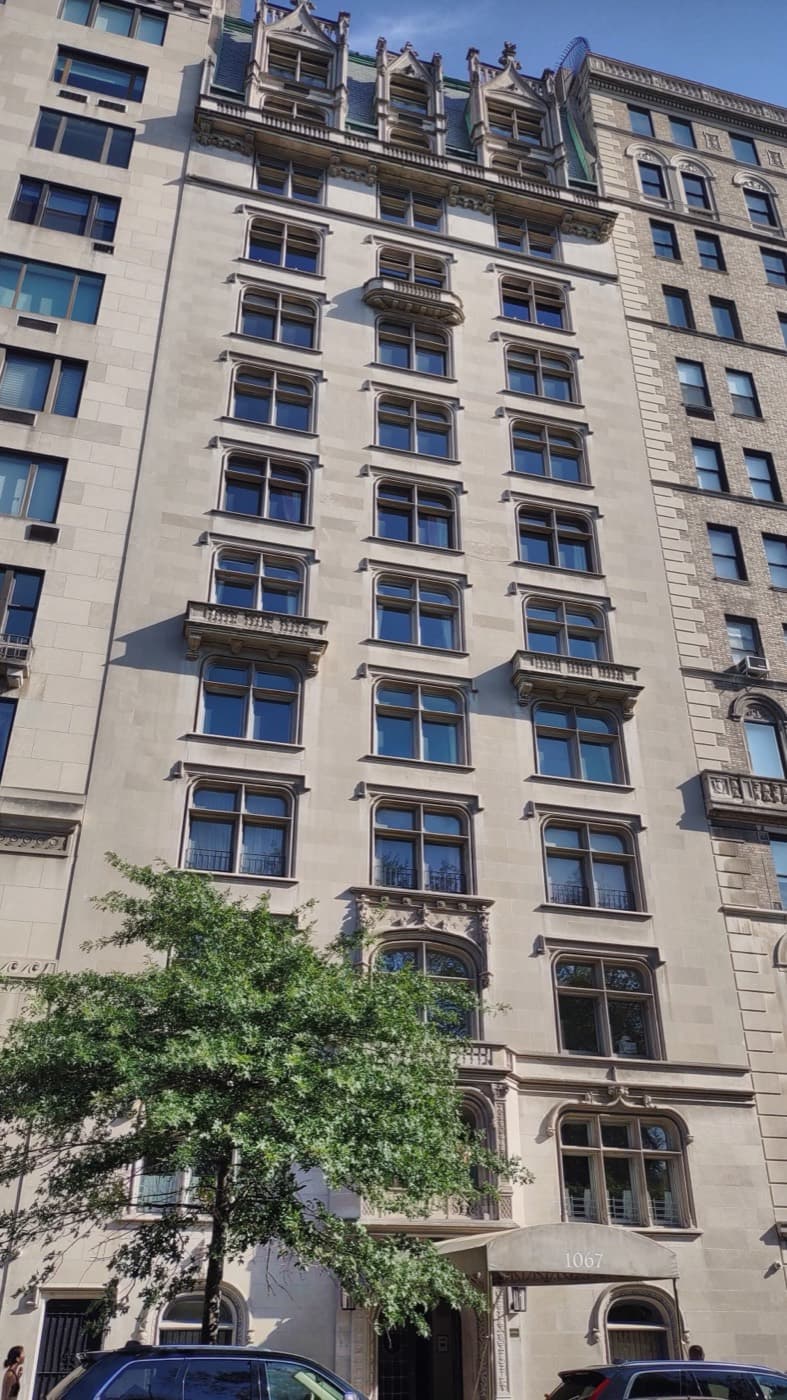
Buildings on Fifth Avenue







Tell us what you are looking for and the Roebling Research Desk will send building matches across Fifth Avenue, with pricing and diligence on each.
Get building matches sent to you →Get the corridor read on your building.
See how your apartment stacks up against the rest of Fifth Avenue, or get a market update tuned to this stretch — sent to you directly.