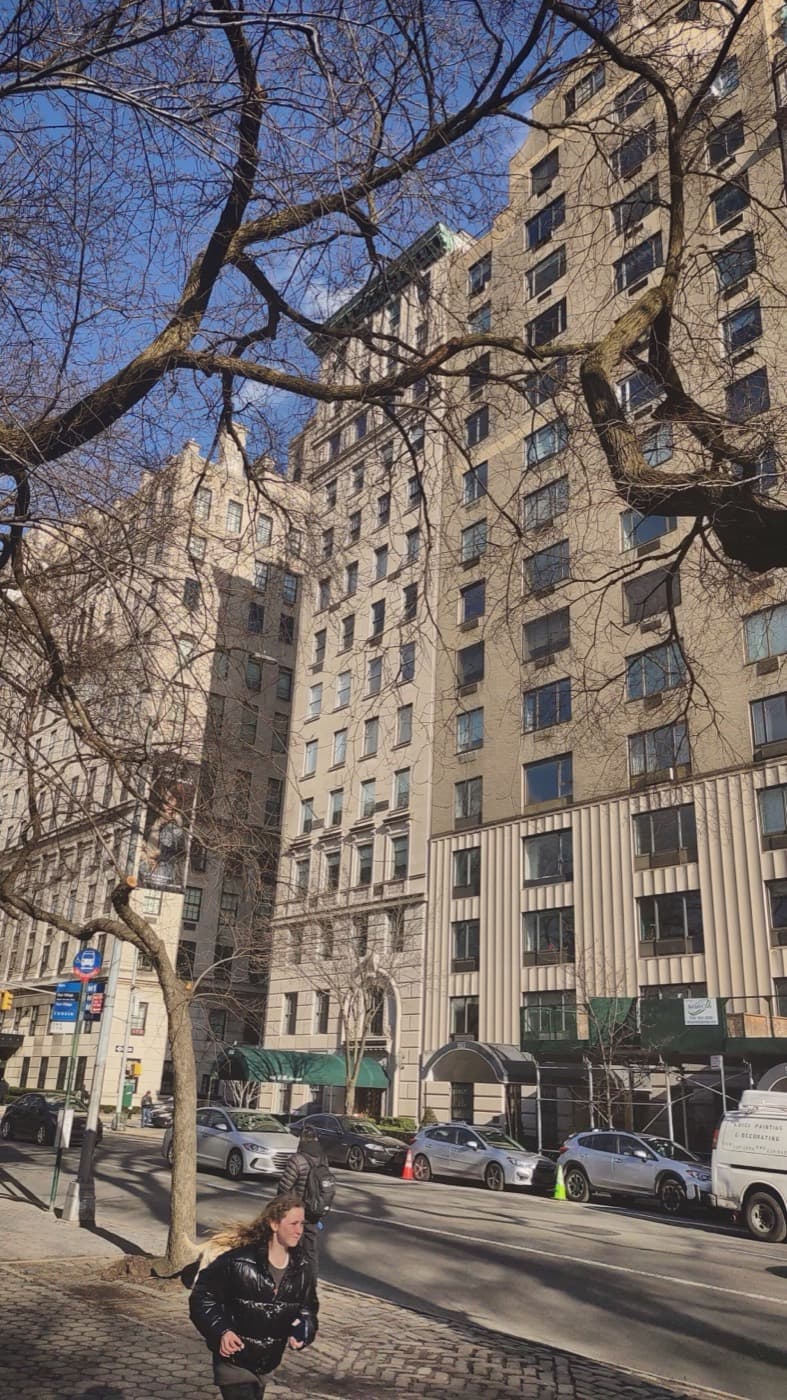
956 Fifth Avenue
956 Fifth Avenue, New York, NY 10075
Lenox Hill, Upper East Side
BBL 1013910071 · BIN 1041813
- Year built
- 1925
- Type
- Cooperative
- Landmark
- Designated
Every recorded sale at this building, 2004–2026
Bedroom-by-bedroom medians, the full transfer record, and how units trade against ask.
- 3BR median
- $7.3M
- Recent range
- $4.5M – $10M
- Listing discount
- 2.4%
- Recorded transfers
- 19
Own an apartment here? See what it would sell for.
A Private Pricing Opinion — what your apartment at 956 Fifth Avenue would likely sell for today, what it costs to sell, and what you’d walk away with — reviewed personally against condition, exposures, renovation quality, and the competition actually on the market.
956 Fifth Avenue is a limestone-clad pre-war cooperative on one of the most coveted blocks in Manhattan — Fifth Avenue between 76th and 77th, directly opposite Central Park and a short walk from The Metropolitan Museum of Art. Designed by Nathan Korn, the architect also responsible for nearby 944 Fifth Avenue, it carries a particular distinction: the building originally held a single apartment per floor, the most aristocratic of pre-war planning conventions, before several of those floors were subdivided in the 1950s into the 25 apartments it holds today.
The building's history is a small piece of Fifth Avenue lore. It was begun in 1925 as a shorter structure to conform to a 1920 zoning limit; when the courts overturned that limit and restored the avenue's earlier height allowance, the building was enlarged to its present 15-story scale. The result is a tall, slender Italianate limestone house with the proportions and detailing of the avenue's best 1920s stock.
For buyers, 956 Fifth offers the rarest pre-war combination: a full limestone facade, Central Park frontage, a one-per-floor pedigree, an exceptionally small shareholder body, and a board posture that is — by the conservative standards of upper Fifth — comparatively accommodating.
Architecture and unit composition
Korn's facade is all limestone, a more expensive and more enduring choice than the brick-over-base construction of most apartment houses of the period, and the reason the building reads as a peer to the avenue's grandest cooperatives. The composition is vertical and disciplined, with the quiet classical detailing that defines Fifth Avenue's 1920s register.
The original one-apartment-per-floor plan produced enormous homes — full-floor layouts with private elevator-landing entry, expansive entertaining rooms, and the layered service wings of grand pre-war planning. The 1950s subdivisions added a layer of half-floor and smaller residences, so the building today ranges from intimate apartments to the surviving large floor-throughs. The west-facing residences carry direct Central Park views; the address's defining luxury is the park itself, immediately across the avenue.
Building operations
956 Fifth runs as a full-service white-glove cooperative. A full-time doorman, elevator attendants, and a live-in resident manager anchor a staff scaled to a small, demanding shareholder body, with central laundry among the building's services. For 25 apartments, the staffing is generous — the operational hallmark of a boutique Fifth Avenue house.
On policy, the building is notably flexible for the corridor. Pets are permitted, pieds-à-terre are allowed, and washer/dryers are permitted — an accommodating combination for upper Fifth. A 3% flip tax is paid by the purchaser, and the cooperative permits financing of up to 25% of the purchase price, the conservative cap that signals a financially substantial, owner-occupied building. Prospective purchasers should expect a full board package and interview.
Local Law 97
- 2024–2029 annual penalty
- $0 (under cap)
- 2030–2034 annual penalty
- $12,729/yr
- Per unit / month range
- $0 – $48
Source: NYC LL84 benchmarking and PLUTO · The Roebling Research Library. City record last verified September 2026.
See full Local Law 97 analysis — emissions history, scenarios, methodology →Facade safety — Local Law 11
The latest available FISP filing classified the facade as Safe — no repairs were required at that inspection. Facade inspections run on a fixed five-year cycle; future inspection, repair, and any assessment decisions remain building-specific.
How to read this, and where it comes from
QEWI = Qualified Exterior Wall Inspector — the licensed engineer the city requires to sign the report (the independent expert, not the managing agent).
Penalties shown are amounts DOB assessed against filings on record across 2005–10 to 2020–25. The FISP dataset does not record whether they were paid, contested or remain open, so treat the figure as history rather than a current balance and confirm the building’s standing with the managing agent.
Source: NYC DOB facade filings (FISP) · The Roebling Research Library. City record last verified September 2026.
Management & transfer contacts
- Flip tax
- 3% of gross purchase price paid by buyer
- Notable fees
- Max financing 25%
Recent sales
Recent transfers at this building, curated by The Roebling Team research desk. Prices are the transfer amounts recorded with the NYC Department of Finance; apartment-level detail is checked against the building’s own file in The Roebling Research Library before publishing.
| Date | Unit | Apartment | Price | PPSF | vs. Ask |
|---|---|---|---|---|---|
| Dec 18, 2025 | 3A | 3 BR · 2.5 BA | $4,510,000 | +7.5% | |
| Nov 19, 2025 | 11 | 5 BR · 4 BA | $9,000,000 | +0.1% | |
| Sep 27, 2023 | 8 | 3 BR · 4.5 BA · 3,600 sf | $9,995,000 | $2,776/sf | -4.8% |
| Apr 17, 2023 | 14A | 2 BR · 2 BA | $4,500,000 | -6.3% | |
| Mar 1, 2018 | 4B | 2 BR · 2 BA · 1,050 sf | $1,950,000 | $1,857/sf | -2.3% |
| Aug 4, 2016 | 10 | 3 BR · 3,400 sf | $15,500,000 | $4,559/sf | -8.3% |
| Aug 7, 2013 | 12A | 3 BR | $9,375,000 | -9.9% | |
| Jul 12, 2013 | 12AB | 4 BR | $12,500,000 | -2.3% |
Market read. $/sf is measured on the latest sales with reliable square footage (2023): a median $2,776/sf across 1 sale. The building has traded as recently as 2026. Median listing discount 6.3% from the last ask — a recurring negotiation gap worth pricing into any offer or listing strategy.
The retrade record
Lines that have traded more than once in the public record — the building’s appreciation arc, apartment by apartment.
Other recent transfers
| Date | Unit | Price |
|---|---|---|
| Mar 8, 2005 | 14B | $1,395,000 |
Full closing history with price-per-square-foot over time, the complete retrade record, and every line that has traded.
Sales sourced from NYC Department of Finance recorded transfers (BBL 1-01391-0071) and verified listing data. Apartment-level facts (line, condition, asking-price context) curated and cross-verified by The Roebling Team research desk. Not all transactions cross-verify with ACRIS records — sponsor and LLC purchases sometimes record at stipulated values rather than market price; square footage on co-ops is not officially recorded, figures shown are approximate.
What to know if you’re buying
A purchase here is a pre-war cooperative purchase, but one with friendlier rules than most of its neighbors. Financing is capped at 25% — buyers need a strong cash position. The board conducts a full admissions review, including a financial package and interview, and weighs liquidity beyond the purchase price. The upside is flexibility: pieds-à-terre and pets are welcome, which opens the building to second-home buyers and to those whom stricter Fifth Avenue boards would turn away. The 3% flip tax falls to the buyer, so factor it into your acquisition budget. Buyers should also evaluate floor and exposure carefully — the gap between a full-floor park-front home and a smaller post-subdivision unit is significant.
What to know if you’re selling
Lead with the pedigree and the flexibility. A full limestone Korn facade, Central Park frontage, a one-per-floor history, and — unusually for the avenue — pied-à-terre and pet allowances are a marketing package most Fifth Avenue co-ops cannot offer. Position to the right comparable tier: large floor-throughs benchmark against the avenue's grand cooperatives, while smaller residences are best framed as a rare affordable foothold on Fifth. Disclose the flip tax and financing terms up front so qualified buyers price the deal correctly. A board-ready purchaser is the key to a clean closing — present financial strength early.
Comparable buildings
If you're considering 956 Fifth Avenue, also evaluate these nearby Fifth Avenue cooperatives:
- 944 Fifth Avenue — Nathan Korn's 1925 Fifth Avenue cooperative
- 950 Fifth Avenue — pre-war Fifth Avenue cooperative adjacent
- 955 Fifth Avenue — pre-war park-front cooperative across the avenue
- 960 Fifth Avenue — the Candela / Warren & Wetmore landmark to the north
- 965 Fifth Avenue — Fifth Avenue cooperative peer
The neighborhood
For the full corridor — architecture, schools, transit, and pricing across Fifth Avenue — read The Roebling Team Guide to Fifth Avenue.
The full playbook — what goes in the package, how boards read your financials, the interview, and the timeline — plus sample cover, reference, and personal letters you can adapt.
How to read the facts on this page. Items attributed to an offering plan describe the building as it was offered at that filing — unit mix, square footage, the amenity program as planned. They are not a statement about how the building operates today. Tax and compliance figures are sourced separately to current City records and carry their own dates. House rules, staffing and fee policy can change by board resolution without any public filing: treat every policy line here as a starting point for diligence and confirm it with the managing agent. Where this page compares one building or neighborhood to another, that is our analysis of the recorded record — it names the measure, the period and the sample it rests on, and it is an observation about medians rather than a prediction about any particular apartment.
Considering a move at 956 Fifth Avenue?
Request a private building brief with the relevant comparable sales, current and off-market availability, and an apartment-specific view of value.