Rosario Candela (1890–1953) is the most consequential architect of Manhattan's pre-war luxury apartment building. A Sicilian immigrant trained at Columbia, Candela designed an extraordinary concentration of Park Avenue and Fifth Avenue cooperatives between 1924 and 1931 — among them 720 Park, 740 Park, 770 Park, 778 Park, 1040 Fifth, 1107 Fifth, and 834 Fifth — establishing the layout vocabulary (entry gallery, library, formal dining, paneled service wing, primary suite as private quarters) that defines the tier-one prewar program. His apartment plans are studied by working brokers and buyers as the canonical reference; sellers of Candela-designed inventory typically command 20–40% per-foot premiums over peer pre-war stock of the same vintage.
The architect who designed how the rich live indoors
For roughly five years between 1927 and 1931, a Sicilian-born architect operating out of a small Manhattan office designed the apartments that would define what a luxury New York residence looked like for the next century. Rosario Candela is not the architect of a single famous building. He is the architect of the genre. When buyers today speak of a "pre-war Park Avenue apartment" — the formal entry gallery, the library that flows into the living room, the dining room positioned for service from a butler's pantry, the primary suite with dedicated closets and dressing space, the staff wing reachable through a separate entry — they are describing the floor plate Candela invented, refined, and replicated across more than seventy-five Manhattan apartment buildings during his peak working years.
The buildings themselves are familiar shorthand. 740 Park Avenue. 778 Park. 834 Fifth. 1040 Fifth. 720 Park. 770 Park. 990 Fifth. 960 Fifth. 1 Sutton Place South. 19 East 72nd Street. Each address carries its own institutional reputation, its own resident roster, its own pricing tier. The shared author is rarely the headline — but it is structurally consequential. A buyer evaluating any apartment built between roughly 1925 and 1932 in tier-one Manhattan inventory is, with high probability, evaluating a Candela design. And the value that buyer is paying for — the room logic, the proportion, the way the apartment carries itself across nearly a century — is in large part Candela's work.
This piece is a long-form look at who Candela was, what his architecture actually did, which buildings he designed in Manhattan, and how to think about a Candela apartment as a buyer in 2026. The Roebling Team at Compass maintains individual building pages for many of his most consequential commissions; this is the architect-level companion piece. Where attribution is contested across credible sources — and a few cases are — we flag the dispute rather than picking a side.
Who he was
Rosario Candela was born March 7, 1890 in Montelepre, a small town in the province of Palermo, Sicily. His father, Michele Candela, was a plasterer. Rosario emigrated to New York in 1906, returned to Italy for a period of study, and came back to the United States permanently in 1909 — arriving, according to multiple sources, with around twenty dollars in his pocket.
He gained admission to the Columbia University School of Architecture and graduated in 1915. Family lore, repeated in Andrew Alpern's canonical study of his work, records that he was so aware of his own design ability that he reportedly erected a velvet rope around his drafting table at Columbia to discourage other students from copying his projects. Whether literally true or stylized in retelling, the anecdote captures the temperament that would carry his career: rigorous, self-protective, and confident in his own technical superiority over peers.
After Columbia, Candela worked at small firms — initially Italian-American practices in Lower Manhattan, then larger New York offices — drafting tenement-class and middle-market apartment work that gave him a deep working knowledge of how apartment houses actually got built in the city. His first independent commissions in the early 1920s clustered on the Upper West Side, primarily along West End Avenue and Riverside Drive, where he designed at least seven multi-story residential buildings between roughly 1922 and 1925. These were not luxury commissions; they were the working architectural training that prepared him for the work that followed.
The break came in the mid-1920s, when developers building speculative luxury cooperatives on Park Avenue and Fifth Avenue began commissioning Candela for floor-plate work. By 1927 he was the most sought-after apartment-house designer in the city. Across 1927 and 1928 he designed approximately nineteen buildings. In 1929 alone he was credited with twenty-seven separate apartment-house designs, of which twelve were ultimately completed before the housing boom collapsed into the Depression construction trough. By his death in October 1953, he had been associated with some seventy-five Manhattan apartment buildings — a portfolio scaled larger than any peer in his generation.
A second career ran in parallel. Candela was a serious amateur cryptographer. In 1938 he published The Military Cipher of Commandant Bazeries — a book documenting his successful break of a previously unsolved nineteenth-century French military cipher. Starting in 1941 he taught a class on cryptography and cryptanalytics at Hunter College — at the time considered the only such public course in the United States. During World War II he worked for the OSS, the forerunner of the CIA. He died at age sixty-three.
The architectural argument
What did Candela actually invent, and why does it still matter when buyers evaluate his buildings nearly a century later?
The answer is the floor plate. Before Candela, the typical Manhattan luxury apartment was organized as a row of large rooms strung along a central hall — a configuration adapted from townhouse logic and stretched horizontally across a flat. The rooms were generous but the circulation was inefficient: guests passed through service zones to reach formal entertaining rooms; family members crossed entertaining zones to reach private bedrooms; staff and residents were forced to share circulation corridors. The apartment functioned more as a stretched corridor of rooms than as a coherent residence.
Candela's innovation was what Andrew Alpern called the "separation of three" — a deliberate partition of apartment space into three functional zones, each with its own circulation. Public entertaining rooms (entry gallery, living room, library, dining room) sat on one axis. Private family rooms (primary suite, secondary bedrooms) sat on a second axis. Service spaces (kitchen, butler's pantry, staff bedrooms, service entry) sat on a third. Each zone could function without crossing the others. A guest entering through the formal gallery never saw the kitchen. Staff entering through the service door never crossed the library. Family members moving between bedroom and library never traversed the service wing.
The premise produced several signature design moves that recur across the Candela portfolio. The formal entry gallery — typically a substantial room rather than a passageway, often the architectural centerpiece of the apartment — anchored arrival. Library and living room were configured as a paired suite, frequently with the library opening directly off the gallery and the living room flowing from the library. The dining room was placed adjacent to a full butler's pantry, with the pantry providing service access from the kitchen without exposing the dining room to working space. The primary suite was positioned at the apartment's most private end, often with windows on multiple exposures and substantial closet and dressing infrastructure. The service wing was reached through a separate corridor with its own elevator access, allowing domestic staff to operate without crossing family or guest circulation.
In Candela's duplex apartments — which became his architectural signature at peak commissions like 770 Park and 720 Park — the framework was vertical. The lower floor held the entertaining rooms, organized around a sweeping curved or freestanding staircase that rose from the gallery to the upper floor of bedrooms and family rooms. Soaring double-height entertaining spaces, Palladian arches at room transitions, wood-burning fireplaces (often multiple per apartment), and herringbone floors recur across the duplex inventory.
The buildings themselves carried these moves outward to their facades. Candela's exteriors are typically classical or Italian Renaissance in vocabulary — limestone-clad lower stories, brick body above, ornamented cornices, restrained but generous fenestration. Upper floors stepped back to create terraces, often copper-clad, that became one of the defining silhouettes of the pre-war Manhattan skyline. He is widely credited with helping codify the setback-and-penthouse profile that today reads as quintessentially "pre-war New York" — though he was working within zoning logic that other architects also used.
The reason the floor plate still matters is durability. A Candela apartment built in 1929 still functions as a Candela apartment in 2026. The room logic accommodates contemporary use without renovation pressure: the entry gallery still works as the social anchor; the library-living room sequence still hosts; the primary suite still organizes private life; and the service wing — even when its original kitchen has been removed and the staff rooms repurposed into closets, a home office, or a children's wing — still preserves circulation that contemporary buyers value. Apartments designed for staffed 1929 life have aged into apartments well-suited to un-staffed 2026 life, which is unusual for residential architecture of any era and a substantial contributor to the price premium that Candela buildings carry today.
The pre-Depression peak: 1929–1931
Candela's career divides cleanly into three phases. The 1920–1925 Upper West Side period was working-architect training. The 1925–1928 ramp into tier-one work produced the first Park Avenue and Fifth Avenue commissions. And then the 1929–1931 peak produced the buildings that today define the genre. Most of his most consequential work falls inside that three-year window — and the work ended abruptly when the Depression collapsed the speculative-cooperative construction market.
The Park Avenue cluster between East 70th and East 73rd Streets is the densest geographic concentration of his peak work. Walking north from 70th Street: 720 Park Avenue (1929) at the northwest corner of 70th; 740 Park Avenue (1929–1930) between 71st and 72nd; 770 Park Avenue (1929–1930) at the southwest corner of 73rd; and 778 Park Avenue (1931) at the northwest corner of 73rd. Four Candela commissions inside a four-block stretch, all designed within roughly twenty-four months. The cluster does not exist by accident — the same group of developers, brokers, and prospective owner-occupiers was active across the buildings, and Candela's reputation by 1929 was such that he was the working assumption for the floor-plate work in any speculative luxury cooperative being planned on the avenue.
720 Park is among the most architecturally refined of the four. Candela collaborated with Cross & Cross, the firm whose partner Eliot Cross had been part of the development consortium that originally acquired the site. The building's 29 apartments are architecturally heterogeneous to a degree that exceeds even Candela's other work: he later told his son Joseph that no more than three apartments in the entire building were alike, and that the customizing commissions for the original owners covered the firm's overhead by themselves. The result is a building that reads less as a coordinated cooperative and more as a collection of bespoke residences within a shared envelope.
740 Park is the most institutionally famous Candela building — the address that Michael Gross's 2005 book elevated to shorthand for the apex of American residential property. Attribution note: most contemporary sources, including the, credit the design to Rosario Candela in collaboration with Arthur Loomis Harmon — the design partner of Shreve, Lamb & Harmon, who is best known as the lead architect of the Empire State Building. A separate body of sources, including older real-estate trade press and several long-running broker-published profiles, credit the collaboration to Candela and Cross & Cross instead. (Attribution disputed.) The 31-apartment building (the number occasionally reported as 33 reflects the original sponsor plan; current cooperative ownership is 31) was developed by James T. Lee, the maternal grandfather of Jacqueline Kennedy Onassis, who himself lived in the building. John D. Rockefeller Jr.'s 20,000-square-foot triplex was among the original apartments.
770 Park — sometimes called The Sonora — is Candela's most architecturally ambitious Park Avenue floor plate. He designed the building on a deep site in an H-shaped configuration that allowed every apartment multiple exposures and substantial light access, a result that conventional rectangular floor plates of comparable scale could not have produced. The original 1929 sponsor plan called for thirty-five duplex apartments within a forty-unit building — among the highest duplex concentrations in his entire body of work. The sweeping staircases, Palladian arches, soaring ceilings, and multiple wood-burning fireplaces that recur in Candela's duplex inventory appear here in their most concentrated form.
778 Park is the conceptual outlier of the cluster. Designed in 1931 for developer Charles Newmark, the eighteen-story tower carries one apartment per floor — a configuration that places it among only a handful of Manhattan buildings where the apartment is the floor. The building also rose taller than the surrounding Park Avenue norm of fifteen stories, which had been an informal market convention rather than a zoning constraint. Brooke Astor lived in a fourteen-room duplex spanning the fifteenth and sixteenth floors until her death in 2007; Pantone founder Lawrence Herbert later listed his full-floor eleventh-floor apartment at $39.5 million.
The Fifth Avenue commissions of the same period are equally consequential. 834 Fifth Avenue (1931) is widely regarded — by The New York Observer and by the building's residents themselves — as the single most prestigious cooperative address in New York City. The 24-apartment, 16-story limestone-clad composition was one of the last luxury apartment houses completed before the Depression halted such projects in the city. Rupert Murdoch, Charles Schwab, Elizabeth Arden, and Alfred Taubman have been among its long-term residents. 1040 Fifth Avenue (1930) — twenty-seven apartments across seventeen stories with copper-clad setback penthouses — was the building where Jacqueline Kennedy Onassis lived from 1964 until her death in 1994; the apartment passed to Caroline Kennedy and John F. Kennedy Jr. before its eventual sale.
The cluster produced an unusual coincidence of architectural quality, developer ambition, and timing. Candela's peak craft, the wealth concentration of late-1920s New York, and the brief window before the construction boom collapsed combined to produce the buildings that now define the entire pre-war Manhattan luxury category. Nothing comparable was built in the city for nearly two decades after, and nothing built since has reproduced the conditions that made these commissions possible.
The Depression-era pivot
The 1929 housing peak ended quickly. By 1932 Candela's office was no longer designing speculative luxury cooperatives. The buyers who had populated the 1929–1931 sponsor plans had largely vanished from the market; developers who had carried the speculative cooperative model could not finance new projects; and the apartment-house construction industry in Manhattan contracted to a fraction of its late-1920s output. The reality affected every architect working in the genre, but it fell hardest on the practices most identified with the apex-tier work. Candela's portfolio after 1932 contains substantially fewer apartment buildings, and the ones that exist reflect a different commercial reality.
19 East 72nd Street (1937) is the canonical late-Candela commission and the building that best illustrates the Depression-era pivot. Candela collaborated with Mott B. Schmidt — the classically-trained architect best known for his upper-class private residential work — for developer and attorney John Thomas Smith. According to Smith's grandchild, quoted in a 1996 New York Times article, Schmidt was brought in specifically to "ride herd on Candela, who was thought too extreme, too Art Deco-y" for the client's taste. The building rose on the site of the Charles L. Tiffany House (McKim, Mead & White, 1882–85), which had been razed in 1936 after Louis Comfort Tiffany's 1933 death. The completed structure is a quasi-Art Deco limestone composition with restrained ornamental detailing — a building that preserves Candela's underlying floor-plate discipline but trades the lavish 1929-era ornamental program for the more economical detailing the late-1930s market would support.
The architectural restraint of 19 East 72nd Street is not weakness; it is a different commercial brief. Floor plates incorporate refinements Candela had learned across nearly two decades of high-end apartment design. Mechanical systems reflect mid-1930s improvements over 1929-era infrastructure. Apartment configurations are more efficient, with somewhat less service-wing infrastructure than the lavish 1929–1931 plans — reflecting the reality that even tier-one Depression-era residents typically maintained smaller domestic staffs than their late-1920s peers. The result is a building that captures the architect's mature design discipline at a more accessible price point than the 1929–1931 commissions, with the trade-off being the late-vintage Depression-era ornamental restraint relative to the peak.
Candela continued to take commissions through the 1940s, including alterations, additions, and small private residential work, alongside his cryptography teaching and OSS work during the war years. But the apartment-house architecture for which he is remembered was effectively complete by 1932. The 1937 building at 19 East 72nd was, in practical terms, his final major Manhattan apartment commission before the war ended speculative residential construction in the city for the duration.
A note on attribution: some published sources list 25 Sutton Place South as a 1936 Candela commission. This appears to conflate two different addresses. 25 Sutton Place (without "South"), at the corner of Sutton Place and East 56th Street, was a 1928 Candela commission. 25 Sutton Place South is a different building entirely — a 1959 postwar high-rise designed by Paul Resnick and known as Cannon Point North, with no Candela involvement. The two are sometimes confused in real-estate listings; the addresses are distinct.
Collaborators and the broader pre-war apartment-architect tradition
Candela rarely worked alone. The portfolio includes recurring collaborations with several firms whose own reputations carry weight, and the collaborations are themselves part of how to read his work.
Cross & Cross — the firm of brothers John W. Cross and Eliot Cross — partnered with Candela on 720 Park Avenue and on several Sutton Place commissions including 1 Sutton Place South (1927), 4 Sutton Place (1928), and 25 Sutton Place (1928). Cross & Cross brought a separate reputation for Manhattan commercial work (including the City Bank–Farmers Trust Building at 20 Exchange Place and the General Electric Building at 570 Lexington). Their collaborations with Candela typically saw Cross & Cross managing the building envelope and ornamental program while Candela handled the apartment-by-apartment floor-plate design — a division of labor that played to each firm's strengths.
Warren & Wetmore — the firm best known as architects of Grand Central Terminal (1903–1913) and the New York Yacht Club (1901) — collaborated with Candela on two of the most architecturally distinguished Fifth Avenue commissions of the era. 990 Fifth Avenue (1927), built on the former Woolworth Mansion site, contains only six apartments — five duplexes and one triplex — which is among the absolute lowest apartment counts of any tier-one Fifth Avenue building. 960 Fifth Avenue (1928), at the southeast corner of 77th Street on the former William A. Clark mansion site, is consistently characterized in trade press and broker commentary as among the most exclusive cooperatives in Manhattan. In both cases the division of labor followed the same logic: Warren & Wetmore managed the public-building exterior treatment; Candela handled the apartment interiors. The pairing produced exteriors that read in dialogue with the broader Carpenter / Cross & Cross / Candela Fifth Avenue tradition and interiors that carry the Candela apartment-design discipline at full scale.
Mott B. Schmidt, at 19 East 72nd Street, served the specific function described above — adding classical restraint to a Candela design the client found too aesthetically forward for the late-1930s market.
Arthur Loomis Harmon, on the disputed 740 Park attribution, would represent — if confirmed — a collaboration between the architect of America's most prestigious apartment cooperative and one of the design partners of the Empire State Building. The fact that the attribution dispute exists at all reflects how loosely the early-twentieth-century apartment-building authorship record was kept; primary documentation on the building's design team is incomplete.
The collaborations matter because they situate Candela inside the broader pre-war Manhattan apartment-architect tradition. J.E.R. Carpenter dominated Fifth Avenue from roughly 1916 through the late 1920s, designing more than thirty-five Fifth Avenue and Park Avenue buildings — a portfolio that overlaps Candela's in geography but not in floor-plate philosophy (Carpenter's plans tend toward symmetrical row-of-rooms organization rather than Candela's separation-of-three logic). George and Edward Blum designed dozens of Park Avenue and Upper East Side buildings between roughly 1907 and 1930, often featuring elaborate terra-cotta ornament that distinguishes their work from Candela's restrained limestone-and-brick exteriors. Cross & Cross themselves designed independent Park Avenue and Fifth Avenue commissions during the same period. The pre-war Manhattan luxury apartment, as buyers encounter it today, was built by a generation of architects working within a shared market — but Candela's specific floor-plate logic is what most contemporary buyers recognize as defining of the genre, which is why his name has carried forward as the architect most identified with the era.
The canonical reference for the entire group is Andrew Alpern's The New York Apartment Houses of Rosario Candela and J.E.R. Carpenter, originally published by Acanthus Press in 2002 with essays by David Netto and Christopher Gray (whose New York Times "Streetscapes" columns remain the most consistently reliable trade-press source on the pre-war Manhattan apartment-house record). Buyers and brokers working seriously in this tier of inventory typically have a copy on the shelf.
Buying a Candela today: what to know
Several practical considerations follow from Candela authorship that buyers should weight at the apartment level.
Board posture follows the building's institutional culture, not the architect's signature. A Candela building is not, by virtue of being a Candela building, a particular kind of cooperative. 740 Park's board is famously the most rigorous in New York. 1040 Fifth's board operates somewhat more flexibly. 720 Park permits trust purchases; 778 Park explicitly prohibits them. The architecture is shared; the institutional posture varies materially building-by-building. Approach board approval through building-specific research, not architect-level generalization.
Pricing tiers within the Candela corpus are wider than buyers often assume. At the apex — full-floor or duplex configurations at 740 Park, 778 Park, 834 Fifth, or 990 Fifth — apartments routinely transact between $20 million and $50 million, with rare combinations and renovated full-floor inventory transacting higher. In the middle tier — typical apartments at 770 Park, 720 Park, 1040 Fifth, or 960 Fifth — pricing ranges from approximately $8 million to $25 million. At the more accessible end — apartments at 775 Park, 19 East 72nd, or smaller Candela commissions on the Upper East Side and Upper West Side — pricing can begin in the low-to-mid single-digit millions for 2-3 bedroom configurations. The shared architect provides design quality across the portfolio; the price differential reflects building scale, floor plate, address, board posture, and view envelope.
View permanence is generally excellent across Park Avenue and Fifth Avenue Candela inventory. The corridors are built out; Central Park anchors Fifth Avenue exposures; Park Avenue's median plantings and corridor regularity stabilize views. Carnegie Hill and Lenox Hill side-street Candela work has more variable view permanence depending on the specific site.
Renovation is constrained by historic district status almost universally. Most of the Candela tier-one corpus sits within either the Upper East Side Historic District or the Metropolitan Museum Historic District. Substantial renovation is feasible but must respect the architectural character; modern overhauls that erase pre-war detail are not approved by either the boards of these buildings or by Landmarks Preservation Commission review where applicable. Buyers planning extensive renovation should understand the cultural expectation: renovation should reinforce the building's character, not modernize it.
The architect-level credential carries marketing weight that buyers attentive to apartment quality should weight accordingly. Candela authorship is a real differentiator within the broader pre-war Manhattan inventory — and it is widely recognized across the brokerage profession, the architectural-historical literature, and the secondary-market buyer pool. Apartments in Candela buildings retain value across cycles more reliably than peer pre-war inventory by architects with weaker market recognition. The premium is real, modest in any individual transaction, and durable across long holding periods.
Apartment-level heterogeneity within Candela buildings is high. Candela's interior design discipline produced apartments that vary substantially in configuration, layout, and condition across decades of combinations and renovations. Comparable analysis at the apartment-configuration level is essential. The "Candela apartment" you are evaluating is its specific apartment, not a generic representative of the architect's portfolio.
Common pitfalls. Buyers occasionally assume Candela authorship from period or address proximity without verifying — a particular trap on Fifth Avenue, where Carpenter dominates, and on Park Avenue, where Carpenter, Cross & Cross, Blum brothers, and Schwartz & Gross all designed adjacent buildings. Confirm authorship building-by-building with the building's offering plan, the relevant historic district designation report, or Alpern's canonical reference. The Roebling Team building profiles cross-checked above are also a reliable starting point for the specific addresses in our index.
Working with The Roebling Team
The Roebling Team at Compass specializes in Central Park West, the Upper East Side, and the broader Park-facing Manhattan market — which includes a substantial concentration of Candela's most consequential commissions. We publish individual building pages for many of the buildings discussed above, and we maintain working transactional context on the others. If you are considering a purchase or sale at a Candela building — at any tier of the portfolio — a thirty-minute consultation is the right starting point. We bring building-specific context (architecture, board culture, transactional mechanics, pricing at the apartment level) plus the comparative perspective across the broader Candela corpus that buyers and sellers need to make informed decisions in this tier of inventory.
Corey Cohen, Principal The Roebling Team at Compass 646.939.7375 · c.cohen@compass.com
Run the numbers
- Mansion Tax Calculator — at Candela-building pricing, multiple cliff thresholds routinely apply
- Buyer Closing Cost Calculator
- Seller Closing Cost Calculator
Related building profiles
- 720 Park Avenue — Candela / Cross & Cross 1929
- 740 Park Avenue — Candela with Cross & Cross or Arthur Loomis Harmon, 1929–1930 (attribution disputed)
- 775 Park Avenue (765 Park) — Candela 1927
- 770 Park Avenue — Candela 1929–1930
- 778 Park Avenue — Candela 1931
- 19 East 72nd Street — Candela / Mott B. Schmidt 1937
- 834 Fifth Avenue — Candela 1931
- 990 Fifth Avenue — Candela / Warren & Wetmore 1927
- 960 Fifth Avenue — Candela / Warren & Wetmore 1928
- 1040 Fifth Avenue — Candela 1930
Related guides
- Manhattan Co-op Buying Guide — Pillar 4 — board approval mechanics in detail
- Park-Facing Apartments Guide — Pillar 5
- NYC Real Estate Tax & Closing Cost Guide — Pillar 3
This page reflects publicly available information and The Roebling Team transaction experience. The Roebling Team at Compass does not represent any individual building's management, board, or sponsor. Sources triangulated across, Friends of the Upper East Side Historic Districts, the Museum of the City of New York's 2018 "Elegance in the Sky" exhibition materials, Christopher Gray's New York Times "Streetscapes" reporting, and Andrew Alpern's The New York Apartment Houses of Rosario Candela and J.E.R. Carpenter (Acanthus Press, 2002). Where credible sources disagree on attribution, the dispute is flagged in the body of the piece rather than resolved. © 2026 The Roebling Team at Compass.
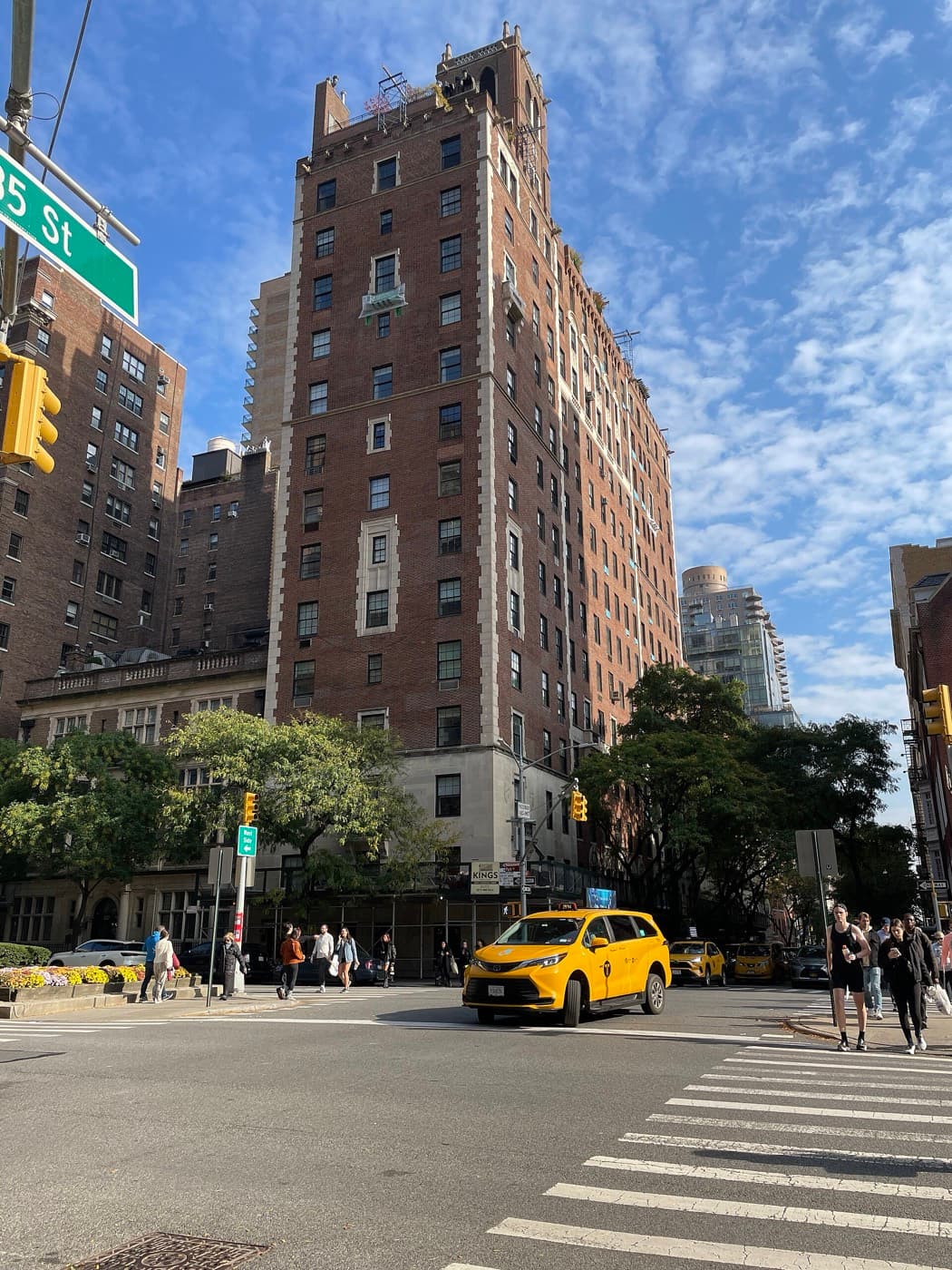
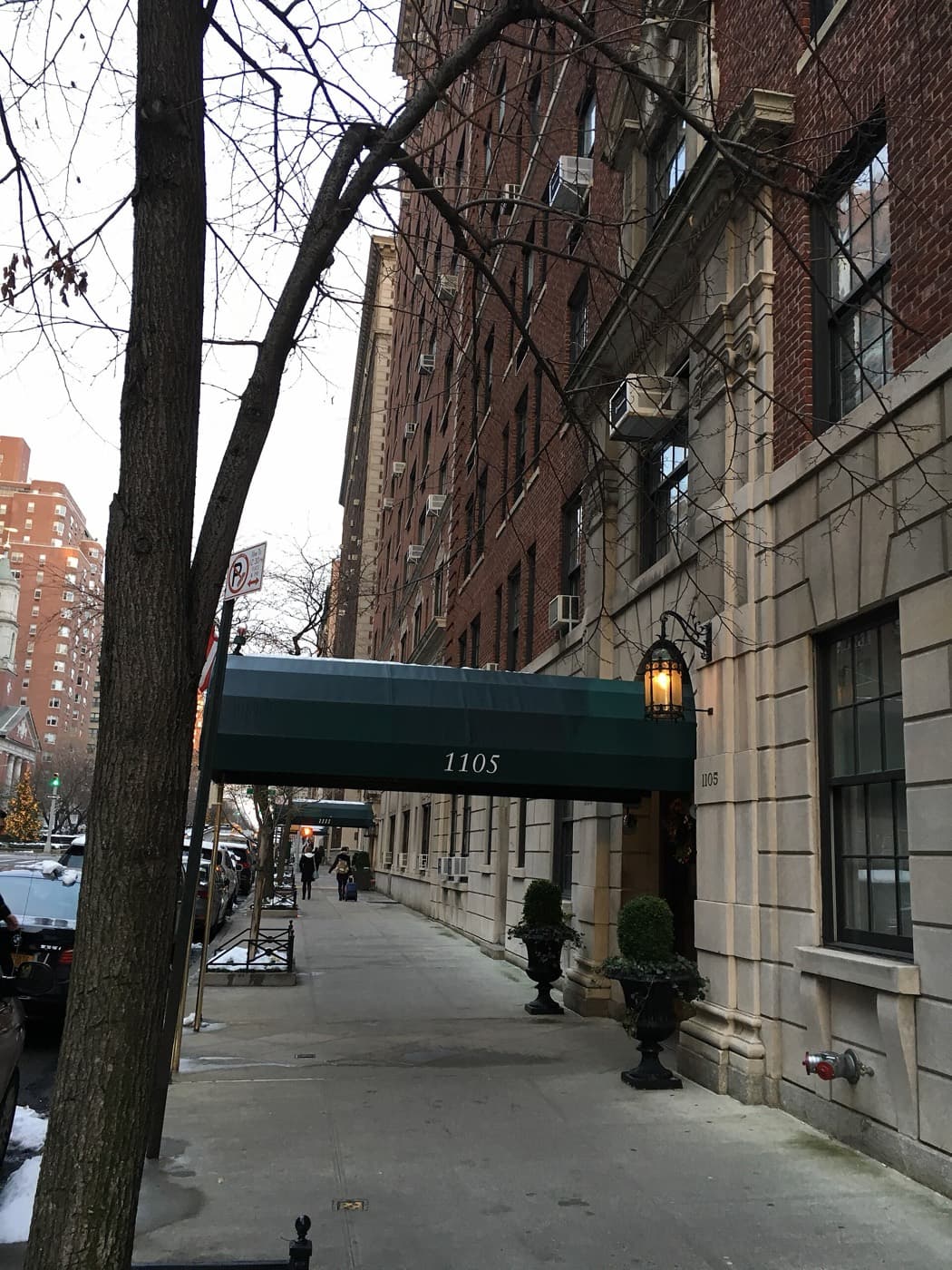
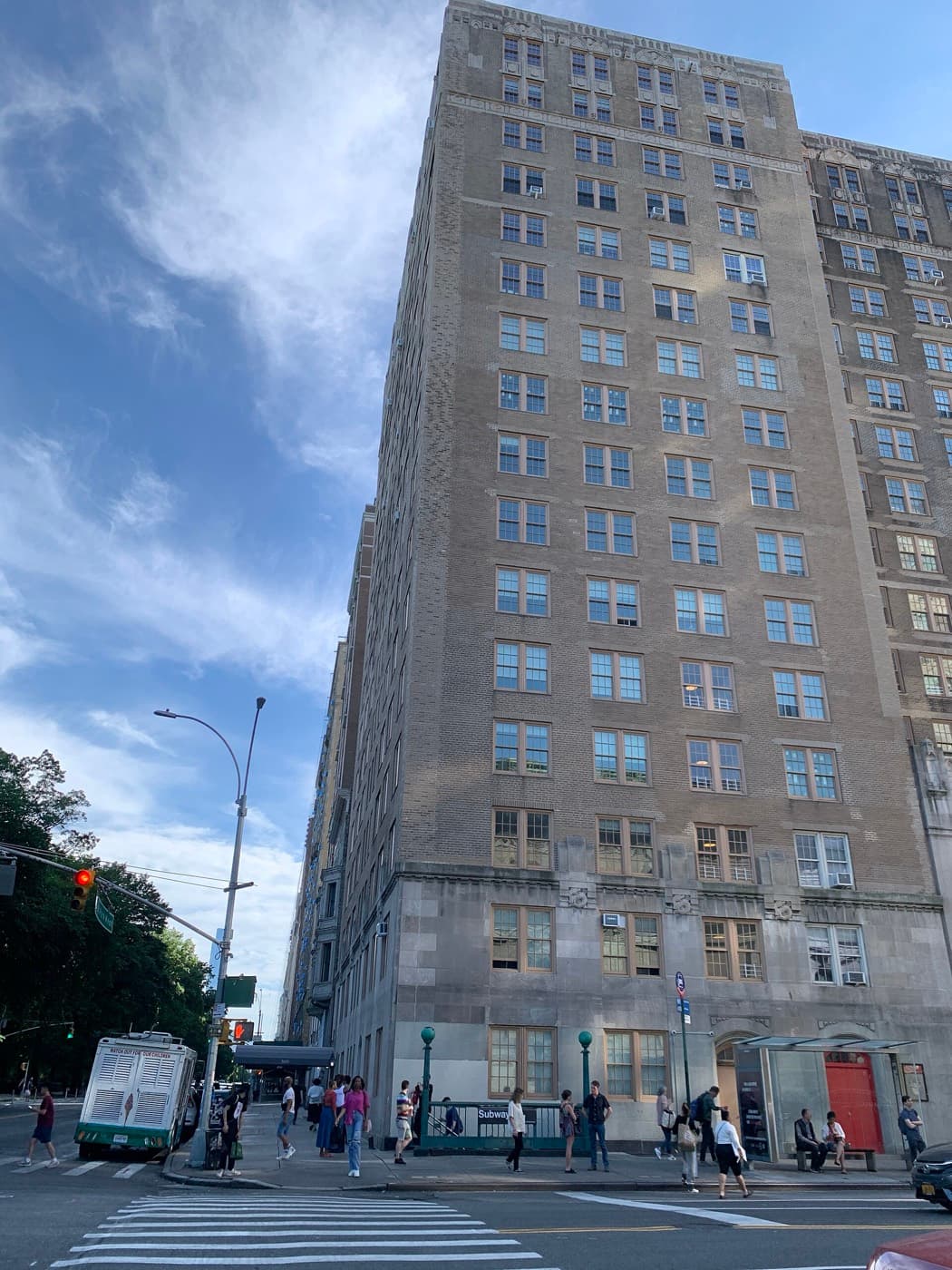
Buildings designed by Rosario Candela





The drawings are public. The rest isn't.
How these buildings have actually traded, which lines deliver what the plans promise, and how each board handles financing and approvals.