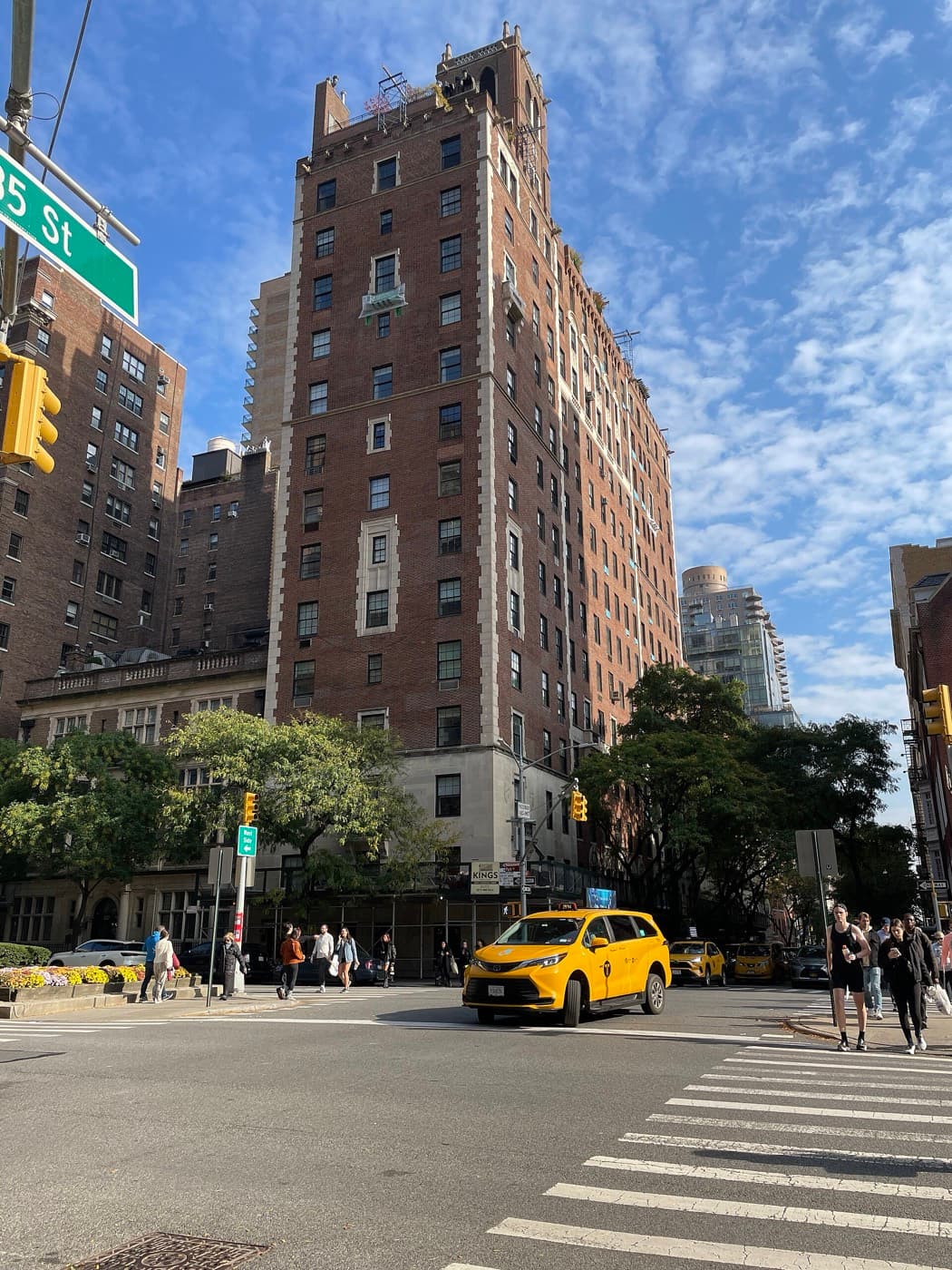
1021 Park Avenue
1021 Park Avenue, New York, NY 10028
Upper East Side
BBL 1015140001 · BIN 1047926
- Year built
- 1929
- Type
- Cooperative
- Landmark
- Designated
Every recorded sale at this building, 2003–2025
Bedroom-by-bedroom medians, the full transfer record, and how units trade against ask.
- Recent range
- $500K – $5M
- Listing discount
- 9.4%
- Recorded transfers
- 26
Own an apartment here? See what it would sell for.
A Private Pricing Opinion — what your apartment at 1021 Park Avenue would likely sell for today, what it costs to sell, and what you’d walk away with — reviewed personally against condition, exposures, renovation quality, and the competition actually on the market.
1021 Park Avenue is a Rosario Candela building — and on Park Avenue, that is the highest pedigree there is. Completed in 1929 at the northeast corner of East 85th Street, with Kenneth M. Murchison and built by the Campagna organization, it belongs to the small canon of Carnegie Hill cooperatives that define pre-war Park Avenue living. What sets it apart even among Candela's work is its face: a genuinely dramatic neo-Gothic façade, complete with gargoyles, heraldic shields, and a crenellated parapet crowning the penthouse — a flourish rare on an avenue better known for restraint.
The building's appeal is the rare combination of architecture and intimacy. At just 27 apartments across 15 stories, 1021 Park is small even by Carnegie Hill standards, which means privacy, low density, and a board and staff that know every household. The layouts are Candela layouts — gracious, intelligently planned, with the proportions that make pre-war Park Avenue the benchmark against which the rest of Manhattan is measured.
Architecture and unit composition
The neo-Gothic detailing is the signature. Where most of Park Avenue's pre-war stock works in a quiet classical register, 1021 reaches for ornament — the gargoyles, shields, and battlemented crown give the building a silhouette that reads from blocks away. Behind that face, Candela's planning does the quieter work: well-scaled entrance galleries, formal rooms arranged for entertaining, and the room counts that pre-war Park Avenue buyers come for.
With 27 residences over 15 floors, the building runs low-density, and a recent program of capital work modernized the infrastructure — the basement was rebuilt to add a private storage room for every apartment, a renovated common laundry, a fitness center, and upgraded mechanicals with the capacity to convert from oil to gas. The position within the Carnegie Hill Historic District protects the building and its surroundings.
Building operations
1021 Park Avenue is run as a white-glove cooperative: a 24-hour doorman and a live-in resident manager, with a fitness center and per-apartment storage on premises. Financing is conservative by design — permitted up to 50% of the purchase price — and a 2.5% flip tax is paid by the purchaser at closing. The building is pet-friendly. Pieds-à-terre, co-purchasing, and parents purchasing for adult children are permitted, the latter typically considered case-by-case — a more flexible posture than many Park Avenue boards, though primary residence remains the building's center of gravity. Purchases clear through a full board application and interview.
Local Law 97
- 2024–2029 annual penalty
- $0 (under cap)
- 2030–2034 annual penalty
- $13,572/yr
- Per unit / month range
- $0 – $40
Source: NYC LL84 benchmarking and PLUTO · The Roebling Research Library. City record last verified September 2026.
See full Local Law 97 analysis — emissions history, scenarios, methodology →Facade safety — Local Law 11
The latest available filing classified the facade as SWARMP — Safe With A Repair and Maintenance Program: the engineer identified conditions requiring monitoring or repair before the next inspection cycle. The scope, timeline, and how the building funds the work are building-specific — we review the filings and board materials for you.
How to read this, and where it comes from
QEWI = Qualified Exterior Wall Inspector — the licensed engineer the city requires to sign the report (the independent expert, not the managing agent).
Source: NYC DOB facade filings (FISP) · The Roebling Research Library. City record last verified September 2026.
Management & transfer contacts
- Flip tax
- 2.5% of purchase price, paid by purchaser at closing
- Sublet policy
- Allowed but discouraged; case by case
- Pied-à-terre
- Allowed
- Notable fees
- Managing Agent's Fee $900 (individual) / $1000 (estate); Max financing 50%; no purchases into trusts
Recent sales
Recent transfers at this building, curated by The Roebling Team research desk. Prices are the transfer amounts recorded with the NYC Department of Finance; apartment-level detail is checked against the building’s own file in The Roebling Research Library before publishing.
| Date | Unit | Apartment | Price | PPSF | vs. Ask |
|---|---|---|---|---|---|
| Jul 1, 2025 | 9A | 2 BR · 3 BA | $2,900,000 | -9.4% | |
| Jun 24, 2024 | 13D | 3 BR · 3 BA · 2,200 sf | $1,500,000 | $682/sf | off-mkt |
| Feb 23, 2023 | 105 | 1 BR · 1 BA | $500,000 | -16.0% | |
| Jan 26, 2023 | 4 | 3 BR · 4.5 BA | $4,975,000 | +0.0% | |
| Jul 6, 2022 | 6 | 3 BR · 5.5 BA | $4,700,000 | -5.6% | |
| Oct 21, 2021 | 5C | 5 BR · 4 BA | $5,405,000 | -9.2% | |
| Sep 13, 2021 | 6 | 5 BR · 6.5 BA | $8,350,000 | -12.1% | |
| Apr 2, 2019 | 3C | 4 BR · 5 BA | $6,050,000 | -5.5% |
Market read. $/sf is measured on the latest sales with reliable square footage (2024): a median $682/sf across 1 sale. The building has traded as recently as 2025. Median listing discount 5.6% from the last ask — a recurring negotiation gap worth pricing into any offer or listing strategy.
Other recent transfers
| Date | Unit | Price |
|---|---|---|
| Nov 4, 2004 | PHC | $3,850,000 |
| Jun 20, 2003 | 4 | $5,200,000 |
Full closing history with price-per-square-foot over time, the complete retrade record, and every line that has traded.
Sales sourced from NYC Department of Finance recorded transfers (BBL 1-01514-0001) and verified listing data. Apartment-level facts (line, condition, asking-price context) curated and cross-verified by The Roebling Team research desk. Not all transactions cross-verify with ACRIS records — sponsor and LLC purchases sometimes record at stipulated values rather than market price; square footage on co-ops is not officially recorded, figures shown are approximate.
What to know if you’re buying
Capital is the gate. Financing is capped at 50%, so plan for at least half the purchase price in cash plus the post-closing liquidity a Park Avenue board expects to see. A 2.5% flip tax, paid by the buyer at closing, is part of your cost basis — budget it from the start. The building is more flexible than most on use: pieds-à-terre and co-purchasing are permitted, and parents buying for children are considered case-by-case, which widens the field of qualified buyers. The building is pet-friendly. Expect a rigorous board package and interview — this is a Candela building with a discerning board. The reward is a low-density, architecturally distinctive home in one of Carnegie Hill's most recognizable buildings.
What to know if you’re selling
Lead with the name and the face. "Rosario Candela" and the building's neo-Gothic crown are durable marketing assets that distinguish a sale here from the quieter pre-war stock around it. The use flexibility is a selling point — that pieds-à-terre and co-purchasing are permitted broadens your buyer pool relative to stricter Park Avenue boards. Price to the Carnegie Hill Candela tier, not the broader avenue — the relevant comparison set is the neighborhood's pedigreed pre-war cooperatives. Prepare buyers for a serious board. A fully documented, liquidity-strong package is essential; we help sellers vet buyers for board-readiness before accepting an offer so a transaction at this level doesn't stall.
Comparable buildings
If you're considering 1021 Park Avenue, also evaluate nearby Carnegie Hill and Park Avenue cooperatives:
- 1020 Park Avenue — pre-war cooperative directly across the avenue
- 1025 Park Avenue — Carnegie Hill co-op a block north
- 1036 Park Avenue — pre-war Park Avenue cooperative peer
- 1000 Park Avenue — full-service pre-war co-op to the south
- 1100 Park Avenue — Carnegie Hill cooperative on the avenue
The neighborhood
For the full corridor — architecture, schools, transit, and pricing across Park Avenue — read The Roebling Team Guide to Park Avenue.
The full playbook — what goes in the package, how boards read your financials, the interview, and the timeline — plus sample cover, reference, and personal letters you can adapt.
How to read the facts on this page. Items attributed to an offering plan describe the building as it was offered at that filing — unit mix, square footage, the amenity program as planned. They are not a statement about how the building operates today. Tax and compliance figures are sourced separately to current City records and carry their own dates. House rules, staffing and fee policy can change by board resolution without any public filing: treat every policy line here as a starting point for diligence and confirm it with the managing agent. Where this page compares one building or neighborhood to another, that is our analysis of the recorded record — it names the measure, the period and the sample it rests on, and it is an observation about medians rather than a prediction about any particular apartment.
Considering a move at 1021 Park Avenue?
Request a private building brief with the relevant comparable sales, current and off-market availability, and an apartment-specific view of value.