
Upper West Side
The Upper West Side is the broader west-side residential market beyond Central Park West, spanning Lincoln Square, Broadway, Columbus, Amsterdam, West End Avenue, Riverside Park, and the neighborhood's deep stock of family-sized co-ops and condos.
What Upper West Side is selling for
Movement of the annual median — not adjusted for transaction mix. Which apartments happened to trade (size, floor, condition, line) moves these as much as value does; the sample behind each is shown beneath it.
Two markets, one neighborhood. Since 2016, Upper West Side condos are down 6% and co-ops up 2% on paper — but after inflation, −29.6% and −23.8% in real terms.
Movement of the annual median — not adjusted for transaction mix. Which apartments happened to trade (size, floor, condition, line) moves these as much as value does; the sample behind each is shown beneath it.
Method & coverage
Method. Condos are measured per square foot, co-ops per room (room counts from listing data; sales without a usable room count are excluded). The percentages are movement of the annual median — not a constant-quality or repeat-sale index — so transaction mix moves them as well as value. Real-terms figures deflate that same median by CPI.
Coverage. 26,084 recorded sales. Before the figures above, 242 non-arms-length transfers (nominal estate, gift, or intra-family deeds and mis-recorded bulk filings) and 57 duplicate records of the same deed (a combined apartment or penthouse recorded under more than one unit label) were removed. Corridors may overlap — a sale can appear in both a neighborhood set and a narrower avenue set. Recorded transfers via NYC Department of Finance, enriched by The Roebling Research Library.
Upper West Side rents
Upper West Side rents are up 6.4% in January–September 2026, against the same months of 2025. 2025 was +7.4%, 2024 +4.0%, 2023 +1.9%.
The same apartments, lease to lease, each year against the year before (11,731 lease-to-lease comparisons). 2026 compares January–September with January–September 2025. The latest months can move as late-reported leases arrive.
| Size | 2023 | 2024 | 2025 | 2026 YTD |
|---|---|---|---|---|
| All sizes | $761,329 leases+0.4% | $811,343 leases+5.8% | $871,251 leases+8.3% | $91991 leases+4.3% |
| Studio | $91167 leases+3.8% | $86153 leases−4.8% | $97162 leases+12.1% | $97163 leases+0.1% |
| 1 bedroom | $74619 leases+0.1% | $79641 leases+6.3% | $84560 leases+6.6% | $88476 leases+4.8% |
| 2 bedroom | $74391 leases+1.3% | $79393 leases+6.4% | $87393 leases+9.6% | $91263 leases+4.8% |
| 3 bedroom+ | $83152 leases+7.0% | $86156 leases+3.9% | $97136 leases+13.0% | $10689 leases |
Median rent per square foot per year, from closed leases that report square footage. 2026 is January–September.
| Size | 2023 | 2024 | 2025 | 2026 YTD |
|---|---|---|---|---|
| All sizes | $1,300177 leases+6.4% | $1,300184 leases0.0% | $1,567132 leases+20.5% | $1,517110 leases−3.2% |
| Studio | $1,475*19 leases | $1,40031 leases | $1,650*17 leases | $1,672*14 leases |
| 1 bedroom | $1,25087 leases | $1,27088 leases | $1,45070 leases | $1,50464 leases |
| 2 bedroom | $1,25560 leases | $1,25051 leases | $1,55036 leases | $1,440*25 leases |
| 3 bedroom+ | $1,429*11 leases | $1,792*14 leases | — | — |
Median monthly rent per room, co-op sublets. 2026 is January–September. * Fewer than 30 leases.
Compiled by The Roebling Team at Compass from closed leases, through September 2026. Figures are indicative, not an appraisal. The Roebling Index
Within Upper West Side
Upper West Side spans several distinct residential corridors, each with its own character and pricing. Explore them individually — every building below is part of Upper West Side.
The residential west-side neighborhood between Central Park West and the Hudson River, anchored by Lincoln Square at its southern edge and stretching north past 110th Street into Morningside Heights. The Upper West Side proper sits between Central Park West and Riverside Drive, with the Broadway / Columbus / Amsterdam / West End Avenue grid running north-south through its core.
The corridor's argument
The Upper West Side is the cultural residential corridor of Manhattan — the largest concentration of substantial pre- and post-war full-service apartment buildings off the avenue trophy tier, supported by Lincoln Center, Riverside Park, the Museum of Natural History, the Beacon Theatre, Symphony Space, and the substantial daily-life infrastructure (Zabar's, Fairway, Citarella, Whole Foods, the four Trader Joe's within walking distance) that the avenue-trophy corridors do not match at the same density.
Three sub-corridors define the residential inventory:
- Lincoln Square — south of 70th Street, anchored by Lincoln Center, with substantial post-war full-service co-op and condo inventory (Lincoln Plaza, Lincoln Towers, the Park Laurel, Fifty West 66) plus the legacy pre-war buildings on the side streets
- Central Upper West Side — 70th through 86th Streets, the deepest concentration of pre-war full-service co-op inventory off Central Park West and West End Avenue
- Upper Upper West Side — 86th Street through 110th, with the Broadway / West End / Riverside Drive prewar inventory extending north into Morningside Heights
Inventory shape
The Upper West Side residential inventory is broader in tier-range than the more uniform Park Avenue or Central Park West corridors. The corridor carries:
- Pre-war full-service co-ops on the side streets and West End Avenue — substantial 1920s and 1930s buildings with full doormen, large floor plates, and the architectural register of the broader pre-war Manhattan apartment-building canon
- Post-war full-service co-ops in Lincoln Square and on the Broadway / Columbus / Amsterdam grid — 1950s through 1980s buildings with 24-hour staffing and full amenity programs
- Contemporary new-construction condominiums clustered in Lincoln Square and along Broadway — the Robert A.M. Stern-designed 15 Central Park West and Park Avenue Hotel-tier inventory representing the corridor's apex condo tier
- Brownstone and townhouse inventory on the side streets — the residential character that defines the corridor's pre-war architectural fabric
Daily-life and transit
The Upper West Side's amenity density distinguishes it from every other Manhattan residential corridor:
- Cultural anchors — Lincoln Center (Metropolitan Opera, New York Philharmonic, Juilliard, Lincoln Center Theater, the David H. Koch Theater), the American Museum of Natural History at 79th and Central Park West, the Beacon Theatre on Broadway and 74th, Symphony Space on Broadway and 95th, the New-York Historical Society at 77th
- Park access — Central Park along the eastern boundary; Riverside Park (the Olmsted-designed waterfront park on the western boundary running approximately 70 blocks)
- Dining anchors — Zabar's (80th and Broadway), Citarella (75th and Broadway), Fairway, the four neighborhood Trader Joe's, and the Whole Foods at 87th and Columbus
- Transit — the 1 train along the Broadway spine; the 2/3 express at 72nd and 96th; the B/C local along Central Park West; the M5/M7/M10/M11/M104 bus network blanketing the corridor
Schools
The Upper West Side carries substantial public-school and independent-school infrastructure. Multiple private schools sit within the corridor (Trinity, Collegiate, Calhoun, the Lycée, the Mandell School).
Comparable to
The Upper West Side reads as the post-war full-service + pre-war substantial-inventory cooperative cohort that contrasts with:
- Central Park West — the Park-facing avenue itself, anchored by the Emery Roth twin-tower icons and the broader CPW pre-war landmark inventory
- Upper East Side — the Park-facing east-side corridor, a more uniformly pre-war and trophy-tier residential inventory at substantially higher pricing
- Park Avenue — the trophy-tier UES residential spine, a different price tier and a different architectural register
Buyers evaluating the Upper West Side against these alternatives are typically choosing the broader inventory range + cultural amenity density + more accessible pricing that the corridor delivers relative to the trophy-tier avenue alternatives.
Buildings across Upper West Side


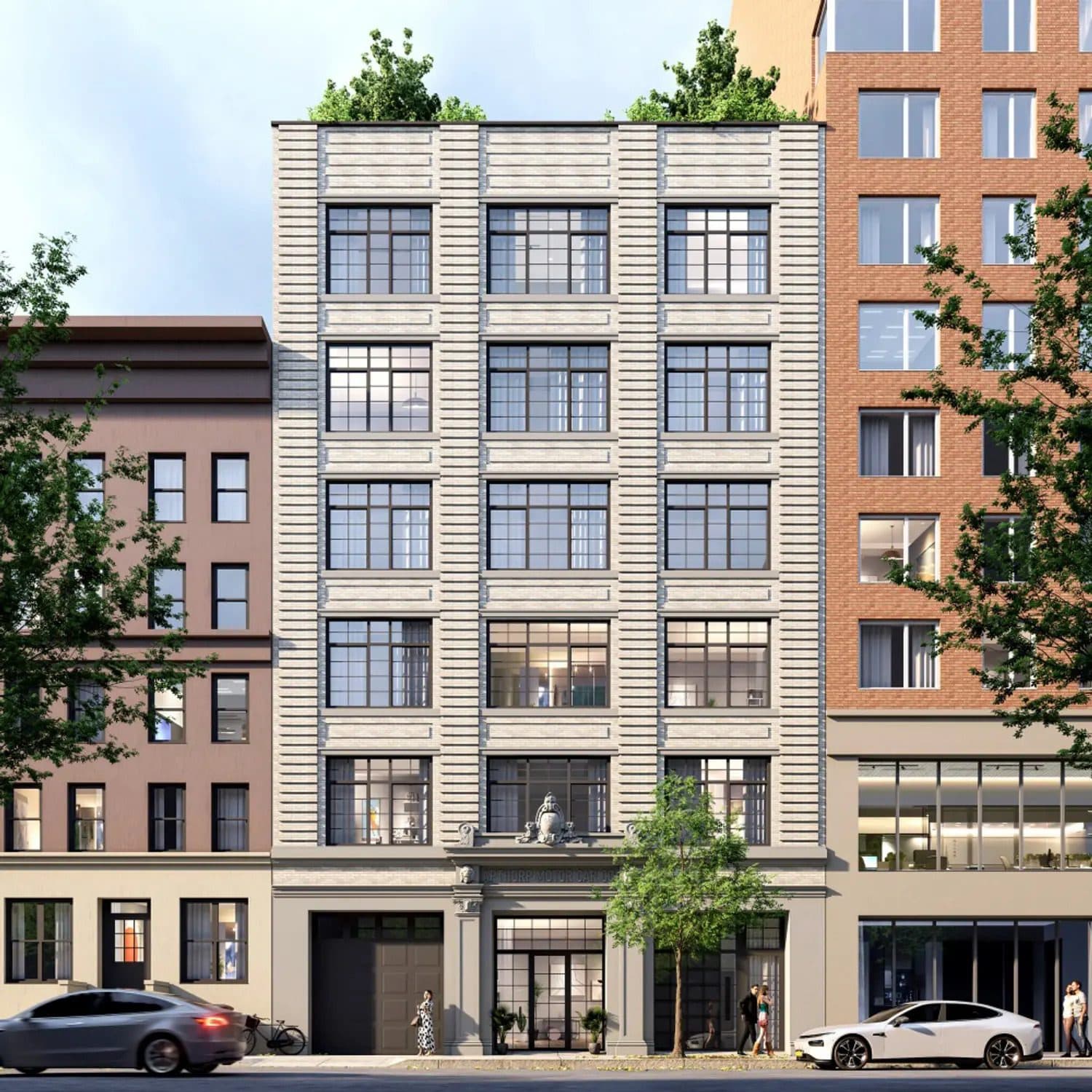


Tell us what you are looking for and the Roebling Research Desk will send building matches across Upper West Side, with pricing and diligence on each.
Get building matches sent to you →Get the neighborhood read on your building.
See how your apartment compares with the rest of Upper West Side, or get a market update tuned to this neighborhood — sent to you directly.
646.939.7375 · c.cohen@compass.com