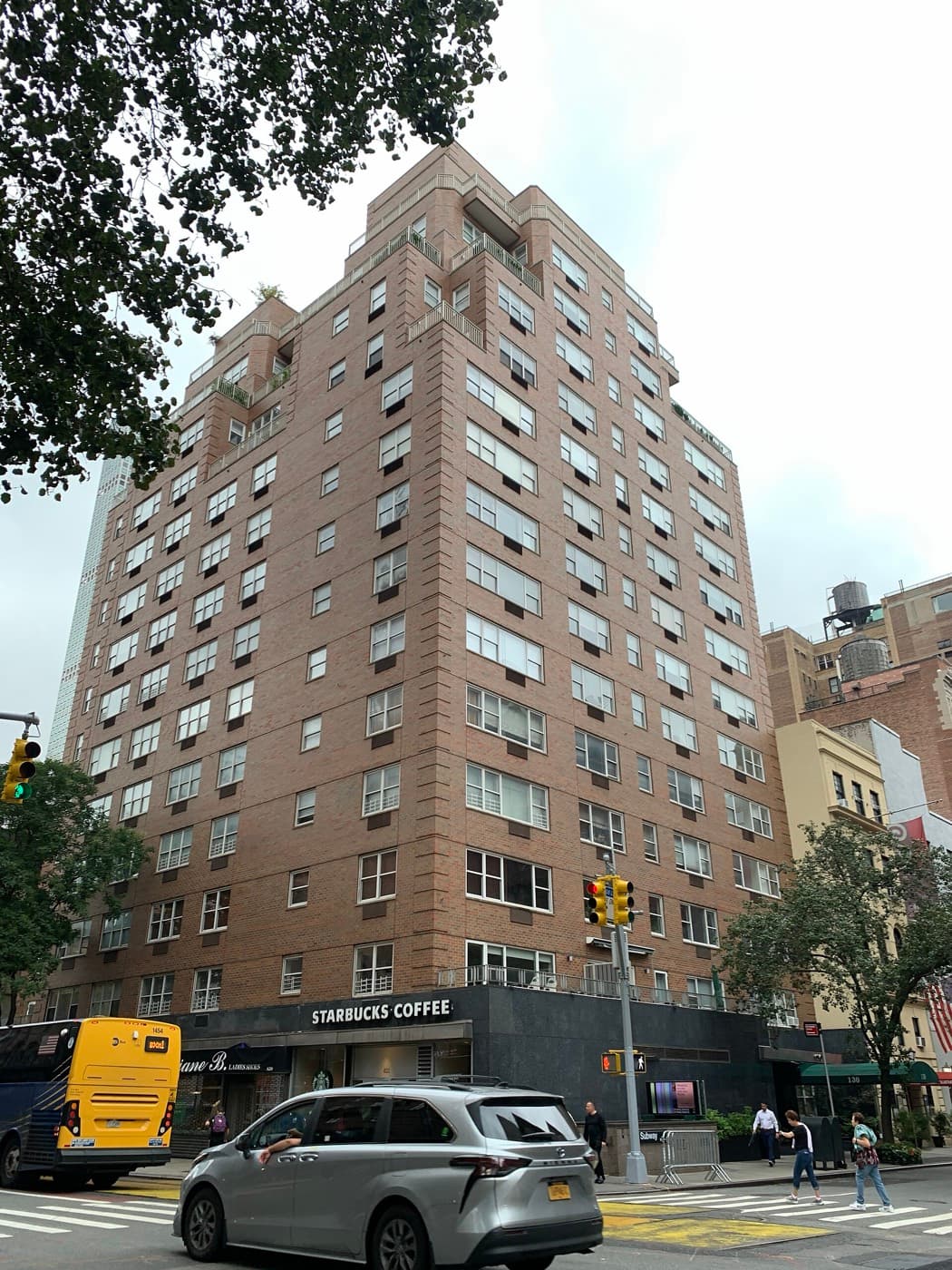
130 East 63rd Street
130 East 63rd Street, New York, NY 10065
Lenox Hill, Upper East Side
BBL 1013977504 · BIN 1042069
- Year built
- 1991
- Type
- Condop
- Units
- 73
- Pets
- Pets welcome (verify current policy at offer stage)
- Subletting
- Unrestricted
- Financing
- Liberal
- Flip tax
- 2% (paid by seller)
Every recorded sale at this building, 2003–2026
Price-per-square-foot over time, the line- and floor-premium curves, and every recorded sale.
- Median $/sf (floor-adjusted)
- $1,227
- Listing discount
- 3.0%
- Recorded sales
- 105
- On record
- 2003–2026
Own an apartment here? See what it would sell for.
A Private Pricing Opinion — what your apartment at 130 East 63rd Street would likely sell for today, what it costs to sell, and what you’d walk away with — reviewed personally against condition, exposures, renovation quality, and the competition actually on the market.
130 East 63rd Street is a condop — a hybrid ownership structure that is legally a cooperative but operated under condominium-style rules — and that structure is the building's defining feature. A condop combines the cooperative form (you own shares, not a deeded unit) with the operational flexibility of a condominium: no board approval, no board interview, unrestricted subletting, liberal financing, and open access for pied-à-terre buyers, foreign buyers, and investors. For buyers who want Upper East Side location and cooperative-adjacent pricing without the gatekeeping of a traditional co-op board, the condop is the answer, and 130 East 63rd is one of Lenox Hill's clean examples.
The building itself is a white-brick postwar structure on 63rd Street between Park and Lexington — one of the more desirable Lenox Hill blocks, steps from Park Avenue, the 6 train, and the neighborhood's retail and dining. Converted to condop in 1991, it has operated ever since under the no-approval, unrestricted-sublet framework that makes it a natural fit for buyers who value flexibility: investors, international purchasers, parents buying for children, and pied-à-terre owners.
Like a cooperative, the building prices in rooms rather than square feet. But the condop structure means the transactional experience — no board package to survive, no interview, unrestricted subletting — is closer to a condominium than to the neighborhood's traditional co-ops.
Building operations
130 East 63rd Street operates with a 24-hour doorman, a live-in super, a roof deck/terrace, a bike room, a central laundry, and additional storage. In-unit washer/dryer installation is permitted.
The condop structure is the operative distinction. Unlike a traditional cooperative, the building requires no board approval and conducts no board interview; subletting is unrestricted; financing is liberal; and pied-à-terre, foreign, and investor purchases are welcome. A 2% flip tax applies, paid by the seller. This combination makes the transactional experience closer to a condominium than to a co-op. Specific current policies should still be confirmed against building materials during due diligence. Our Co-op vs Condo guide covers the ownership-structure framing, and the condop sits between the two.
Architecture and building character
The building is a white-brick postwar structure — a common Upper East Side building type of the mid-century era — distinguished by a polished blue-gray granite base, sidewalk landscaping, and a lobby finished with onyx paneling. The 15-story height and the Park-to-Lexington mid-block position give upper floors improved light, and higher floors capture partial Chrysler Building and open-city sight lines.
The apartment mix reflects postwar Lenox Hill construction — efficient layouts across roughly 73 residential units, priced by room. In-unit washer/dryer installation is permitted, which is a genuine convenience for the tier.
Local Law 97
- 2024–2029 annual penalty
- $0 (under cap)
- 2030–2034 annual penalty
- $0 (under cap)
- Per unit / month range
- —
Source: NYC LL84 benchmarking and PLUTO · The Roebling Research Library. City record last verified September 2026.
See full Local Law 97 analysis — emissions history, scenarios, methodology →Facade safety — Local Law 11
The latest available FISP filing classified the facade as Safe — no repairs were required at that inspection. Facade inspections run on a fixed five-year cycle; future inspection, repair, and any assessment decisions remain building-specific.
How to read this, and where it comes from
QEWI = Qualified Exterior Wall Inspector — the licensed engineer the city requires to sign the report (the independent expert, not the managing agent).
Penalties shown are amounts DOB assessed against filings on record across 2005–10 to 2020–25. The FISP dataset does not record whether they were paid, contested or remain open, so treat the figure as history rather than a current balance and confirm the building’s standing with the managing agent.
Source: NYC DOB facade filings (FISP) · The Roebling Research Library. City record last verified September 2026.
Recent sales
130 East 63rd trades at Lenox Hill's cooperative-adjacent tier, priced by room, but its condop flexibility supports a broader buyer pool than a traditional co-op — investors, international buyers, pied-à-terre purchasers, and parents buying for children all transact here without the board gatekeeping that limits demand at neighborhood co-ops. That flexibility is a durable value driver. As with any building priced by room, pricing should be read at the apartment level; room count, floor, exposure, and condition drive the variation, with higher floors capturing the Chrysler Building sight lines.
Recent transfers at this building, from The Roebling Research Library. Prices are the transfer amounts recorded with the NYC Department of Finance; apartment-level detail is checked against the building’s own file in The Roebling Research Library before publishing.
| Date | Unit | Apartment | Price | PPSF | vs. Ask |
|---|---|---|---|---|---|
| Aug 12, 2026 | 6A | 2 BR · 2 BA | $1,350,000 | -6.9% | |
| Sep 22, 2025 | 4E | 2 BR · 2 BA · 1,300 sf | $1,750,000 | $1,346/sf | +4.5% |
| Jun 5, 2025 | 3D | 1 BR · 1 BA · 875 sf | $975,000 | $1,114/sf | -7.1% |
| Dec 17, 2024 | 3E | 2 BR · 2 BA · 1,300 sf | $1,515,000 | $1,165/sf | -5.3% |
| Jun 18, 2024 | 14E | 3 BR · 3 BA | $2,850,000 | -1.7% | |
| Apr 30, 2024 | 7D | 1 BR · 2 BA | $950,000 | -13.6% | |
| Apr 24, 2024 | 10F | 1 BR · 1 BA | $640,000 | -7.9% | |
| Apr 8, 2024 | 8E | 2 BR · 2 BA · 1,300 sf | $1,350,000 | $1,038/sf | -3.2% |
Market read. $/sf is measured on the latest sales with reliable square footage (2025): a median $1,227/sf (floor-adjusted) across 2 sales. The building has traded as recently as 2026. Median listing discount 3.0% from the last ask — a recurring negotiation gap worth pricing into any offer or listing strategy.
The retrade record
Lines that have traded more than once in the public record — the building’s appreciation arc, apartment by apartment.
Full closing history with price-per-square-foot over time, the complete retrade record, and every line that has traded.
Sales sourced from NYC Department of Finance recorded transfers (BBL 1-01397-7504). Apartment-level facts (line, condition, asking-price context) curated and cross-verified in The Roebling Research Library. Not all transactions cross-verify with ACRIS records — sponsor and LLC purchases sometimes record at stipulated values rather than market price; square footage on co-ops is not officially recorded, figures shown are approximate.
Closed rents at 130 East 63rd Street, last 36 months
| Size | Leases | Median / month |
|---|---|---|
| 1 bedroom | 5 | $4,850 |
| 2 bedroom | 8 | $7,997 |
14 closed leases, October 2023 to September 2026. Most recent lease July 2026. Sizes with fewer than 2 leases are not shown. Compiled by The Roebling Team at Compass from closed leases.
At the recent median sale of $1.51M (4 transfers since 2024), a buyer putting 25% down would pay about $29,381 to close, or 1.9% of the price.
- Mansion tax: $15,150
- No mortgage recording tax or title insurance on a co-op purchase
- Attorneys, lender, building fees and filings: $14,231
Assumes a resale (the seller pays transfer taxes), a $4,500 attorney fee and a mortgage on the rest.
Keep up with 130 East 63rd Street and its market
The Roebling Report, monthly: Manhattan sales data and analysis, including buildings like 130 East 63rd Street. Unsubscribe anytime.
We’ll use your email for The Roebling Report and note your interest in this building. See our privacy policy.
What to know if you’re buying
This is a condop — cooperative form, condominium flexibility. You buy shares, not a deeded unit, so it prices by room like a co-op. But there is no board approval, no interview, unrestricted subletting, and liberal financing. For buyers who want Upper East Side location without co-op gatekeeping, that is the entire point.
The flexibility suits investors, pied-à-terre, and international buyers. The no-approval, unrestricted-sublet framework makes the building a natural fit for buyers whom traditional co-ops exclude.
A 2% flip tax applies at sale, paid by the seller. Factor this into any resale analysis.
Confirm current policies directly. Even in a condop, the specific pet policy, sublet mechanics, and financing terms should be confirmed against current materials during due diligence.
Model the maintenance. As a cooperative structure, the monthly maintenance covers the building's operating costs, property taxes, and any underlying financing. Review the building's financials.
What to know if you’re selling
Foreground the condop flexibility. The building's no-approval, unrestricted-sublet, liberal-financing framework is its principal selling point — it opens the building to investors, international buyers, and pied-à-terre purchasers that co-ops turn away. Lead marketing with it.
Pricing requires apartment-level comparable analysis. Recent comparables on the specific line, room count, floor, and exposure should anchor the approach.
The buyer pool is broader than a co-op's. Position the building's flexibility to reach the widest qualified pool.
Closing timelines are faster than a co-op's. With no board approval, timelines run closer to a condominium than to a traditional cooperative.
Comparable buildings
If you're considering 130 East 63rd Street, also evaluate:
- 139 East 63rd Street — nearby 63rd Street cooperative
- 116 East 63rd Street — adjacent 63rd Street building
- 125 East 63rd Street — nearby 63rd Street inventory
- 205 East 63rd Street — nearby 63rd Street building
- 20 East 68th Street — nearby Lenox Hill condop with comparable flexibility
- 166 East 63rd Street — nearby 63rd Street building
More Upper East Side buildings
- 127 East 64th Street — 1907 condominium by Pickering & Walker
- 129 East 69th Street — 1916 co-op
- 129 East 82nd Street — 1916 co-op
- 130 East 75th Street — 1928 co-op by Schwartz & Gross
- 130 East 94th Street — 1923 co-op by George F. Pelham
- 131 East 81st Street — 1926 co-op
The neighborhood
For the full corridor — architecture, transit, and pricing across Upper East Side — read The Roebling Team Guide to Upper East Side.
The full playbook — what goes in the package, how boards read your financials, the interview, and the timeline — plus sample cover, reference, and personal letters you can adapt.
How to read the facts on this page. Items attributed to an offering plan describe the building as it was offered at that filing — unit mix, square footage, the amenity program as planned. They are not a statement about how the building operates today. Tax and compliance figures are sourced separately to current City records and carry their own dates. House rules, staffing and fee policy can change by board resolution without any public filing: treat every policy line here as a starting point for diligence and confirm it with the managing agent. Where this page compares one building or neighborhood to another, that is our analysis of the recorded record — it names the measure, the period and the sample it rests on, and it is an observation about medians rather than a prediction about any particular apartment.
Considering a move at 130 East 63rd Street?
Request a private building brief with the relevant comparable sales, current and off-market availability, and an apartment-specific view of value.