
West Village
The West Village is downtown's low-density residential core, shaped by townhouses, Federal-style brick rowhouses, cobblestone blocks, boutique condos, and the intimate street grid around Bleecker, Charles, Perry, Hudson, and Bedford.
What West Village is selling for
Movement of the annual median — not adjusted for transaction mix. Which apartments happened to trade (size, floor, condition, line) moves these as much as value does; the sample behind each is shown beneath it.
Two markets, one neighborhood. Since 2016, West Village condos are down 21% and co-ops up 7% on paper — but after inflation, −41.3% and −20% in real terms.
Movement of the annual median — not adjusted for transaction mix. Which apartments happened to trade (size, floor, condition, line) moves these as much as value does; the sample behind each is shown beneath it.
Method & coverage
Method. Condos are measured per square foot, co-ops per room (room counts from listing data; sales without a usable room count are excluded). The percentages are movement of the annual median — not a constant-quality or repeat-sale index — so transaction mix moves them as well as value. Real-terms figures deflate that same median by CPI.
Coverage. 4,108 recorded sales. Before the figures above, 43 non-arms-length transfers (nominal estate, gift, or intra-family deeds and mis-recorded bulk filings) and 25 duplicate records of the same deed (a combined apartment or penthouse recorded under more than one unit label) were removed. Corridors may overlap — a sale can appear in both a neighborhood set and a narrower avenue set. Recorded transfers via NYC Department of Finance, enriched by The Roebling Research Library.
West Village rents
West Village rents are up 8.0% in January–September 2026, against the same months of 2025. 2025 was +6.8%, 2024 +4.3%, 2023 +1.7%.
The same apartments, lease to lease, each year against the year before (3,225 lease-to-lease comparisons). 2026 compares January–September with January–September 2025. The latest months can move as late-reported leases arrive.
| Size | 2023 | 2024 | 2025 | 2026 YTD |
|---|---|---|---|---|
| All sizes | $102221 leases0.0% | $108182 leases+5.5% | $113175 leases+5.0% | $123153 leases+8.9% |
| Studio | $10630 leases | $122*29 leases | $11431 leases | $13732 leases |
| 1 bedroom | $103118 leases+3.6% | $10498 leases | $11387 leases | $11980 leases |
| 2 bedroom | $9961 leases | $10348 leases | $10448 leases | $117*29 leases |
| 3 bedroom+ | $114*12 leases | — | — | $157*12 leases |
Median rent per square foot per year, from closed leases that report square footage. 2026 is January–September. * Fewer than 30 leases.
| Size | 2023 | 2024 | 2025 | 2026 YTD |
|---|---|---|---|---|
| All sizes | $1,678106 leases+9.1% | $1,74692 leases | $2,00081 leases | $2,20061 leases |
| Studio | $1,800*21 leases | $1,975*19 leases | $1,950*19 leases | $2,250*17 leases |
| 1 bedroom | $1,63252 leases | $1,76753 leases | $2,00051 leases | $2,083*29 leases |
| 2 bedroom | $1,81231 leases | $1,600*17 leases | $1,750*10 leases | $2,230*14 leases |
Median monthly rent per room, co-op sublets. 2026 is January–September. * Fewer than 30 leases.
Compiled by The Roebling Team at Compass from closed leases, through September 2026. Figures are indicative, not an appraisal. The Roebling Index
At a glance
Corridor: The West Village, running roughly from West 14th Street on the north to Houston Street on the south, and from Seventh Avenue (or Sixth Avenue / Greenwich Avenue by some definitions) on the east to the Hudson River on the west — the western portion of greater Greenwich Village Adjacent neighborhoods: Greenwich Village to the east, Chelsea to the north, the Meatpacking District at the corridor's northern flank, Hudson Square and Tribeca to the south, Hudson River Park along the western waterfront Building stock: Greenwich Village Historic District (1969 LPC designation, Far West Village Extension 2006) Federal-era and Greek Revival rowhouses centered on Bedford, Grove, Christopher, Bleecker, Hudson, and the broader townhouse blocks; the prewar cooperative supply along Hudson Street and the Sixth Avenue flank; the post-2000 architect-driven Far West Village trophy condominium cohort along Charles, Perry, Leroy, and West Street (Richard Meier's 173/176 Perry and 165 Charles, Herzog & de Meuron's 160 Leroy, CookFox's 150 Charles, Robert A.M. Stern's Superior Ink at 400 West 12th); and the broader townhouse market that operates as a distinct asset class Cultural anchors: The Stonewall National Monument, the Hudson River Park esplanade, the Whitney Museum at the Meatpacking District flank, the Christopher Street piers, the Cherry Lane Theatre, Magnolia Bakery, Murray's Cheese, the Bleecker Street retail spine Transit: Christopher Street–Sheridan Square (1); 14th Street stations at Eighth Avenue (A/C/E/L), Sixth Avenue (F/M/L), and Seventh Avenue (1/2/3); West 4th Street–Washington Square (A/B/C/D/E/F/M); Houston Street (1); the PATH at Christopher Street, 9th Street, and 14th Street Source: The Roebling Team at Compass, verified against public records, the New York City Landmarks Preservation Commission, the Stonewall National Monument designation, building offering plans, the 2025 Michelin Guide, NYC Department of Finance recorded transfers, and direct neighborhood transaction experience. June 2026.
Why the West Village
The West Village is the Manhattan residential neighborhood most associated with deliberate downtown decision-making. Buyers who choose the West Village are, more than buyers in any other Manhattan corridor, choosing the neighborhood for the neighborhood — the streetscape, the scale, the cultural character, the literary and musical and architectural history — rather than for proximity to a particular institution, a particular school cluster, or a particular professional center. The West Village's residential character was shaped by three centuries of accumulated layering: 1820s Federal-era rowhouses surviving on Bedford, Grove, and Commerce; 1830s Greek Revival blocks centered on West 11th and West 12th; mid-19th-century Italianate and Anglo-Italianate brownstone construction; 1920s prewar cooperative apartment houses on Hudson Street and Lower Fifth Avenue; postwar mid-century buildings concentrated at the corridor's eastern flank; the late-20th-century cooperative conversions that produced today's mid-tier cooperative supply; and the post-2000 architect-driven Far West Village trophy condominium cycle that has, over the past two decades, layered Pritzker-architect contemporary residential commissions on top of the historic streetscape.
The structural identity that distinguishes the West Village from the rest of Manhattan rests on three facts. First, the Greenwich Village Historic District designation of April 29, 1969 — extended in 2006 (Far West Village) and 2010 (South Village) — that produced one of the largest historic districts in the United States and that has, through preservation review of every exterior alteration since 1969, protected the streetscape integrity that defines the corridor's character. Second, the post-2000 architect-driven Far West Village condominium cohort — Richard Meier at 173/176 Perry (2002) and 165 Charles (2006), Herzog & de Meuron at 160 Leroy (2018), CookFox at 150 Charles (2015), Robert A.M. Stern at Superior Ink (400 West 12th, 2009), Annabelle Selldorf at 12 Charles, and the broader trophy cohort — that have made the corridor a global signature-architect residential geography in the same register as Chelsea but anchored to the historic-district streetscape rather than to the gallery infrastructure. Third, the townhouse market that operates as a distinct residential asset class, with West Village townhouse transactions among the most consequential single-asset residential closings in Manhattan year over year.
This guide is the orientation document we give buyers who are considering the West Village for the first time. It covers what the corridor is, what its buildings are, what its cultural and institutional geography looks like, where its dining scene sits in 2025, and how its buyer profile differs from Greenwich Village (the eastern half of the broader Village), Chelsea, the Meatpacking District, and the broader downtown Manhattan trophy alternatives. It is not a market report; pricing on the corridor moves quarter to quarter. It is a structural guide intended to be useful in any market.
Boundaries and character
The West Village's boundaries have always been contested, and the precise dividing lines between West Village proper, Greenwich Village proper, the Far West Village, and the Meatpacking District are conventional rather than official. The most-cited boundaries run from West 14th Street on the north, to Houston Street on the south, from Seventh Avenue (or Sixth Avenue / Greenwich Avenue depending on the source) on the east to the Hudson River on the west. The Greenwich Village Historic District designation of 1969 establishes the formal preservation boundary; the Far West Village Historic District Extension of May 2, 2006 extends the preservation to the Hudson River frontage along West Street.
Within those boundaries, sub-character varies meaningfully:
The historic-district core — Bedford, Grove, Christopher, Commerce, Barrow, Morton, West 10th, West 11th, West 12th — operates as the corridor's most preserved residential register. The streetscape vocabulary is brick rowhouse, brownstone, dormered roof, high stoop, with the irregular pre-grid street pattern (Bleecker Street, Grove Street, Christopher Street) producing uncommon block configurations that distinguish the corridor from any other Manhattan residential geography. Edna St. Vincent Millay's 75½ Bedford Street — at 9.5 feet wide, among the narrowest houses in New York — is the corridor's most-cited single-house anchor.
The Hudson Street and Greenwich Avenue commercial spine — running south from West 14th to the corridor's southern flank — operates as the corridor's daily-life retail and dining spine. The streetscape mixes preserved 19th-century commercial fronts with mid-century apartment buildings and the broader contemporary retail infrastructure.
The Far West Village — bounded approximately by Washington Street on the east and the Hudson River on the west, from West 14th south to Christopher Street and beyond — operates as the corridor's contemporary architectural register. The post-2000 architect-driven condominium cohort concentrates here, with Meier's three towers (173 Perry, 176 Perry, 165 Charles), Herzog & de Meuron's 160 Leroy, CookFox's 150 Charles, Stern's Superior Ink, and the broader signature-architect cohort. The streetscape transitions from the historic-district townhouse scale to the post-2000 mid-rise condominium register.
The Meatpacking District at the corridor's northern flank — bounded approximately by West 14th Street on the south and the broader Gansevoort Market Historic District (LPC designation 2003) — operates as the corridor's mixed-use commercial-and-residential anchor at the High Line southern terminus and Whitney Museum location.
What distinguishes the West Village from the rest of Manhattan is the density of pre-grid streetscape preservation combined with the architect-driven contemporary condominium cohort. The pre-grid street pattern — Bedford crossing Grove, Christopher angling west toward the Hudson, Bleecker running diagonally across the conventional grid — produces a streetscape that does not exist anywhere else in Manhattan and that has been preserved at this scale only because the GVHD designation predated the development pressures that would otherwise have reshaped the neighborhood. The contemporary condominium register sits within the same preservation framework — the Far West Village Extension protects the Hudson River frontage streetscape while permitting carefully-reviewed new construction within the architectural register that has produced the trophy condominium cohort.
The West Village skyline — an architectural inventory
The corridor's residential supply concentrates in four distinct cohorts: the townhouse market that operates as a distinct asset class; the Far West Village architect-driven condominium cohort that defines the corridor's trophy contemporary supply; the prewar cooperative inventory along Hudson Street and the eastern flank; and the mid-tier conversion and contemporary new-construction supply distributed across the corridor.
The Far West Village architect-driven condominium cohort:
- 173/176 Perry Street — Richard Meier for Richard Born and Ira Drukier, completed 2002 (173) and 2002 (176). The first major architect-driven residential condominium project on the Far West Village waterfront. 15-story glass curtain wall towers at the corner of Perry and West Street. The transparency-driven facade was the first Manhattan residential project to introduce the contemporary glass-curtain-wall trophy vocabulary at this scale.
- 165 Charles Street — Richard Meier for the Izaki Group, completed 2006. The third Meier tower at the Charles Street and West Street corner. 16 stories, 31 condominium residences.
- 160 Leroy Street — Herzog & de Meuron for The Witkoff Group and New Valley, completed 2018. 16 stories, 57 condominium residences. The undulating ribbed-concrete facade is among the most architecturally distinctive contemporary residential expressions in the corridor.
- 150 Charles Street — CookFox Architects for the Witkoff Group, completed 2015. 16 stories, 91 condominium residences. Brick, copper, and glass with extensive vertical landscaping. Interior design by Alan Wanzenberg. Among the most-cited Far West Village trophy closings.
- Superior Ink at 400 West 12th Street — Robert A.M. Stern Architects for Related Companies, completed 2009. The conversion of the historic Superior Ink Company facility into a 14-story residential condominium tower with adjacent townhouse component. The Stern prewar-vocabulary facade anchors the trophy register at the corridor's northwestern Hudson River flank.
- The Shephard at 275 West 10th Street — Naftali Group with Cary Tamarkin Architects, completed 2016. 12-story conversion of the 1896 J.A. Roebling & Sons Wire Manufactory.
- 12 Charles Street — Annabelle Selldorf for Robert Charles Penn, completed 2019. 8 stories, 13 condominium residences. Among Selldorf's most architecturally restrained residential commissions.
- 90 Morton Street — Asymptote Architecture for Brack Capital Real Estate, completed 2018. 12 stories, 35 condominium residences.
- One Morton Square at 1 Morton Square — Costas Kondylis for Related Companies, completed 2004. 14 stories, 134 condominium residences. The pre-trophy-cycle West Village condominium at the Hudson Street and West Houston corner.
- The Greenwich Lane at 145 West 11th Street — FXFOWLE Architects for Rudin Management and Global Holdings, completed 2015. A five-building condominium and townhouse development on the former St. Vincent's Hospital site. 200 condominium residences and townhouses.
- 140 Charles Street, 99 Jane Street, 421 Hudson Street — additional contemporary West Village condominium supply.
The prewar cooperative inventory:
- 222 West 14th Street — prewar cooperative at the corridor's northern flank.
- 345 West 13th Street and 345 West 14th Street — broader prewar inventory at the corridor's northern flank.
- 122 Greenwich Avenue — prewar cooperative anchor at the Greenwich Avenue commercial spine.
- Westbeth Artists Housing at 463 West Street — Richard Meier with Mitchell-Giurgola Associates (Meier's first major architectural project), completed 1970. The conversion of the former Bell Laboratories complex into 384 affordable artist live-work units. Westbeth operates as the largest affordable artist housing complex in the United States and is structurally distinct from the broader market-rate residential inventory.
The townhouse market — the West Village townhouse cohort transacts at a distinct asset class that operates outside the apartment-building register and on its own pricing logic. Townhouse transactions at the trophy West Village level have, in the post-2015 cycle, reached $35M and above for the most consequential single-family residential closings.
The cumulative architectural effect is uncommon: a corridor in which centuries-deep preservation of pre-grid streetscape character coexists with the most concentrated Pritzker-architect residential cohort in any historic Manhattan neighborhood. Buyers who choose the West Village are choosing both the building and the corridor's structural identity as the historic-preservation residential neighborhood that has selectively integrated contemporary architectural commissions.
Stonewall, the Hudson River esplanade, the Whitney, and the cultural anchor
The corridor's institutional and cultural concentration is the densest historical-preservation-and-contemporary-cultural geography in downtown Manhattan. The institutions cluster within a walking radius of approximately fifteen minutes from any residential address.
The Stonewall National Monument at 51 and 53 Christopher Street — designated by President Obama on June 24, 2016 — is the corridor's most consequential historical institutional anchor. The monument encompasses the Stonewall Inn (the bar where the June 28, 1969 riots that anchored the modern LGBTQ civil rights movement took place), Christopher Park, and the surrounding streets. Stonewall was the first U.S. national monument dedicated to LGBTQ rights and history. The 7.7-acre monument designation, the broader Stonewall Inn building landmark designation (2000), and the corridor's continuing identification as the geographic center of LGBTQ history in New York anchor the corridor's cultural register.
The Whitney Museum of American Art at 99 Gansevoort Street — Renzo Piano Building Workshop with Cooper Robertson, opened May 2015 — sits at the West Village's northern flank and operates as the corridor's most consequential museum institution. The 220,000-square-foot building anchors the High Line southern terminus and is within a 5-to-10-minute walk of most West Village residential addresses.
The Hudson River Park esplanade — the 4-mile linear park along the Hudson River from the Battery to West 59th Street — anchors the corridor's waterfront. The West Village portion includes Pier 45 (Christopher Street Pier, a primary corridor recreational anchor), Pier 46, Pier 51, and the Greenwich Village portion of the park's planted gardens, ball courts, and esplanade. The High Line's southern terminus at Gansevoort Street (the entrance at Gansevoort and Washington) is within a 5-to-10-minute walk of most West Village residential addresses.
The Cherry Lane Theatre at 38 Commerce Street — opened 1924 in the converted 1817 industrial building — is the oldest continuously operating Off-Broadway theater in New York City. The 179-seat house has presented premiere productions of plays by Edward Albee, F. Scott Fitzgerald, Eugene O'Neill, and the broader Off-Broadway tradition. The theater is among the corridor's most architecturally distinctive small cultural venues.
The Village Vanguard at 178 Seventh Avenue South (technically Greenwich Village but at the West Village eastern flank) — opened February 22, 1935 — is the oldest continuously operating jazz club in the world. The 123-seat club has recorded more live jazz albums than any other venue in the world; the Vanguard's continuing operation anchors the corridor's jazz history.
The Comedy Cellar at 117 MacDougal Street (in Greenwich Village proper, at the West Village eastern flank, under the Olive Tree Café since 1982) is the most consequential comedy venue in downtown Manhattan.
Bleecker Street, Magnolia Bakery, Murray's Cheese, John's of Bleecker Street, Joe's Pizza, Three Lives Bookstore — the broader Bleecker Street and Hudson Street retail and food anchor concentration — defines the corridor's daily-life commercial register. The shift from the 1990s artisanal retail concentration to the 2010s luxury retail expansion has been a continuing source of community discussion, and the Bleecker Street retail mix in 2025 reflects the modulated balance between contemporary luxury retail and preserved neighborhood institutions.
The IFC Center at 323 Sixth Avenue (in the 1937 Waverly Theater, restored and reopened 2005) — the dedicated independent and international cinema — is the corridor's most consequential dedicated film venue.
Schools nearby
The West Village's private school inventory is concentrated in the broader Greenwich Village school cluster and the adjacent Chelsea-Meatpacking flank. Several of the schools physically located within or adjacent to the corridor are progressive-education institutions.
Saint Luke's School at 487 Hudson Street — the Episcopal-affiliated independent K-8 school adjacent to the Church of St. Luke in the Fields (1821, the oldest church building in the Greenwich Village Historic District) — is the corridor's most physically central independent school. Approximately 240 students; the integrated chapel, garden, and academic infrastructure produces a distinctive small-school environment within the West Village's historic-district core.
Village Community School at 272 West 10th Street — coeducational independent K-8, founded 1970 — is a progressive independent school within the historic-district core.
The Little Red School House & Elisabeth Irwin High School (LREI) at 272 Sixth Avenue (at West 11th, in Greenwich Village proper but at the West Village eastern flank) — founded 1921 by Elisabeth Irwin and operating as a PK-12 independent school since the 1930s — represents the most explicitly progressive pedagogical tradition in Manhattan independent education.
City and Country School at 146 West 13th Street (Greenwich Village adjacent) — founded 1914 by Caroline Pratt as "the Play School" — is one of the original American progressive education institutions.
Grace Church School at 86 Fourth Avenue (in the Cooper Square area at the Village's eastern edge) — independent JK-12 school of approximately 800 students.
Avenues: The World School at 11 Tenth Avenue (in Chelsea at the High Line corridor's southern Hudson Yards-adjacent end) is the closest comprehensive K-12 independent school at the corridor's northern flank.
The Friends Seminary at 222 East 16th Street is a Quaker day school, accessible by the L train at 14th Street.
On the public side: PS 41 (the Greenwich Village School on West 11th Street, District 2, grades PK-5) and PS 3 (Hudson Street) are the two District 2 elementary anchors. The 2014 zoning split assigned the northern portion of the corridor to PS 41 and the southern portion to PS 3.
Restaurants — Michelin and neighborhood cache
The West Village has the most architecturally-historical restaurant scene in Manhattan — multiple institutions that have operated continuously for half a century or more, alongside the recent generation of destination kitchens that have defined downtown dining in the 2010s and 2020s. The 2025 Michelin Guide for New York, announced in November 2025, named multiple corridor restaurants among the city's starred inventory.
Via Carota at 51 Grove Street (Rita Sodi and Jody Williams, opened 2014) — the contemporary Tuscan-Italian restaurant on Grove Street is among the most-cited and most-difficult-to-reserve restaurants in New York. Via Carota's continuing influence on the corridor's dining geography has been one of the most consequential restaurant phenomena of the post-2010 cycle.
I Sodi at 105 Christopher Street (Rita Sodi, opened 2008) — the Tuscan kitchen that anchors the corridor's contemporary Italian fine-dining register. Among the West Village's longest-running Italian restaurants in continuous operation under original ownership.
Buvette at 42 Grove Street (Jody Williams, opened 2011) — the French wine bar and restaurant that anchors the corridor's small-plate French register. Among the most-cited daily-life and special-occasion restaurants in the corridor.
Don Angie at 103 Greenwich Avenue (Angie Rito and Scott Tacinelli, opened 2017) — contemporary Italian-American.
Minetta Tavern at 113 MacDougal Street (in Greenwich Village proper, at the West Village eastern flank; in continuous operation since 1937, Keith McNally restoration since 2009) — the corridor's longest-running fine-dining bistro and the home of the Black Label Burger.
Babbo Ristorante e Enoteca at 110 Waverly Place (in Greenwich Village proper, at the West Village eastern flank; opened 1998 by Mario Batali and Joseph Bastianich) — the corridor-adjacent Italian institution that anchored the late-1990s and 2000s downtown fine-dining cycle. Operational history under restored ownership; the building and the restaurant remain consequential cultural anchors of the broader Village dining geography.
Carbone at 181 Thompson Street (Major Food Group, opened 2013) — the mid-century Italian-American restaurant in Greenwich Village at the West Village eastern flank. The restaurant has expanded internationally and remains among the most consequential post-2010 fine-dining openings in any New York neighborhood.
Sushi Nakazawa at 23 Commerce Street — Daisuke Nakazawa's omakase counter, one Michelin star retained through 2025.
The Spotted Pig at 314 West 11th Street (April Bloomfield and Ken Friedman, opened 2004) — the first New York restaurant to receive a Michelin star (2006); operational history complex after 2017, currently closed. The building remains within the broader corridor restaurant inventory and the Spotted Pig's influence on the corridor's gastropub register persists.
John's of Bleecker Street at 278 Bleecker (founded 1929 by John Sasso; coal-fired brick-oven; no slices served) — the founding text of New York pizza. Among the corridor's most-cited daily-life institutions.
Joe's Pizza at 7 Carmine Street (between Sixth Avenue and Bleecker, established 1975 by Joe Pozzuoli) — the canonical New York slice.
Mamoun's Falafel at 119 MacDougal Street (original location since 1971) — the late-night Village institution.
Magnolia Bakery at 401 Bleecker Street (opened 1996) — the Sex and the City cupcake destination and a continuing corridor anchor.
Murray's Cheese at 254 Bleecker — the flagship cheese shop and a continuing presence on Bleecker.
Three Lives & Company at 154 West 10th Street (opened 1978, named after Gertrude Stein's first book) — the West Village's intimate literary bookstore.
The White Horse Tavern at 567 Hudson Street (founded 1880) — the corridor's most-photographed historic pub and the bar where Dylan Thomas drank his last drink in 1953. Operations under restored ownership through the 2010s and 2020s.
Corner Bistro at 331 West 4th Street (since 1961) — the West Village's anchor late-night American bar.
The dining inventory, taken together, supports a West Village lifestyle that is dense in casual neighborhood-anchored institutions, well-served at the contemporary fine-dining register (Via Carota, I Sodi, Buvette, Don Angie), and broadly accessible at the corridor-historic register (John's, Joe's, Mamoun's, Magnolia, the White Horse). The dining footprint is among the most architecturally-historical in the United States.
Transit and walkability
The West Village is among the most transit-accessible residential neighborhoods in Manhattan. Six subway lines and the PATH converge at the corridor:
- Christopher Street–Sheridan Square (1) — the corridor's dedicated station at the IRT Seventh Avenue local
- 14th Street–Eighth Avenue (A/C/E/L) — the IND Eighth Avenue and BMT Canarsie convergence at the corridor's northern flank
- 14th Street–Sixth Avenue (F/M/L) and 14th Street–Seventh Avenue (1/2/3) — the IND Sixth Avenue and IRT Seventh Avenue lines at the corridor's northern flank
- West 4th Street–Washington Square (A/B/C/D/E/F/M) — the corridor's major southern transit hub
- Houston Street (1) — the IRT Seventh Avenue local at the corridor's southern flank
The PATH trains stop at Christopher Street, 9th Street, and 14th Street, providing direct New Jersey commuter service to Hoboken, Newark, and Jersey City. The NY Waterway ferry at Pier 79 (West 39th Street) and the broader Hudson River Park ferry infrastructure provide water-frontage transit.
JFK access by car is approximately 30–50 minutes; LaGuardia approximately 25–40 minutes; Newark approximately 25–40 minutes; Teterboro Airport approximately 25–40 minutes. The Holland Tunnel at the corridor's southern flank and the Lincoln Tunnel at West 39th provide direct New Jersey vehicle access.
The walkability score is among the highest in the city; daily-life errands compress into a four-to-six block radius for any address within the historic-district core. The Hudson River Park esplanade at the corridor's western flank extends the corridor's pedestrian geography along the Hudson River. The High Line southern terminus at Gansevoort Street is within a 5-to-10-minute walk of most corridor addresses.
Who buys here, and how it differs from the rest of downtown
The West Village buyer profile is structurally distinct from the Greenwich Village (East), Chelsea, Tribeca, and broader downtown alternatives. Purchases cluster in four overlapping types:
Townhouse and architect-condominium buyers seeking discretion. Buyers who specifically prefer the West Village's residential register over the trophy Park-and-Fifth or Billionaires' Row address tiers. These purchases cluster especially in West Village townhouses (where the privacy and discretion are structurally distinct from the apartment-building register) and in the Far West Village architect-driven condominium cohort (where the amenity register operates without the institutional formality of the UES cooperative tradition).
Pied-à-terre and secondary-residence buyers. Buyers acquiring a Manhattan pied-à-terre or secondary residence who specifically prefer the West Village's historic streetscape over the East Side or Billionaires' Row as their Manhattan address.
Cooperative resales. The cooperative conversion of the 1970s and 1980s allowed many long-term residents to acquire and retain West Village apartments at scale, and the cooperative resale market in the corridor is meaningfully shaped by that long-term ownership.
Historic-significance-anchored buyers. A specific subset of corridor buyers acquire West Village residences for the corridor's historic significance, including the Stonewall National Monument and the Greenwich Village Historic District.
What the corridor is not: a Park-facing residential neighborhood (the geographic relationship with Central Park is via crosstown transit only). The West Village is, structurally, the deliberate-downtown residential corridor — the neighborhood buyers choose for character, history, and streetscape rather than for institutional proximity.
For buyers who value the architectural-historical streetscape, the cultural infrastructure, the proximity to the Hudson River frontage, and the contemporary architect-driven condominium cohort, the West Village is the corridor that fits. For buyers who specifically want a Park-facing residential register or an institutional cooperative tradition, the historic Manhattan corridors are better-fit alternatives.
Pricing tiers — orientation
West Village pricing operates on a wider range than any other historic downtown Manhattan corridor, because the building stock varies meaningfully across the townhouse market, the architect-driven condominium cohort, the prewar cooperative inventory, and the broader mid-tier supply.
The general orientation as of mid-2026:
- The townhouse market transacts at the corridor's apex — typical inventory at $6M–$20M, trophy West Village townhouses (recent megamansion-tier closings) reaching $35M and above for the most consequential single-family residential transactions.
- The Far West Village architect-driven condominium cohort — 173/176 Perry (Meier), 165 Charles (Meier), 160 Leroy (Herzog & de Meuron), 150 Charles (CookFox), Superior Ink (Stern), 90 Morton (Asymptote), 12 Charles (Selldorf), and the broader trophy cohort — transacts at $3M–$15M for typical configurations, $15M–$50M+ for trophy higher-floor and penthouse configurations.
- The Greenwich Lane at 145 West 11th (the former St. Vincent's Hospital site) — typical configurations at $3M–$10M, with the townhouses transacting at higher tier.
- The broader prewar cooperative inventory along Hudson Street, Greenwich Avenue, and the eastern flank — typical configurations at $1.5M–$6M.
- The mid-tier conversion and contemporary new-construction supply — typical configurations at $1M–$4M for entry-tier inventory.
Pricing within each tier varies significantly by line, by floor, by exposure, and by historic-district streetscape character. Hudson River views command meaningful premiums at the corridor's western flank. Townhouses transact on idiosyncratic single-asset logic that does not reduce to per-square-foot averages. Trophy authorship attribution at the signature-architect cohort commands building-specific premiums. Historic-district preserved interior detail commands premiums to renovated-out inventory.
For sellers, pricing strategy must be calibrated to the apartment line or townhouse configuration and the building's specific absorption pattern. For buyers, the practical reality is that the corridor's price-tier separation is meaningful — a $5M purchase at 150 Charles is structurally different from a $5M purchase at One Morton Square, the Greenwich Lane, or the broader mid-tier prewar inventory.
How to use this guide
If you're considering the West Village for the first time, the right starting point is to clarify three structural questions: (1) which residential register your purchase fits — historic-district townhouse, Far West Village architect-driven condominium, prewar cooperative, or mid-tier contemporary; (2) which sub-corridor matches your priorities — the historic-district core, the Far West Village waterfront, the Hudson Street commercial spine, or the Meatpacking northern flank; and (3) which transit and work-and-home geography the residence will anchor.
Our building profiles (linked throughout this guide) cover architecture, sponsor history, board or condominium policy, financing rules, flip taxes, pet policy, pied-à-terre allowability, recent sales context, and the apartment-level realities that distinguish one building from another. For the West Village specifically, the building profiles document the architectural authorship, the historic-district designation context, the apartment-line configurations, and the resale absorption pattern at each address.
If you're selling on the West Village, pricing strategy, marketing approach, and buyer matching are building-specific and apartment-specific. The corridor's signature-architect trophy register transacts on architectural-authorship considerations that do not map onto generic per-square-foot averages; the townhouse market transacts on single-asset logic specific to each property.
The Roebling Team on the West Village
The Roebling Team at Compass works the West Village corridor as part of our broader downtown Manhattan practice. We publish this neighborhood guide because corridor buyers and sellers deserve corridor-specific intelligence — architectural attribution, historic-district context, signature-architect authorship analysis, townhouse-market dynamics, and the realities of pricing at the apartment-line and townhouse level — not generic downtown market commentary.
If you're considering a purchase or sale on the West Village, a 30-minute consultation is the right starting point. We'll bring the full corridor context this page provides plus the transactional specifics your situation requires — entity structuring, board or condominium approvability, comparable analysis at the building, line, or townhouse level, the historic-district preservation considerations specific to townhouse transactions, and the pacing strategy that fits your timeline.
Run the numbers
- Mansion Tax Calculator — at West Village trophy price points, the 1M, 2M, 5M, 10M, 15M, 20M, and 25M cliff effects routinely apply
- Buyer Closing Cost Calculator
- Seller Closing Cost Calculator
Related guides
- Manhattan Co-op Buying Guide — board approval mechanics in detail
- Co-op vs. Condo in Manhattan — how a condominium purchase differs from a co-op purchase
- NYC Real Estate Tax & Closing Cost Guide — closing costs on West Village transactions
- Greenwich Village — adjacent neighborhood guide
- East Village — adjacent neighborhood guide
- NoHo — adjacent neighborhood guide
- Chelsea — adjacent neighborhood guide
This page reflects publicly available information and The Roebling Team transaction experience. The Roebling Team at Compass does not represent any specific building's management, board, or sponsor. Restaurant ratings reflect the 2025 Michelin Guide for New York, announced November 2025. Architectural attributions verified against the New York City Landmarks Preservation Commission, the architects' own materials, the National Park Service for the Stonewall National Monument, and Village Preservation. © 2026 The Roebling Team at Compass.
Buildings on West Village


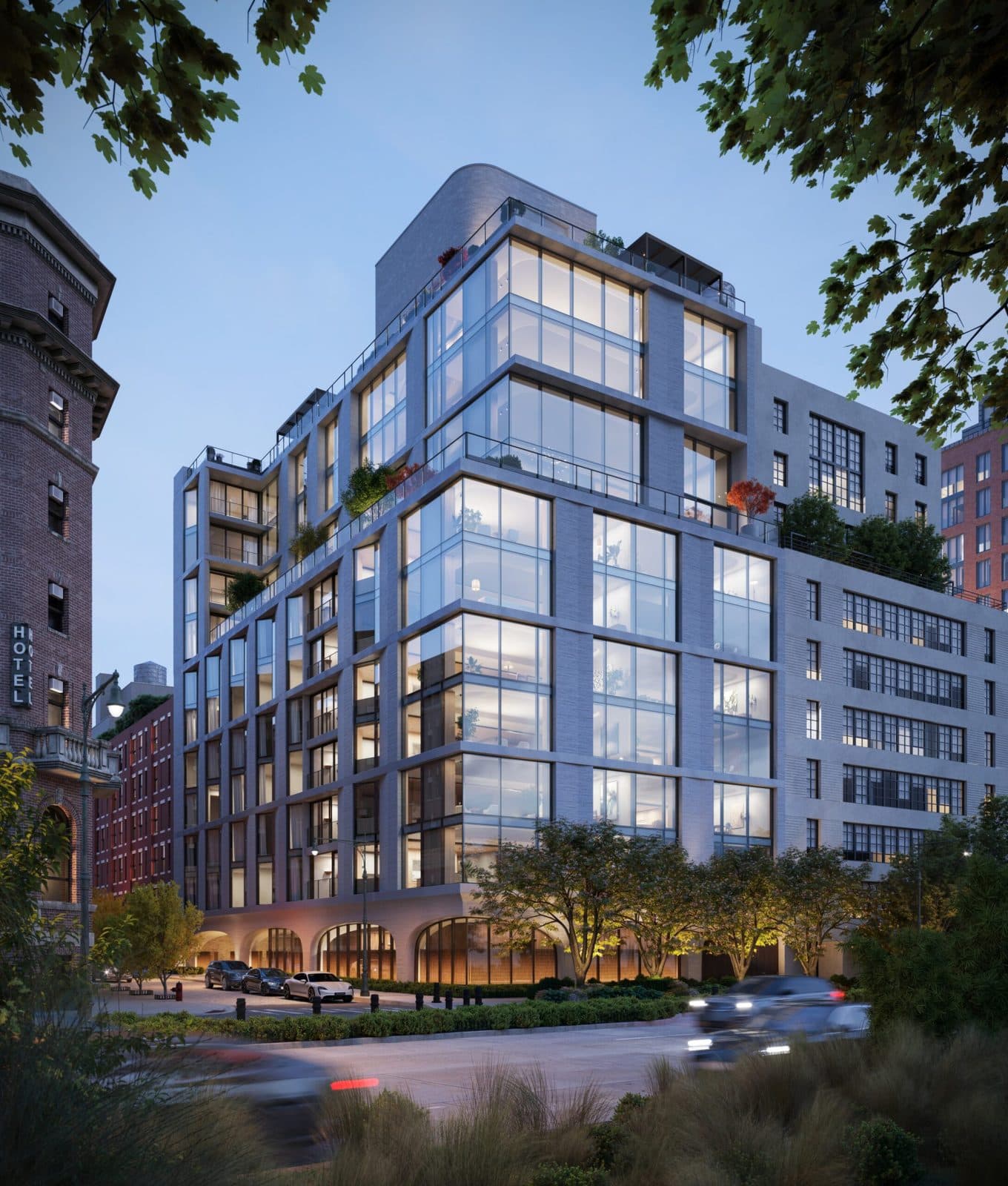


Tell us what you are looking for and the Roebling Research Desk will send building matches across West Village, with pricing and diligence on each.
Get building matches sent to you →Get the neighborhood read on your building.
See how your apartment compares with the rest of West Village, or get a market update tuned to this neighborhood — sent to you directly.
646.939.7375 · c.cohen@compass.com