
Greenwich Village
Greenwich Village is downtown's classic counterpoint to the uptown co-op corridors, centered on Washington Square Park, Lower Fifth Avenue's Gold Coast, historic prewar apartments, and one of Manhattan's richest cultural legacies.
What Greenwich Village is selling for
Movement of the annual median — not adjusted for transaction mix. Which apartments happened to trade (size, floor, condition, line) moves these as much as value does; the sample behind each is shown beneath it.
Two markets, one neighborhood. Since 2016, Greenwich Village condos are down 9% and co-ops down 1% on paper — but after inflation, −31.8% and −26.5% in real terms.
Movement of the annual median — not adjusted for transaction mix. Which apartments happened to trade (size, floor, condition, line) moves these as much as value does; the sample behind each is shown beneath it.
Method & coverage
Method. Condos are measured per square foot, co-ops per room (room counts from listing data; sales without a usable room count are excluded). The percentages are movement of the annual median — not a constant-quality or repeat-sale index — so transaction mix moves them as well as value. Real-terms figures deflate that same median by CPI.
Coverage. 4,089 recorded sales. Before the figures above, 29 non-arms-length transfers (nominal estate, gift, or intra-family deeds and mis-recorded bulk filings) and 22 duplicate records of the same deed (a combined apartment or penthouse recorded under more than one unit label) were removed. Corridors may overlap — a sale can appear in both a neighborhood set and a narrower avenue set. Recorded transfers via NYC Department of Finance, enriched by The Roebling Research Library.
Greenwich Village rents
Greenwich Village rents are up 7.7% in January–September 2026, against the same months of 2025. 2025 was +6.8%, 2024 +3.3%, 2023 +2.4%.
The same apartments, lease to lease, each year against the year before (2,290 lease-to-lease comparisons). 2026 compares January–September with January–September 2025. The latest months can move as late-reported leases arrive.
| Size | 2023 | 2024 | 2025 | 2026 YTD |
|---|---|---|---|---|
| All sizes | $94157 leases−1.2% | $98151 leases+4.5% | $110142 leases+12.4% | $124125 leases+12.4% |
| Studio | $115*26 leases | $109*20 leases | $11433 leases | $14731 leases |
| 1 bedroom | $9684 leases | $10090 leases | $10972 leases | $11771 leases |
| 2 bedroom | $8841 leases | $8637 leases | $10832 leases | $109*21 leases |
Median rent per square foot per year, from closed leases that report square footage. 2026 is January–September. * Fewer than 30 leases.
| Size | 2023 | 2024 | 2025 | 2026 YTD |
|---|---|---|---|---|
| All sizes | $1,66598 leases | $1,70091 leases | $1,89972 leases | $2,05067 leases |
| Studio | $1,75033 leases | $1,74839 leases | $1,800*29 leases | $2,02332 leases |
| 1 bedroom | $1,63251 leases | $1,68346 leases | $1,90033 leases | $2,100*25 leases |
| 2 bedroom | $1,606*10 leases | — | — | $2,050*10 leases |
Median monthly rent per room, co-op sublets. 2026 is January–September. * Fewer than 30 leases.
Compiled by The Roebling Team at Compass from closed leases, through September 2026. Figures are indicative, not an appraisal. The Roebling Index
The Greenwich Village argument
Greenwich Village is the residential neighborhood in Manhattan that organizes itself most explicitly around culture rather than commerce — around the idea that one lives downtown to be near the institutions that produce intellectual and artistic life, and to live in a streetscape that reflects three centuries of accumulated character rather than a single building cycle's worth of luxury construction. It is not a finance neighborhood. It is not a Park-facing neighborhood in the geographic way that the Upper East Side and the Upper West Side are. It is, more than any other zip code in Manhattan, a neighborhood whose residential character is shaped by the architectural decision to preserve — not to develop — and by the institutional decision of NYU, The New School, and a substantial concentration of cultural infrastructure to anchor themselves here rather than elsewhere.
This is the structural fact that separates Greenwich Village from the rest of the Manhattan trophy residential corridor. The Upper East Side trades on Park-and-Fifth pre-war scale. The Upper West Side trades on Central Park frontage and the cultural geography of Lincoln Center and the Museum of Natural History. Tribeca trades on loft conversions and the post-2008 condominium boom. Greenwich Village trades on something more diffuse and harder to replicate: a 2,200-building historic district designated in 1969 that remained the largest in New York City for four decades, a concentration of Federal-era and Greek Revival townhouses rarely matched anywhere else south of 23rd Street, a 1920s prewar cooperative apartment-house corridor on Lower Fifth Avenue that produced some of the most architecturally restrained luxury inventory in the city, and a literary, musical, theatrical, and political history that anchors the neighborhood's identity as the cultural center of American intellectual life for substantial periods of the 20th century.
The buyer who chooses Greenwich Village is making a deliberate downtown decision — and within downtown, a deliberate decision to live in the residential neighborhood with the deepest historical and institutional character rather than in the loft and condominium conversions south of Houston Street. Pricing trades at a meaningful premium to the broader downtown inventory and at a discount to the absolute trophy Upper East Side limestone-front side-street townhouse tier, but the trade-off reflects geography and character — not building quality.
The boundaries and what defines the neighborhood
The conventional Greenwich Village boundaries run from approximately 14th Street on the north to Houston Street on the south, and from Broadway and the Bowery on the east to the Hudson River on the west. These are the consensus boundaries — though the neighborhood's edges have always been contested, and the precise dividing lines between Greenwich Village proper, the West Village, the East Village, and NoHo are conventional rather than official.
The West Village is the western portion of Greenwich Village — bounded on the east by either Seventh Avenue (the most-cited line) or Sixth Avenue / Greenwich Avenue depending on the source. The designation "West Village" emerged in the 1950s and 1960s amid preservation efforts and the cultural identification of the neighborhood's western blocks — Bedford, Grove, Christopher, Bleecker, Hudson — as a particular zone within the broader Greenwich Village umbrella. The East Village, by contrast, is not part of Greenwich Village and has not been since the term came into common use in the 1960s. Originally part of the Lower East Side, the East Village sits east of Broadway and the Bowery and operates as a structurally distinct residential and cultural neighborhood. NoHo — North of Houston — sits between Greenwich Village and the East Village, bounded roughly by Houston (south), Astor Place / 9th Street (north), Broadway (west), and Bowery (east).
For practical purposes, and for the inventory that buyers actually transact in, the residential core of Greenwich Village is the corridor running from Washington Square Park north along Lower Fifth Avenue to 14th Street; the townhouse rows running west of Sixth Avenue from West 4th Street up to 14th; and the West Village core south of West 14th and west of Seventh Avenue down to Houston.
What distinguishes Greenwich Village from the rest of Manhattan is density of historical layering per block. Within a six-block radius, buyers will find 1820s Federal-era survivors, 1830s Greek Revival rowhouse blocks of national significance, 1850s Italianate brownstones, 1890s Romanesque Revival institutional buildings, 1920s prewar luxury cooperative apartment houses on Lower Fifth, 1950s mid-century full-block postwar buildings, and the late-20th-century cooperative conversions that converted much of the rental inventory into the current cooperative tier. The architectural inventory is not coherent in the way Carnegie Hill is — there is no single fifteen-year building cycle that defines the streetscape. The Village is coherent through accumulation rather than through unity, and the accumulated character is precisely the structural feature.
The Greenwich Village Historic District
The Greenwich Village Historic District was designated by the New York City Landmarks Preservation Commission on April 29, 1969 — two months before the Stonewall riots that, in late June of the same year, would anchor the neighborhood's identity as the geographic center of the modern LGBTQ civil rights movement. At designation, the GVHD contained more than 2,200 buildings across 65-plus blocks. The LPC's designation report described the district as containing "more buildings…than all of the other historic districts in New York City at the time combined." The GVHD remained the largest historic district in New York City for four decades.
Two subsequent extensions have expanded the GVHD geographically. Extension I (Far West Village) was designated May 2, 2006, covering the Far West Village along West Street and the Hudson River waterfront, with buildings ranging from 1830 to 1938. Extension II (South Village) was designated June 22, 2010, embracing 225 buildings on twelve blocks south of Washington Square and West 4th Street — 19th-century houses, 19th- and 20th-century tenements, and the immigrant-era institutional buildings that document the Italian and Eastern European settlement history of the South Village.
A separate but adjacent designation — the MacDougal-Sullivan Gardens Historic District — predates the GVHD by two years. Designated August 2, 1967, it covers 22 Greek Revival houses at 74–96 MacDougal Street and 170–188 Sullivan Street, between Houston and Bleecker. The MacDougal houses were built in 1844, the Sullivan houses in 1850; together they form one of the most intact mid-19th-century rowhouse ensembles in Manhattan and a privately-managed shared interior garden that remains a defining feature of the block.
For buyers, the practical implication of GVHD designation is significant. Exterior alterations are subject to LPC review, which protects the streetscape integrity that defines the neighborhood's value proposition — and which limits the development that would otherwise have produced the same kind of glass-and-steel condominium inventory that has reshaped the rest of downtown Manhattan over the past two decades.
The architectural inventory
The Greenwich Village architectural inventory is the most chronologically layered of any Manhattan residential neighborhood. Buyers will encounter, often within the same block, structures from five distinct architectural cycles.
Federal-era rowhouses survive in scattered concentrations on Bedford, Grove, Commerce, and selected blocks of West 11th and West 12th — modest brick-front houses, two-and-a-half or three stories, with high stoops, dormered roofs, and the recessed-entrance vocabulary characteristic of New York's earliest sustained residential architectural period.
Greek Revival rowhouses define some of the neighborhood's most consequential blocks. "The Row" on Washington Square North (Nos. 1–13 and 19–26) — built between 1829 and 1833 — is the single most important Greek Revival rowhouse block in the city. The GVHD designation report describes Washington Square North as "the most important and imposing block front of early Nineteenth Century town houses in the City" and notes that the block "may well be considered the prototype, in this country, of the monumental Greek Revival Rowhouse." Red brick laid in Flemish bond, Ionic and Doric column entrances, marble balustrades, roof-line balustrades, Greek fret motifs along the railings — the architectural vocabulary that the Greek Revival cycle established at Washington Square North spread through the residential development of antebellum Manhattan and Brooklyn.
Italianate brownstones and mansions appear scattered through the neighborhood, most consequentially in the Salmagundi Club at 47 Fifth Avenue — built 1852–53 as a brownstone Italianate mansion for Irad Hawley, acquired by the Salmagundi Club in 1917, designated a New York City landmark in 1969 and added to the National Register of Historic Places in 1975. The Salmagundi remains one of the last private brownstone mansions on Lower Fifth Avenue and one of the only surviving 1850s Italianate fronts on the corridor.
1920s prewar luxury cooperative apartment houses transformed Lower Fifth Avenue between 1922 and 1929. Bing & Bing in collaboration with Emery Roth, Sugarman & Berger, Helmle & Corbett, and Boak & Raad replaced the corridor's 19th-century mansion-and-rowhouse fabric with a sequence of mid-rise luxury cooperatives that today defines the "Lower Fifth Avenue Gold Coast." 39 Fifth Avenue (1922) is generally cited as the first tall apartment building on Lower Fifth. One Fifth Avenue (1927) is the corridor's iconic Art Deco anchor. 45 Fifth Avenue (1925), 30 Fifth Avenue, 33 Fifth Avenue, 24 Fifth Avenue, 51 Fifth Avenue, and 43 Fifth Avenue fill out the corridor's prewar cooperative inventory.
Mid-century postwar full-block buildings introduced a distinct architectural register to the neighborhood in the 1950s. The Brevoort at 11 Fifth Avenue (Boak & Raad, 1954–55) occupies the full block between 8th and 9th Streets on the site of the former Brevoort Hotel — a white-brick mid-century block whose construction was controversial within the neighborhood at the time and whose presence today reflects the brief window before the GVHD designation when full-block postwar development was permissible. 2 Fifth Avenue (Emery Roth & Sons, 1951–52, developed by Rudin Management) wraps the corner of Fifth and Washington Square North with a 20-story tower and a five-story Washington Square North wing, on the site of the demolished Rhinelander Mansions.
Civic and church architecture punctuates the residential fabric. Jefferson Market Library (425 Avenue of the Americas at West 10th, 1874–1877) by Frederick Clarke Withers of Vaux & Withers is High Victorian Gothic at its most exuberant — red brick, black stone, white granite, yellow sandstone, polychrome roof slates, the tower visible across the neighborhood. The 1885 American Architect and Building News voted it the fifth most beautiful building in America; it was threatened with demolition in 1958, saved by public outcry, and reopened as a New York Public Library branch. Church of the Ascension (36–38 Fifth Avenue, 1840–41, Richard Upjohn) is Gothic Revival and a National Historic Landmark since 1987. Judson Memorial Church (55 Washington Square South, 1890–1893, Stanford White / McKim, Mead & White) is yellow Roman brick with limestone and terra cotta. St. Luke in the Fields (1821, Federal style) is the oldest church building in the Greenwich Village Historic District and the third-oldest in continuous use in Manhattan.
NYU, The New School, Cooper Union, and the institutional anchor
Greenwich Village is, structurally, an institutional neighborhood. New York University is the dominant landowner and the dominant institutional presence — its Washington Square campus radiates from the park into the surrounding blocks and accounts for a substantial share of the neighborhood's daytime population. The New School sits to the north along the 12th-to-14th Street corridor near Fifth Avenue. Cooper Union anchors the eastern boundary at Cooper Square, technically in the East Village but functionally part of the same institutional ecosystem. Parsons School of Design, part of The New School, occupies a campus that includes the 1892 Romanesque Revival building at 66 Fifth Avenue (the Sheila C. Johnson Design Center) and adjacent properties.
NYU's institutional presence is also the source of the neighborhood's most consequential ongoing land-use debate. NYU 2031, the university's bicentennial-year expansion plan, contemplated 1.9 million gross square feet of new academic and residential development by 2031, centered on two superblocks between Houston and West 3rd Streets and between LaGuardia Place and Mercer Street. The plan faced sustained community opposition led by a coalition of 35 community groups; a 2014 New York State Supreme Court decision initially blocked portions of the plan over the use of incidental parkland; the decision was reversed on appeal, and the New York Court of Appeals ruled in NYU's favor in 2015. The episode remains the structural reference point for the neighborhood's institutional-vs-resident relationship.
For residential buyers, the institutional concentration produces specific effects. Daytime foot traffic is academic rather than commercial. Restaurant and retail life is more eclectic and more price-diverse than the Upper East Side equivalent.
Washington Square Park and the cultural infrastructure
Washington Square Park — 9.75 acres at the geographic and social heart of the neighborhood — sits on what was, until 1797, a potter's field. An estimated 20,000-plus burials remain beneath the park. The Common Council purchased the 90-lot parcel in 1797 as a public burial ground; in 1826 the field was converted to the Washington Military Parade Ground; the modern park took shape through the 19th and early 20th centuries.
The Washington Square Arch — Stanford White's permanent 1892 Tuckahoe marble structure, 77 feet tall, modeled on the Arc de Triomphe — is the visual and ceremonial center of the park and one of the most recognizable architectural objects in lower Manhattan. White's original 1889 plaster arch, built for the centennial of George Washington's inauguration, was replaced by the permanent marble structure dedicated formally on May 4, 1895.
The neighborhood's cultural infrastructure extends well beyond the park. The Stonewall Inn at 53 Christopher Street — the site of the June 28, 1969 riots that anchored the modern LGBTQ civil rights movement — was designated Stonewall National Monument by President Obama on June 24, 2016. It was the first U.S. national monument dedicated to LGBTQ rights and history; the monument's 7.7 acres include the Stonewall Inn, Christopher Park, and the surrounding streets. The Village Vanguard (178 Seventh Avenue South, opened February 22, 1935) is the oldest continuously operating jazz club in the world. The Blue Note (131 West 3rd Street, opened September 30, 1981) and Café Wha? (115 MacDougal Street, opened 1959, host to early Dylan, Springsteen, and Hendrix) anchor the neighborhood's music history. The Comedy Cellar (founded 1982, on MacDougal beneath the still-operating Olive Tree Café) is the most consequential comedy venue in downtown Manhattan.
The neighborhood's literary register is unparalleled in American urban history. Mark Twain lived at 21 Fifth Avenue and 14 West 10th. Henry James was born at 21 Washington Place; his grandmother lived at 18 Washington Square North; he immortalized the area in Washington Square (1880). Edgar Allan Poe lived at 137 Waverly Place, 113½ Carmine Street, 130 Greenwich Street, and 85 West 3rd Street. Edna St. Vincent Millay lived at 75½ Bedford Street — one of the smallest and narrowest houses in New York City. e.e. cummings lived in Patchin Place. Eugene O'Neill was associated with the Provincetown Playhouse on MacDougal Street. Jackson Pollock kept a studio in MacDougal Alley. Bob Dylan lived at 92–94 MacDougal Street and at the Washington Square Hotel.
The Strand Bookstore (828 Broadway at East 12th Street, founded 1927 by Benjamin Bass, moved to the current Broadway location in 1957) sits at the eastern boundary of the Village proper but is structurally part of the neighborhood's cultural identity — The New York Times called it in 2016 "the undisputed king of the city's independent bookstores." Three Lives & Company (154 West 10th Street, opened 1978, named after Gertrude Stein's first book) is the West Village's intimate literary bookstore. Jefferson Market Library is the neighborhood's NYPL anchor. Greenwich House (founded by Mary Kingsbury Simkhovitch on Thanksgiving Day, 1902; current main building 27 Barrow Street, 1917, by Delano and Aldrich) is the historic settlement house and a continuing presence on Barrow.
Private schools
The Greenwich Village private school inventory is smaller and less concentrated than the Carnegie Hill / Upper East Side equivalent, and includes several of the city's long-established progressive and independent institutions.
Grace Church School (86 Fourth Avenue, in the Cooper Square area at the Village's eastern edge) is an independent JK–12 school of approximately 800 students. The Little Red School House & Elisabeth Irwin High School (LREI, on West 11th Street near Bleecker) was founded in 1921 by Elisabeth Irwin as an experimental alternative and became private in the 1930s; today it operates as a PK–12 independent school with a progressive pedagogical orientation. City and Country School (146 West 13th Street) was founded in 1914 by Caroline Pratt as "the Play School" and moved to its 13th Street location in 1921; it remains one of the original American progressive education institutions. Saint Luke's School (487 Hudson Street, West Village) is affiliated with the Church of St. Luke in the Fields. Village Community School (West 10th Street, near St. Luke's) is the West Village independent K–8.
Friends Seminary (222 East 16th Street) is a Quaker day school; its address places it east of the neighborhood, near Gramercy / Stuyvesant Town. Public education is anchored by PS 41 (the Greenwich Village School on West 11th Street, District 2, grades PK–5) and PS 3 (Hudson Street); the 2014 zoning split assigned the northern portion of the neighborhood to PS 41 and the southern portion to PS 3.
Restaurants and dining
Greenwich Village has the most architecturally-historical restaurant scene in Manhattan — multiple institutions that have operated continuously for half a century or more, alongside the recent generation of destination kitchens that have defined downtown dining in the 2010s and 2020s.
Babbo (110 Waverly Place, opened 1998) is the Italian institution. Carbone (181 Thompson Street, Major Food Group, opened 2013) is the red-sauce mid-century Italian-American restaurant that anchored the South Village's Major Food Group ascendancy. Minetta Tavern (113 MacDougal Street, in continuous operation since 1937, Keith McNally since 2009) is the corridor's longest-running fine-dining bistro and the home of the Black Label burger. I Sodi (founded 2008 by Rita Sodi) is the Tuscan kitchen that anchors the West Village's contemporary Italian register; Via Carota (51 Grove Street, Rita Sodi and Jody Williams) is its broader-audience partner restaurant. Buvette (West Village, opened 2011, Jody Williams) is the neighborhood's French wine bar.
The Village's pizza and casual-Italian institutions are inseparable from the neighborhood's identity. John's of Bleecker Street (278 Bleecker, founded 1929 by John Sasso, coal-fired brick-oven, no slices served) is the founding text of New York pizza. Joe's Pizza (Carmine Street between Sixth and Bleecker, established 1975 by Joe Pozzuoli) is the canonical slice. Mamoun's Falafel (119 MacDougal Street, original location since 1971) is the late-night Village institution. Magnolia Bakery (401 Bleecker Street, opened 1996) is the Sex and the City cupcake destination. Murray's Cheese (250–258 Bleecker at Leroy) is the Village's flagship cheese shop and a continuing presence on Bleecker.
For Lower Fifth Avenue residents specifically, the walking radius reaches the full Bleecker–Carmine–MacDougal–Sixth Avenue restaurant corridor in approximately ten minutes; the Carbone / Babbo / Minetta Tavern triangle on Thompson, Waverly, and MacDougal is a five-minute walk from 45 Fifth and the adjacent Gold Coast buildings.
Transit and daily-life infrastructure
Greenwich Village is among the most transit-accessible residential neighborhoods in Manhattan, served by every numbered IRT and lettered IND/BMT line that crosses 14th Street and a substantial concentration of stations south of it.
West 4th Street–Washington Square (A, B, C, D, E, F, M) is the corridor's major transit hub, with both the Sixth Avenue local-and-express and the Eighth Avenue local-and-express lines converging. 14th Street–Union Square (4, 5, 6, L, N, Q, R, W) at the northern boundary provides the IRT Lexington Avenue and Broadway-line connections. 14th Street–Sixth Avenue (F, M, L) and 14th Street–Eighth Avenue (A, C, E, L) anchor the northern boundary's transit access; 8th Street–NYU (R, W) on Broadway serves the Washington Square area; Christopher Street–Sheridan Square (1) and Houston Street (1) serve the West Village. The PATH trains stop at Christopher Street, at 9th Street / Sixth Avenue, and at 14th Street / Sixth Avenue, providing direct New Jersey commuter access.
For Lower Fifth Avenue specifically, the closest stations are 14th Street–Union Square (4/5/6/L/N/Q/R/W) and 8th Street–NYU (R/W); West 4th (A/B/C/D/E/F/M) is approximately a ten-minute walk south. The transit profile is materially stronger than the Upper East Side / Upper West Side equivalent.
The retail-and-daily-life spine of the Village runs along Bleecker Street (West Village retail and dining), Sixth Avenue (broader retail and services), and Lower Fifth Avenue itself (residential with limited ground-floor retail). The walkability score is among the highest in the city; daily-life errands compress into a four-to-six block radius for any address within the residential core.
Pricing tiers
Greenwich Village trades at a meaningful premium to the broader downtown inventory and at a discount to the absolute trophy Upper East Side limestone-front side-street townhouse tier. The general pricing logic: Lower Fifth Avenue Gold Coast prewar cooperatives trade in the $1,400–$2,400 per square foot range depending on the building, vintage, and apartment configuration; West Village townhouses trade in the $6 million to $20 million range for typical inventory, with trophy West Village townhouses (recent megamansion-tier closings) reaching $35 million and above; new-construction and conversion condominium inventory (The Greenwich Lane, 150 Charles, 70 Vestry south of Houston) trades at the highest per-square-foot tier in the neighborhood, comparable to trophy UES new-construction.
Within the Village, pricing tiers compress around three structural variables: (1) the historic district streetscape, with addresses on Washington Square North, Lower Fifth Avenue, Bedford, Grove, and the historic-district side streets commanding premiums to peripheral inventory; (2) the new-construction-vs-prewar trade-off, with condominium conversions and new construction commanding amenity-and-financing premiums to the prewar cooperative tier; (3) the West Village townhouse market, which operates as a distinct asset class from the apartment-house corridor and trades on its own pricing logic.
Compared to the Upper East Side and the Upper West Side, the Village offers materially more accessible pricing on prewar cooperative inventory of comparable vintage and architectural pedigree — a function of the smaller average apartment scale, and the more permissive board-policy environment. The Village offers materially less accessible pricing on equivalent new-construction condominium inventory — a function of the supply constraint imposed by the historic district designation.
Who buys here
Greenwich Village demand is more varied than the Carnegie Hill or Lenox Hill equivalent. Purchases fall into four overlapping categories:
Primary residences anchored to the cultural and institutional core. Purchases driven by proximity to the institutions that have organized the Village for a century — NYU, The New School, the galleries, the music venues, and the publishing and cultural infrastructure around Washington Square. This is the demand the neighborhood is most strongly associated with and the demand that has historically driven its residential character.
Discreet high-end purchases. High-net-worth buyers who specifically prefer the Village's residential register — which "does not broadcast wealth the way the Upper East Side does," in the language one Village specialist broker uses — over the trophy Park-and-Fifth address tier. These purchases cluster especially in West Village townhouses and in new-construction condominium conversions, where the architectural and amenity vocabulary comes without the institutional formality of the UES cooperative tradition.
Pied-à-terre and secondary-residence purchases. Buyers for whom the Village's architectural character — low-rise, historic, and walkable — is the draw, and who specifically prefer the Village over the Upper East Side as a Manhattan address.
Long-held cooperative resales. The cooperative conversion of the 1970s and 1980s allowed many owners to acquire and retain Village apartments at scale, and much of that inventory has been held for a generation or more. Cooperative resales in the neighborhood are meaningfully shaped by that continuity of ownership.
Greenwich Village is the wrong neighborhood for buyers prioritizing Park frontage, formal cooperative board cultures, or new-construction luxury amenity packages of the kind that define the Hudson Yards / midtown supertall tier. Buyers prioritizing those characteristics should look to the Upper East Side, the Upper West Side, or the new-construction Park-facing corridors at the south end of Central Park.
Run the numbers
Related guides
- Manhattan Co-op Buying Guide
- Manhattan Apartment Buying Guide — Pillar 2
- NYC Real Estate Tax & Closing Cost Guide
This page reflects publicly available information and The Roebling Team transaction experience. The Roebling Team at Compass does not represent the schools, museums, restaurants, or buildings referenced herein. Historic district boundaries, school addresses, restaurant statuses, and institutional operations verified against the NYC Landmarks Preservation Commission, Village Preservation, the schools' own materials, and the restaurants' own materials; readers should confirm current status independently at the time of decision. © 2026 The Roebling Team at Compass.
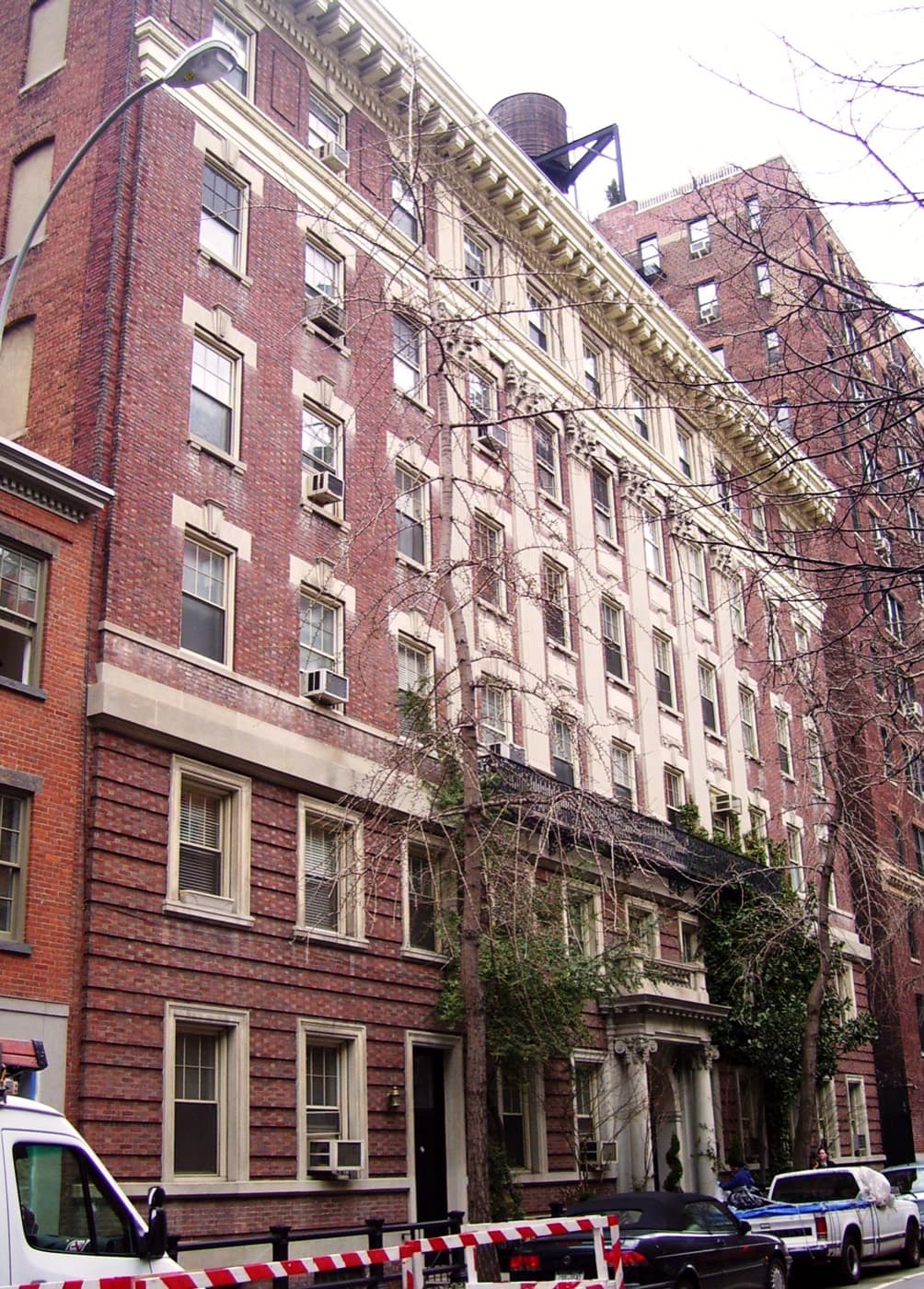
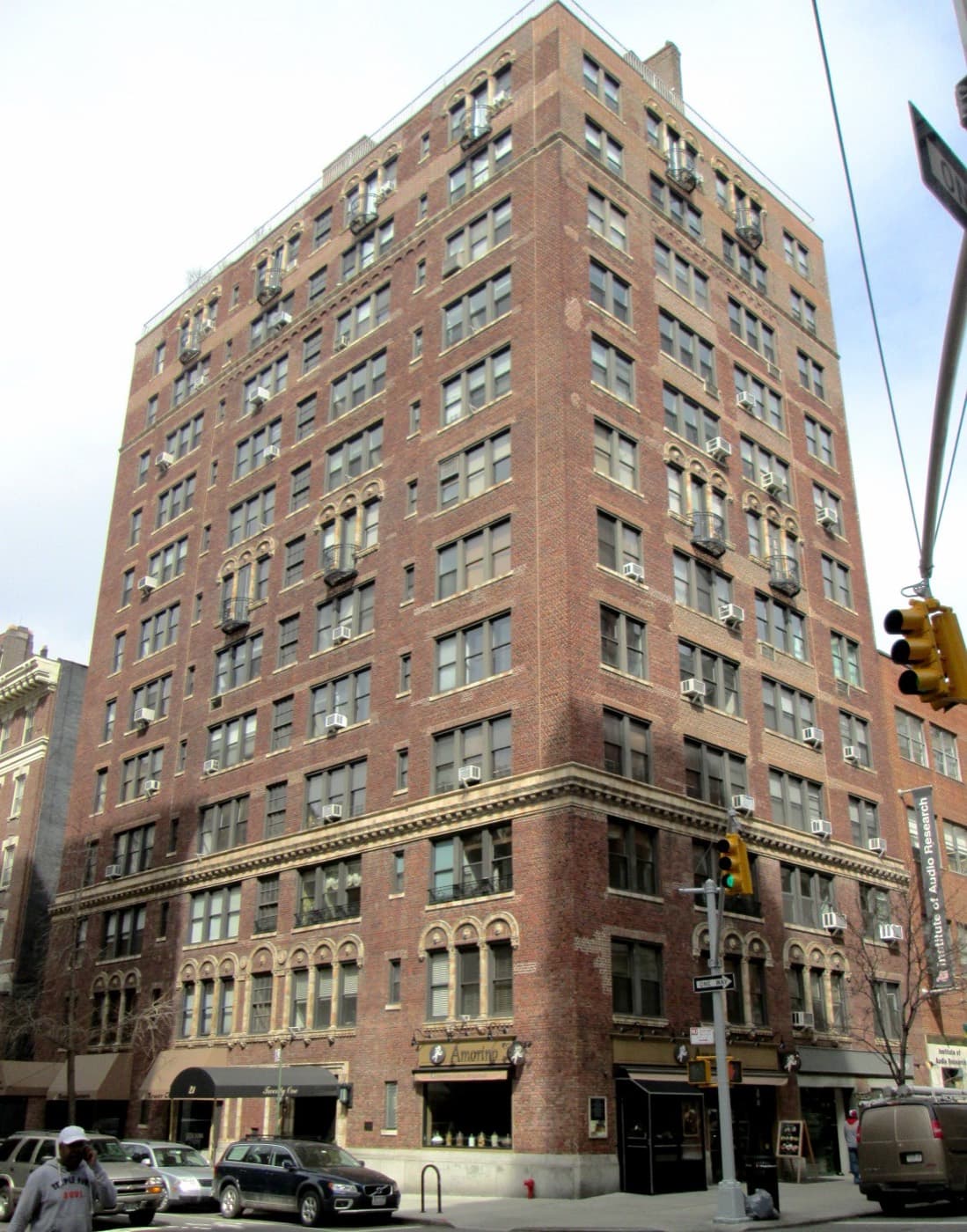
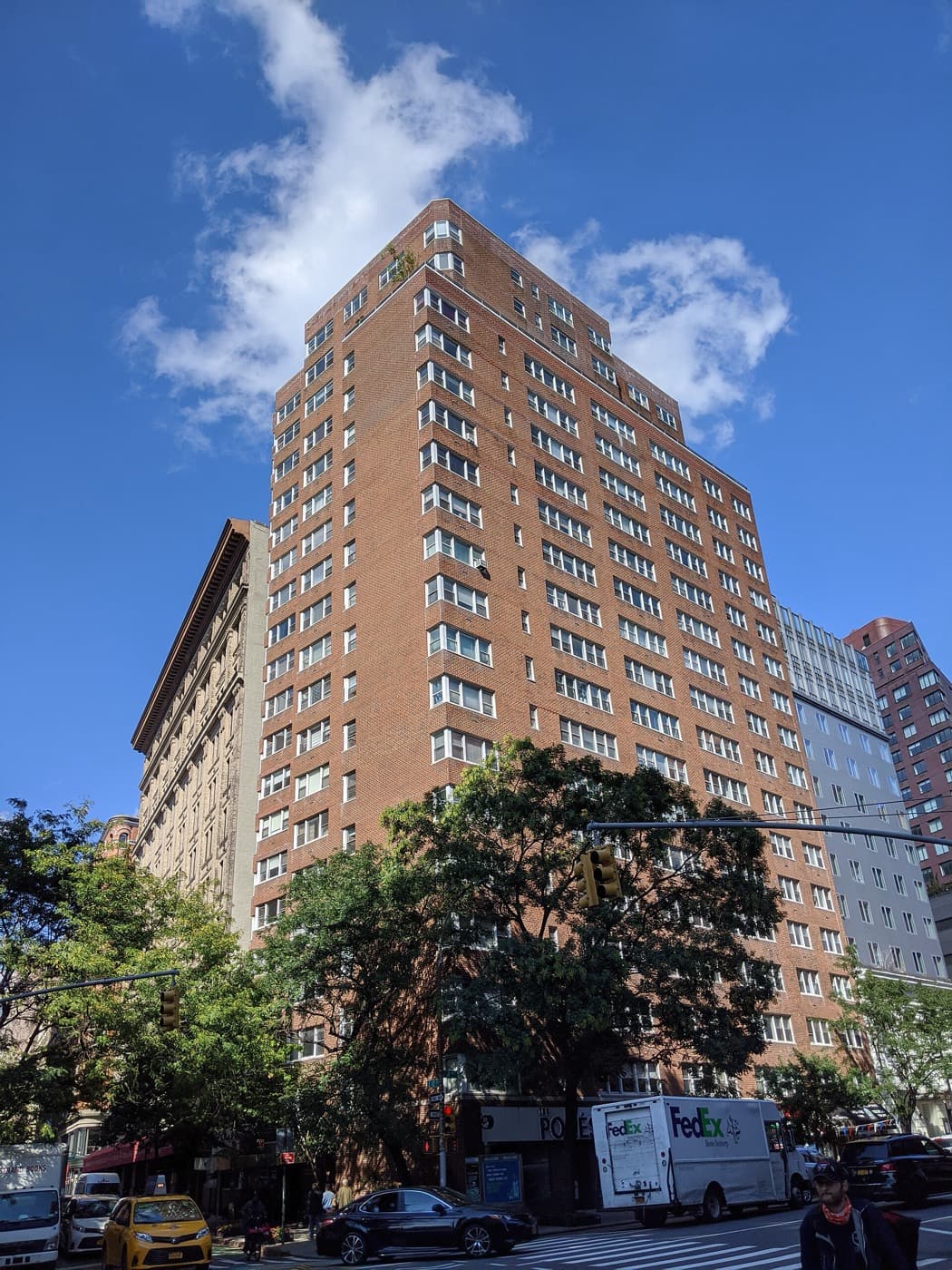
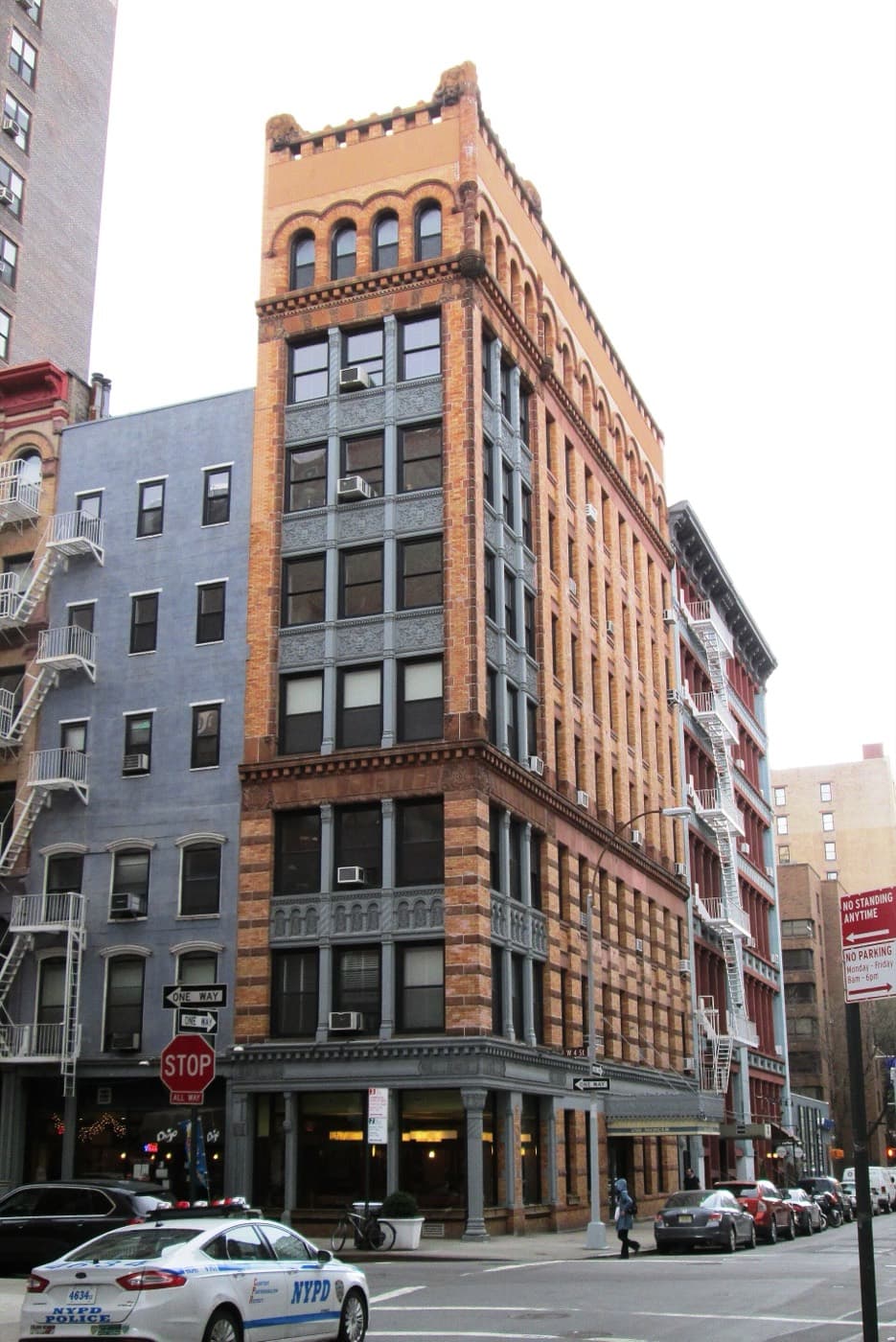
Buildings on Greenwich Village







Tell us what you are looking for and the Roebling Research Desk will send building matches across Greenwich Village, with pricing and diligence on each.
Get building matches sent to you →Get the neighborhood read on your building.
See how your apartment compares with the rest of Greenwich Village, or get a market update tuned to this neighborhood — sent to you directly.