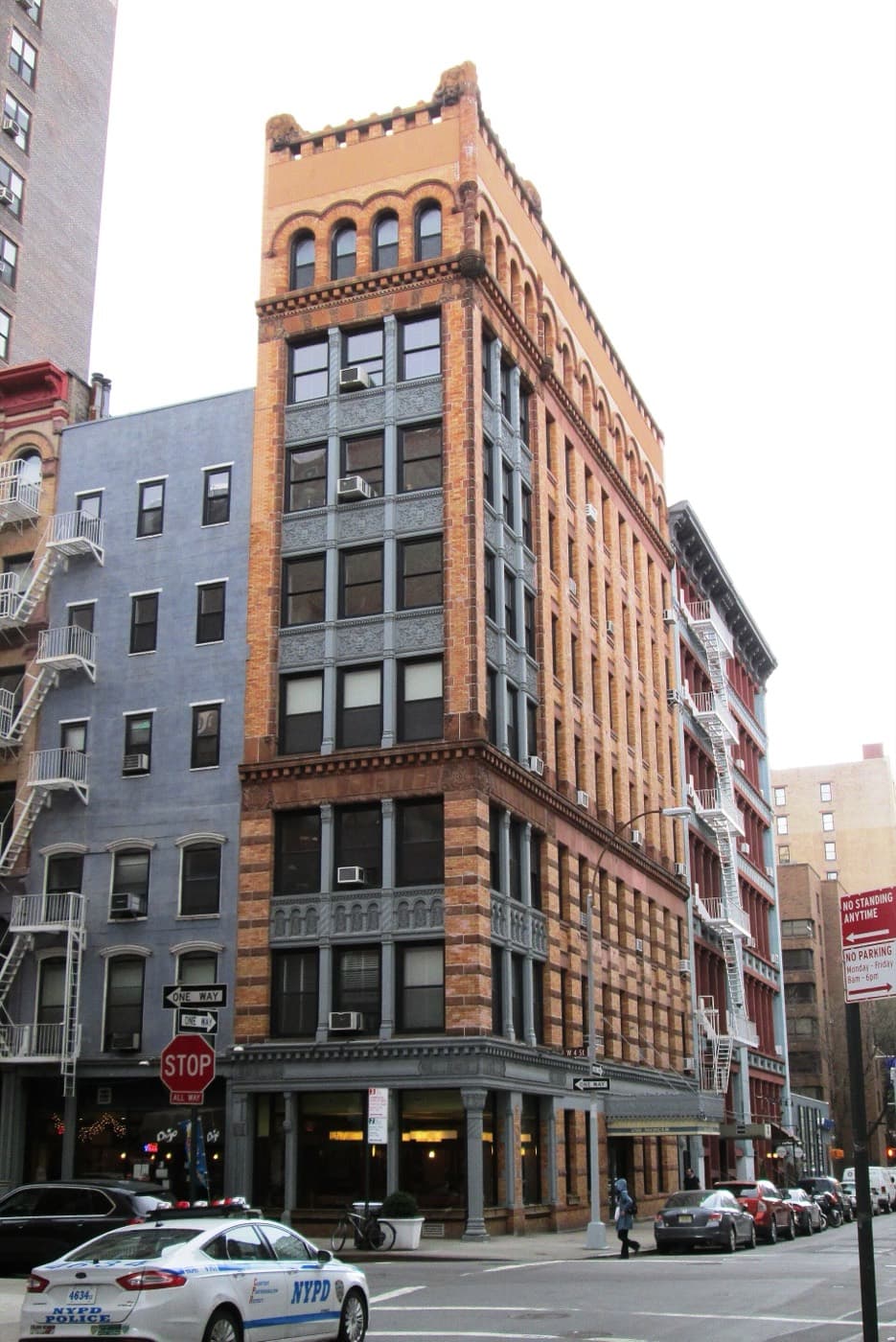
Mercer Square (250 Mercer Street / 14 West 4th Street)
250 Mercer Street, New York, NY 10012
BBL 1005357501 · BIN 1008629
- Year built
- 1908
- Type
- Prewar loft-and-manufacturing buildings converted to residential
- Units
- 263
- Landmark
- In a historic district
- Pets
- Permitted for shareholders
- Subletting
- Permitted with board approval (a corporate sublet fee applies)
Own an apartment here? See what it would sell for.
A Private Pricing Opinion — what your apartment at Mercer Square would likely sell for today, what it costs to sell, and what you’d walk away with — reviewed personally against condition, exposures, renovation quality, and the competition actually on the market.
Mercer Square is one of the largest and most distinctive cooperatives in Greenwich Village — a full-block ensemble of nine interconnected early-twentieth-century loft buildings, bounded by Mercer Street, West 3rd Street, West 4th Street, and Broadway, two blocks from Washington Square Park in the heart of the NYU area. Where most Village co-ops are single prewar apartment houses or converted townhouses, Mercer Square is a stitched-together complex of former manufacturing and commercial buildings, and that origin gives it something the neighborhood's more conventional inventory cannot offer: genuine loft volume, extraordinary layout diversity, and a scale of amenity and service unusual for the area.
The architectural anchor is the Broadway corner at West 4th Street — the former Merchants' Building, completed in 1908 to designs by architect William C. Frohne for developer Philip Braender. It is a serious piece of commercial architecture: rusticated limestone piers on granite bases, cast-iron storefront enframements shaped like bundled sheaves, a band of stern-faced owls above the third floor, fearsome lions' heads at the fourteenth, and figural faces worked into the Corinthian capitals near the top. The building was state-of-the-art for its day, with electric elevators, high-pressure heating, and its own power plant. The nine structures were combined into a single residential complex in 1979–1980 and taken cooperative in 1986.
For buyers, Mercer Square matters because it combines that loft character and NoHo-landmarked pedigree with a service and amenity package — full-time doorman, landscaped courtyard, roof deck — and, historically, a reputation for unusually flexible cooperative rules. It is a Village address at genuine loft scale.
Architecture and unit composition
Mercer Square is not one building but nine interconnected structures rising to as many as sixteen stories, organized for residents under four lettered addresses. Because the buildings were built at different times over roughly a two-to-three-decade span and were originally loft and light-manufacturing space — apparel, millinery, and textile firms among the early tenants — the residential conversion produced an exceptional range of apartment types. Ceilings run high, on the order of 11 to 14 feet in many units, with exposed columns and large windows carried over from the buildings' commercial origins.
Layout diversity is the building's signature. Inventory ranges from studios with wide living areas through simplexes, duplexes with double-height living rooms, triplexes, and multi-level homes with spiral staircases, clerestory windows, and private terraces. Some units carry fireplaces; several have terraces or balconies. The variety means no two apartments are alike, and it rewards buyers who shop the building for the specific volume and configuration they want rather than a standardized floor plate.
The complex is within the NoHo Historic District, so exterior and facade work is subject to Landmarks Preservation Commission review — a protection for the building's character and a consideration for any alteration that touches the exterior.
Building operations
Mercer Square operates with a 24-hour doorman and concierge and a live-in superintendent. Common amenities include a landscaped courtyard with decorative murals, a furnished common roof deck, multiple laundry rooms, a bicycle room, and private basement storage for shareholders. Ground-floor retail — including neighborhood-serving tenants — occupies the commercial condominium portion of the cond-op. There is no gym and no garage. Recent capital work has included new elevators, a renovated lobby, and updated hallways and courtyard.
The building is legally a cond-op: the apartments are held by the cooperative corporation (Mercer Square Owners Corp.), while the ground-floor retail is a separate commercial condominium. In practice, buyers purchase cooperative shares and the residential portion trades as a co-op.
A note on board policy — verify before relying on it. Mercer Square has a long-standing reputation for liberal, "condo-style" rules, and several of those are well-supported: a 20% minimum down payment, a 2% flip tax paid by the seller at closing, pets permitted for shareholders, guarantors allowed, and subletting permitted with board approval after an initial ownership period (with a corporate sublet fee). However, the current managing agent's stated policy is more restrictive than the building's older reputation on several points — co-purchasing, parents purchasing for student children, and pieds-à-terre may not currently be permitted, and short-term rentals are not allowed. Because these specifics have shifted over time and differ across sources, confirm the current rules directly with the managing agent before making an offer. This is a live-verification item, not a settled fact.
Local Law 97
- 2024–2029 annual penalty
- $0 (under cap)
- 2030–2034 annual penalty
- $182,392/yr
- Per unit / month range
- $0 – $55
- Modeled exposure split equally across 274 units (the city tax-lot count). Not an assessed amount; co-op shareholders are typically charged by share allocation.
Source: NYC LL84 benchmarking and PLUTO · The Roebling Research Library. City record last verified September 2026.
See full Local Law 97 analysis — emissions history, scenarios, methodology →Facade safety — Local Law 11
The latest available filing classified the facade as Unsafe — conditions requiring corrective action, which under FISP means a protective sidewalk shed and repairs. Review the subsequent filings, the repair status, and the building’s board and financial materials — we pull the repair scope and funding picture for you.
How to read this, and where it comes from
QEWI = Qualified Exterior Wall Inspector — the licensed engineer the city requires to sign the report (the independent expert, not the managing agent).
Penalties shown are amounts DOB assessed against filings on record across 2005–10 to 2020–25. The FISP dataset does not record whether they were paid, contested or remain open, so treat the figure as history rather than a current balance and confirm the building’s standing with the managing agent.
Source: NYC DOB facade filings (FISP) · The Roebling Research Library. City record last verified September 2026.
Management & transfer contacts
- Sublet policy
- Allowed
- Pied-à-terre
- Allowed
- Notable fees
- Min Down Payment: 20%
Recent sales
Mercer Square trades actively as a Greenwich Village loft cooperative, typically with a small number of units on the market and a steady flow of closings under the 250 Mercer Street building record. Larger, higher-floor, and specially configured homes sit at the top of the building's range. Because many units lack a clean published square footage, price-per-room is the more reliable cross-unit metric and is best derived at the apartment level during diligence.
One financial characteristic defines the building and must be understood up front: maintenance is high. The cooperative carries a substantial underlying mortgage, and combined with real estate taxes that pushes monthly maintenance well above what a comparable unpledged prewar co-op would charge. The offset is that a large share of maintenance is tax-deductible — a meaningful portion, given how much of it is mortgage interest and taxes. Buyers should model the after-tax carry, not just the headline maintenance, and should recognize that the high maintenance can make units slower to sell and more sensitive in soft markets.
Recent transfers at this building, from The Roebling Research Library. Prices are the transfer amounts recorded with the NYC Department of Finance; apartment-level detail is checked against the building’s own file in The Roebling Research Library before publishing.
| Date | Unit | Apartment | Price | PPSF | vs. Ask |
|---|---|---|---|---|---|
| Jul 30, 2026 | B1505 | 1 BA | $715,000 | -4.7% | |
| Jul 16, 2026 | B706B707 | 2 BR · 2 BA | $3,729,123 | -5.6% | |
| Jul 13, 2026 | C412 | 1 BR · 1 BA | $1,685,000 | -3.7% | |
| Jun 8, 2026 | B502 | 1 BR · 1 BA · 1,000 sf | $1,060,000 | $1,060/sf | -3.6% |
| May 21, 2026 | C201 | 1 BR · 1 BA · 1,000 sf | $900,000 | $900/sf | +0.6% |
| May 13, 2026 | C415 | 1.5 BA | $830,000 | +4.4% | |
| Apr 1, 2026 | D802 | 3 BR · 2.5 BA · 1,900 sf | $3,300,000 | $1,737/sf | +0.0% |
| Mar 25, 2026 | D1202 | 2 BR · 1 BA | $1,975,000 | +23.8% |
Market read. Most recent trades (2026) cleared a median $1,399/sf (recorded) across 4 sales. Median listing discount 2.2% from the last ask — a recurring negotiation gap worth pricing into any offer or listing strategy.
Other recent transfers
| Date | Unit | Price |
|---|---|---|
| Apr 3, 2023 | B1108 | $1,080,000 |
| Dec 13, 2012 | D902 | $775,000 |
| Dec 13, 2012 | A305 | $1,465,000 |
Sales sourced from NYC Department of Finance recorded transfers (BBL 1-00535-7501). Apartment-level facts (line, condition, asking-price context) curated and cross-verified in The Roebling Research Library. Not all transactions cross-verify with ACRIS records — sponsor and LLC purchases sometimes record at stipulated values rather than market price; square footage on co-ops is not officially recorded, figures shown are approximate.
Closed rents at Mercer Square, last 36 months
| Size | Leases | Median / month |
|---|---|---|
| Studio | 2 | $4,325 |
| 1 bedroom | 17 | $7,000 |
| 2 bedroom | 2 | $14,250 |
21 closed leases, October 2023 to September 2026. Most recent lease July 2026. Sizes with fewer than 2 leases are not shown. Compiled by The Roebling Team at Compass from closed leases.
What to know if you’re buying
Understand the cond-op structure and the co-op purchase. You are buying cooperative shares in the residential portion; the ground-floor retail is a separate commercial condominium. Purchase mechanics, financing, and closing costs follow co-op rules.
Maintenance is high — model the after-tax carry. The underlying mortgage drives maintenance well above peer prewar co-ops, but a large share is tax-deductible. The relevant number for your budget is the after-tax monthly carry, not the headline figure. Request current financials and the deductibility percentage during diligence.
Verify the board rules directly. The building's flexible reputation is partly out of date. Confirm the current position on subletting, pieds-à-terre, co-purchasing, and parents buying for students with the managing agent before you commit — do not rely on older marketing copy.
Shop the building for the layout. No two apartments are alike. Loft volume, ceiling height, light, and multi-level configurations vary dramatically unit to unit. Decide what you want, then find the apartment that delivers it.
Landmark review applies to exterior work. The building is in the NoHo Historic District; any alteration touching the facade is subject to LPC review.
What to know if you’re selling
Lead with the loft character. High ceilings, exposed columns, and distinctive layouts are the building's differentiators against conventional Village inventory. Present the specific volume and configuration clearly.
Address the maintenance head-on. Buyers will focus on the high maintenance; get ahead of it with the deductibility figure and a clear after-tax carrying-cost picture.
Price to the building's own comp set. Given the layout diversity, in-building comparables — normalized for size, floor, and configuration — are the most reliable frame.
Confirm current board policy for your buyer. The rules have tightened relative to the building's reputation. Make sure your buyer understands the current subletting and residency requirements so approval is smooth.
Comparable buildings
If you're considering Mercer Square, also evaluate other Greenwich Village, NoHo, and adjacent loft and prewar cooperatives with strong service and distinctive layouts. The Roebling Team can assemble an apartment-level comparable set across the Greenwich Village corridor tailored to your budget, layout requirements, and tolerance for co-op financials and rules.
More Greenwich Village buildings
- 200 Mercer Street — 1870 co-op
- 215 Sullivan Street (209 Sullivan Street) — 1892 condominium
- 211 Thompson Street — 1887 co-op
- 290 Sixth Avenue — 1940 co-op by H.I. Feldman
- Snug Harbor (303 Mercer Street) — 1900 co-op
- 360 Sixth Avenue (360 Avenue of the Americas) — 1986 condominium
The neighborhood
For the full corridor — architecture, transit, and pricing across Greenwich Village — read The Roebling Team Guide to Greenwich Village.
The full playbook — what goes in the package, how boards read your financials, the interview, and the timeline — plus sample cover, reference, and personal letters you can adapt.
How to read the facts on this page. Items attributed to an offering plan describe the building as it was offered at that filing — unit mix, square footage, the amenity program as planned. They are not a statement about how the building operates today. Tax and compliance figures are sourced separately to current City records and carry their own dates. House rules, staffing and fee policy can change by board resolution without any public filing: treat every policy line here as a starting point for diligence and confirm it with the managing agent. Where this page compares one building or neighborhood to another, that is our analysis of the recorded record — it names the measure, the period and the sample it rests on, and it is an observation about medians rather than a prediction about any particular apartment.
Considering a move at Mercer Square?
Request a private building brief with the relevant comparable sales, current and off-market availability, and an apartment-specific view of value.