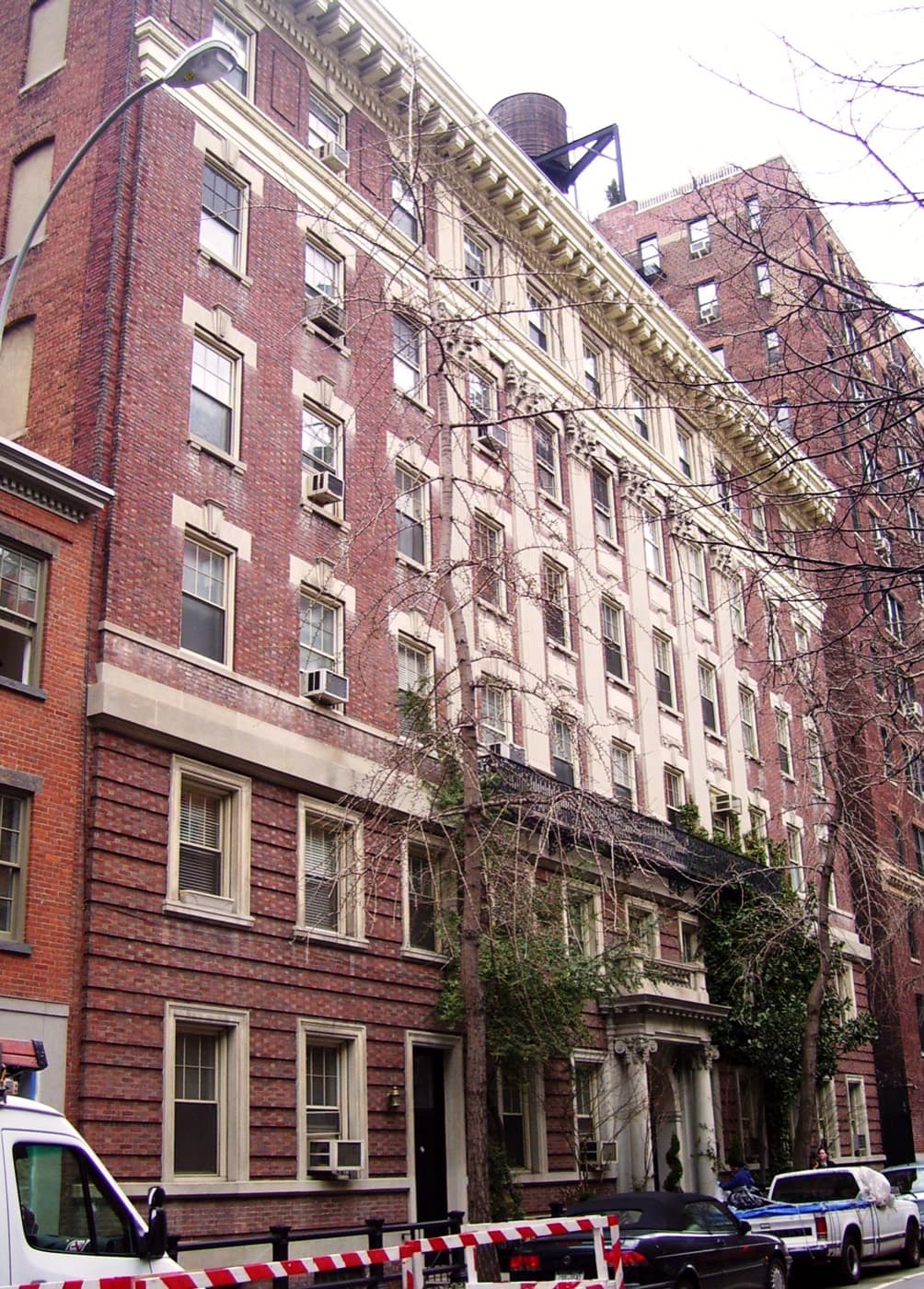
15 East 10th Street (The Mayfield)
15 East 10th Street, New York, NY 10003
BBL 1005680026 · BIN 1009266
- Year built
- 1910
- Type
- Cooperative
- Units
- 42
- Floors
- 6
- Landmark
- In a historic district
- Pets
- Confirm current terms with the board at offer stage
- Subletting
- Board approval required; confirm current terms at offer stage
- Flip tax
- To be confirmed with the board at offer stage
Every recorded sale at this building, 2003–2022
Bedroom-by-bedroom medians, the full transfer record, and how units trade against ask.
- Listing discount
- 0.0%
- Recorded transfers
- 38
Own an apartment here? See what it would sell for.
A Private Pricing Opinion — what your apartment at The Mayfield would likely sell for today, what it costs to sell, and what you’d walk away with — reviewed personally against condition, exposures, renovation quality, and the competition actually on the market.
The Mayfield occupies one of the most coveted residential blocks in Greenwich Village — East 10th Street between Fifth Avenue and University Place, a tree-lined stretch within the Greenwich Village Historic District, a short walk from Washington Square. Completed in 1910 and converted to cooperative ownership in 1984, the six-story pre-war building has operated since as a quiet, well-kept co-op with an intimate unit count.
The appeal here is the setting and the scale. This is a classic pre-war Village address — solid masonry construction, defined room layouts, and the storybook streetscape that draws buyers to this corner of Manhattan. With 42 residences across six floors, the building is small enough to feel like a house rather than an institution, and its position inside the historic district protects the character of the block in perpetuity.
For buyers, the Mayfield offers the combination that makes pre-war Village co-ops enduringly desirable: a landmark-district location, a well-run building with a live-in superintendent, and moderate carrying costs relative to a full-service tower. It is a sought-after residential address rather than a trophy building, and it prices accordingly.
Architecture and unit composition
The 42 apartments distribute across six stories in a 1910 pre-war elevator envelope. The unit mix runs from studios and one-bedrooms through two-bedroom layouts, with the pre-war bones — thick walls, generous ceiling heights, and defined rooms — that Village buyers prize. Interiors vary substantially apartment to apartment; renovation quality is a primary driver of the pricing spread within the building.
The building presents to the street with the restrained pre-war character appropriate to its historic-district block, and the tree-lined outlook is itself part of the value for many of the apartments.
Building operations
The Mayfield is a well-run pre-war cooperative with an elevator, central laundry, private storage cages, bicycle storage, and a live-in superintendent. It is not a full-service doorman building — the trade-off that keeps carrying costs moderate for a pre-war co-op of this vintage — and that profile suits buyers who prioritize location and character over staffing.
As a cooperative, purchases require board approval and are subject to the building's financing limits and any flip tax; these figures should be confirmed directly with the board at offer stage. Buyers should review the current maintenance schedule, any assessments, the reserve position, and recent capital work — elevator, roof, and façade history in particular, given the building's age and historic-district status — during due diligence.
Facade safety — Local Law 11
The latest available FISP filing classified the facade as Safe — no repairs were required at that inspection. Facade inspections run on a fixed five-year cycle; future inspection, repair, and any assessment decisions remain building-specific.
How to read this, and where it comes from
QEWI = Qualified Exterior Wall Inspector — the licensed engineer the city requires to sign the report (the independent expert, not the managing agent).
Source: NYC DOB facade filings (FISP) · The Roebling Research Library. City record last verified September 2026.
Recent sales
As a cooperative, the Mayfield is read on a price-per-room basis; many apartments trade without a published square footage, and per-room pricing is the more reliable comparison. Recent closings have run from the mid-hundreds of thousands for smaller layouts into the low seven figures for renovated two-bedrooms, with floor, exposure, and condition the dominant variables within the building.
Apartments here turn over at a measured pace and have historically transacted within a normal band of asking after a typical marketing period, consistent with a well-run, non-trophy pre-war co-op in a protected district. Renovated, higher-floor apartments command the premium. Specific recent figures and the building's current financing and flip-tax terms should be confirmed at offer stage.
Recent transfers at this building, from The Roebling Research Library. Prices are the transfer amounts recorded with the NYC Department of Finance; apartment-level detail is checked against the building’s own file in The Roebling Research Library before publishing.
| Date | Unit | Apartment | Price | vs. Ask |
|---|---|---|---|---|
| Oct 4, 2022 | 5A | 2 BR · 1 BA | $1,315,000 | -2.6% |
| Nov 11, 2021 | 3F | 4 BR · 3.5 BA | $4,050,000 | -25.7% |
| Aug 2, 2021 | 5D | 1 BR · 1 BA | $1,150,000 | +0.0% |
| Jul 8, 2021 | 4D | 1 BR · 1 BA | $1,165,000 | +1.3% |
| Jun 23, 2021 | 2G | 1 BR · 1 BA | $1,110,000 | -3.5% |
| Dec 7, 2020 | 1E | 1 BR · 1 BA | $950,000 | -13.6% |
| Oct 22, 2020 | 3B | 1 BR · 1 BA | $1,325,000 | -8.6% |
| Sep 9, 2020 | 5B | 1 BR · 1 BA | $1,100,000 | -4.3% |
Market read. $/sf is measured on the latest sales with reliable square footage (2017): a median $1,486/sf (recorded) across 1 sale. The building has traded as recently as 2022. Median listing discount 0.0% from the last ask.
The retrade record
Lines that have traded more than once in the public record — the building’s appreciation arc, apartment by apartment.
Other recent transfers
| Date | Unit | Price |
|---|---|---|
| Dec 9, 2009 | 1E | $630,000 |
| Oct 6, 2006 | 6C | $525,000 |
Full closing history with price-per-square-foot over time, the complete retrade record, and every line that has traded.
Sales sourced from NYC Department of Finance recorded transfers (BBL 1-00568-0026). Apartment-level facts (line, condition, asking-price context) curated and cross-verified in The Roebling Research Library. Not all transactions cross-verify with ACRIS records — sponsor and LLC purchases sometimes record at stipulated values rather than market price.
Closed rents at The Mayfield, last 36 months
| Size | Leases | Median / month |
|---|---|---|
| 1 bedroom | 4 | $6,000 |
4 closed sublet leases, October 2023 to September 2026. Most recent lease April 2025. Based on few leases. Sizes with fewer than 2 leases are not shown. Compiled by The Roebling Team at Compass from closed leases.
Buying here? Co-op closing costs typically run 2 to 3% of the price. See NYC co-op and condo closing costs, line by line.
Keep up with The Mayfield and its market
The Roebling Report, monthly: Manhattan sales data and analysis, including buildings like The Mayfield. Unsubscribe anytime.
We’ll use your email for The Roebling Report and note your interest in this building. See our privacy policy.
What to know if you’re buying
The block is the asset. A landmark-district address on one of the Village's best residential streets is permanent value. Buyers are buying into a protected streetscape.
Understand the co-op economics. Confirm the building's current financing limit, any flip tax, and the maintenance schedule directly with the board, and model the full carry before you offer.
Condition drives price. Renovation quality is a primary variable within the building. Inspect kitchens, baths, and mechanicals and price against comparable condition.
Know the service profile. This is an elevator co-op with a live-in super, not a full-service doorman building. If doorman coverage is a priority, weigh that against the location and the moderate carry.
Board approval applies. As a cooperative, purchases require board approval. Prepare a complete, well-documented board package.
What to know if you’re selling
Lead with the location and the pre-war character. The historic-district block and the pre-war proportions are the headline against newer or larger-scale inventory.
Presentation matters. Because condition drives the pricing spread, staging and preparation materially affect outcome.
Price per room against the right comps. Comparable analysis should weight floor, exposure, and condition — and account for the building's boutique, non-doorman profile in the buyer pool it attracts.
Comparable buildings
If you're considering 15 East 10th Street, also evaluate:
- 41 University Place — full-service pre-war cooperative a block away
- 44 East 12th Street (Parc Village) — full-service condominium at the Union Square edge
- Greenwich Village corridor — the broader neighborhood's cooperative tradition
More Greenwich Village buildings
- 12 West 9th Street — 1952 condop
- 14 West 11th Street — 1844 co-op
- 14 West 14th Street — 2008 condominium
- 15 West 11th Street — 1923 co-op
- 15 West 12th Street — 1957 co-op
- 16 East 11th Street — 1839 co-op
The neighborhood
For the full corridor — architecture, transit, and pricing across Greenwich Village — read The Roebling Team Guide to Greenwich Village.
The full playbook — what goes in the package, how boards read your financials, the interview, and the timeline — plus sample cover, reference, and personal letters you can adapt.
How to read the facts on this page. Items attributed to an offering plan describe the building as it was offered at that filing — unit mix, square footage, the amenity program as planned. They are not a statement about how the building operates today. Tax and compliance figures are sourced separately to current City records and carry their own dates. House rules, staffing and fee policy can change by board resolution without any public filing: treat every policy line here as a starting point for diligence and confirm it with the managing agent. Where this page compares one building or neighborhood to another, that is our analysis of the recorded record — it names the measure, the period and the sample it rests on, and it is an observation about medians rather than a prediction about any particular apartment.
Considering a move at The Mayfield?
Request a private building brief with the relevant comparable sales, current and off-market availability, and an apartment-specific view of value.