
Flatiron
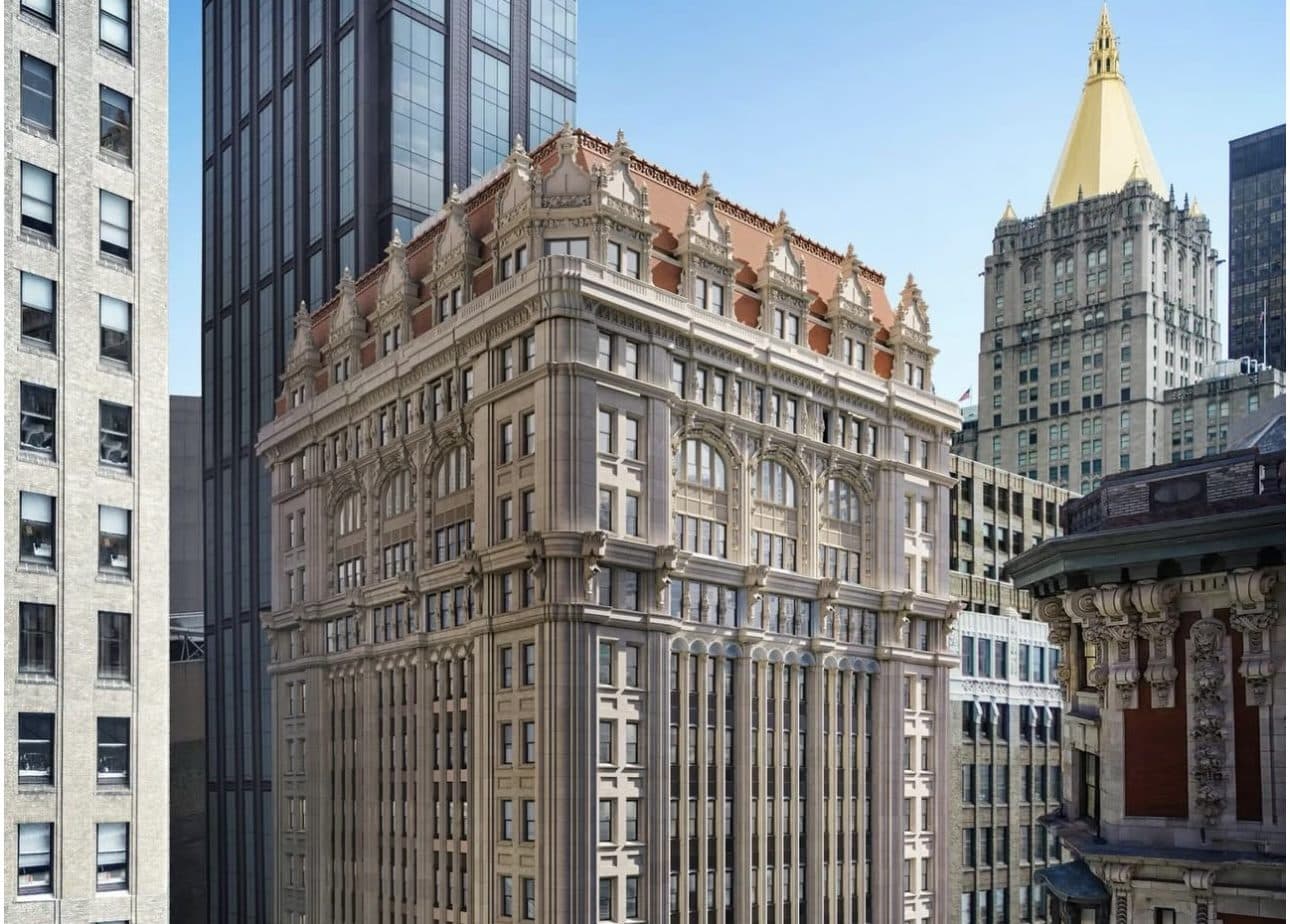
Flatiron spans the Flatiron District, NoMad, and Madison Square Park, mixing prewar commercial conversions, boutique new development, and post-2010 luxury condos like Madison Square Park Tower, around one of Manhattan's strongest design and office-adjacent residential corridors.
What Flatiron is selling for
Movement of the annual median — not adjusted for transaction mix. Which apartments happened to trade (size, floor, condition, line) moves these as much as value does; the sample behind each is shown beneath it.
Two markets, one neighborhood. Since 2016, Flatiron condos are down 14% and co-ops down 15% on paper — but after inflation, −35.8% and −36.9% in real terms.
Movement of the annual median — not adjusted for transaction mix. Which apartments happened to trade (size, floor, condition, line) moves these as much as value does; the sample behind each is shown beneath it.
Method & coverage
Method. Condos are measured per square foot, co-ops per room (room counts from listing data; sales without a usable room count are excluded). The percentages are movement of the annual median — not a constant-quality or repeat-sale index — so transaction mix moves them as well as value. Real-terms figures deflate that same median by CPI.
Coverage. 3,798 recorded sales. Before the figures above, 25 non-arms-length transfers (nominal estate, gift, or intra-family deeds and mis-recorded bulk filings) and 6 duplicate records of the same deed (a combined apartment or penthouse recorded under more than one unit label) were removed. Corridors may overlap — a sale can appear in both a neighborhood set and a narrower avenue set. Recorded transfers via NYC Department of Finance, enriched by The Roebling Research Library.
Flatiron rents
Flatiron rents are up 7.1% in January–September 2026, against the same months of 2025. 2025 was +5.6%, 2024 +6.2%, 2023 −1.1%.
The same apartments, lease to lease, each year against the year before (1,690 lease-to-lease comparisons). 2026 compares January–September with January–September 2025. * Few repeat leases that year. The latest months can move as late-reported leases arrive.
| Size | 2023 | 2024 | 2025 | 2026 YTD |
|---|---|---|---|---|
| All sizes | $90164 leases−4.5% | $100171 leases+10.3% | $106166 leases+6.2% | $117116 leases+10.2% |
| Studio | $109*16 leases | $102*17 leases | $111*17 leases | $120*18 leases |
| 1 bedroom | $9484 leases | $10579 leases | $10695 leases | $11862 leases |
| 2 bedroom | $8559 leases | $9667 leases | $10549 leases | $11033 leases |
Median rent per square foot per year, from closed leases that report square footage. 2026 is January–September. * Fewer than 30 leases.
| Size | 2023 | 2024 | 2025 | 2026 YTD |
|---|---|---|---|---|
| All sizes | $1,57534 leases | $1,708*24 leases | $1,577*20 leases | $1,965*16 leases |
| 1 bedroom | $1,500*18 leases | $1,565*12 leases | $1,667*10 leases | $1,931*12 leases |
Median monthly rent per room, co-op sublets. 2026 is January–September. * Fewer than 30 leases.
Compiled by The Roebling Team at Compass from closed leases, through September 2026. Figures are indicative, not an appraisal. The Roebling Index
At a glance
Corridor: Flatiron, running roughly from East 14th Street on the south to East 26th Street on the north, and from Park Avenue South on the east to Sixth Avenue on the west — anchored at the geographic center by Madison Square Park and the Flatiron Building (175 Fifth Avenue) Adjacent neighborhoods: Union Square to the south, NoMad to the north, Gramercy to the east, Chelsea to the west, Madison Square Park as the corridor's defining open-space anchor Building stock: A mixed register anchored by the Ladies' Mile Historic District (LPC designation 1989), the Flatiron Building and the broader 1900–1920 commercial-to-residential conversion inventory, the One Madison and 212 Fifth post-2010 trophy condominium concentration, the broader 23rd Street and Park Avenue South prewar conversion supply, and the Madison Square Park-facing residential register Cultural anchors: Madison Square Park, the Flatiron Building, the Met Life Tower at One Madison Avenue, the Met Life North Building, Shake Shack flagship, Eataly Flatiron, ABC Carpet & Home, the Madison Square Park Conservancy programming, the broader Ladies' Mile retail history Transit: 23rd Street stations at Park Avenue South (6), Broadway (R/W), and Sixth Avenue (F/M); 14th Street–Union Square (4/5/6/L/N/Q/R/W) at the corridor's southern flank; 28th Street (R/W and 6) at the corridor's northern flank Source: The Roebling Team at Compass, verified against public records, the New York City Landmarks Preservation Commission, the Ladies' Mile Historic District designation, building offering plans, the 2025 Michelin Guide, NYC Department of Finance recorded transfers, and direct neighborhood transaction experience. June 2026.
Why the Flatiron
The Flatiron is the Manhattan residential neighborhood most explicitly organized around the emergence of the post-2010 luxury condominium concentration layered over the corridor's historic commercial heritage. For most of the 20th century, the area now known as the Flatiron operated primarily as a commercial neighborhood — the southern terminus of the Ladies' Mile retail corridor (the late-19th-century luxury shopping district that ran from the Flatiron Building south to Union Square), the headquarters cluster of the toy and publishing industries (centered on the International Toy Center at 200 Fifth Avenue), the home of the Metropolitan Life Insurance Company (whose 1909 tower at One Madison Avenue was, at completion, the tallest building in the world), and the broader corporate-headquarters district that defined the corridor's commercial identity for over a century.
The post-2000 transformation has been one of the most significant residential repositionings of any American urban neighborhood. The conversion of the International Toy Center, the post-2010 trophy condominium concentration at One Madison and 212 Fifth, the emergence of NoMad as a distinct adjacent residential register, the Madison Square Park revitalization, and the Eataly Flatiron and Shake Shack flagship retail anchors together have produced a Flatiron residential identity that did not exist in any meaningful sense before 2010. The Flatiron is, today, among the densest residential conversion-and-new-construction geographies in Manhattan and the most-cited "emerging" condominium corridor in downtown Manhattan.
The structural identity that distinguishes the Flatiron from the rest of Manhattan is the layering of the Ladies' Mile Historic District commercial architecture with the post-2010 luxury condominium trophy register, anchored to Madison Square Park — the 6.2-acre public park that operates as the corridor's primary daily-life open-space amenity and the site of the Shake Shack flagship, the Madison Square Park Conservancy programming, and the broader cultural infrastructure that has emerged in the post-2010 cycle.
This guide is the orientation document we give buyers who are considering the Flatiron for the first time. It covers what the corridor is, what its buildings are, what its institutional and cultural geography looks like, where its dining scene sits in 2025, and how its buyer market differs from Gramercy, the Village, and the broader downtown Manhattan trophy alternatives. It is not a market report; pricing on the corridor moves quarter to quarter. It is a structural guide intended to be useful in any market.
Boundaries and character
The Flatiron's conventional boundaries run from East 14th Street on the south, to East 26th Street on the north, from Park Avenue South on the east to Sixth Avenue on the west. The corridor's borders are particularly contested at the northern and western edges, where the Flatiron transitions into NoMad (north of East 23rd along Broadway) and into Chelsea (west of Sixth Avenue along the broader West 23rd corridor). Within those boundaries, sub-character varies meaningfully:
Madison Square — the blocks immediately surrounding the park, anchored at the Flatiron Building (175 Fifth Avenue) at the corridor's geographic center — operates as the corridor's most architecturally consequential register. The park-facing buildings include the Met Life Tower (One Madison Avenue, 1909), the Met Life North Building (11 Madison Avenue, 1932/1950), the Appellate Division Courthouse (35 East 25th Street, 1900), and the broader park-facing trophy inventory.
The Ladies' Mile flank — running along Broadway and Sixth Avenue from approximately East 17th to East 23rd — operates as the corridor's most preserved 19th-century commercial register. The Ladies' Mile Historic District (LPC designation 1989) preserves the cast-iron and ornamental brick commercial fronts that defined the late-19th-century luxury shopping district.
The post-2010 trophy condominium concentration — anchored at One Madison (23 East 22nd Street), 212 Fifth Avenue, 15 Union Square West, and the broader trophy conversion supply — operates as the corridor's contemporary residential anchor.
The Union Square flank at the corridor's southern terminus — including the broader 14th Street and Union Square commercial concentration — operates as the corridor's mixed-use commercial-and-residential anchor.
What distinguishes the Flatiron from the rest of Manhattan is the layering of the Ladies' Mile Historic District commercial architecture with the post-2010 luxury condominium concentration. Within a six-block radius, buyers encounter the 1902 Flatiron Building, the 1909 Met Life Tower, the 1900 Appellate Division Courthouse, the broader Ladies' Mile cast-iron commercial inventory, the 1980s and 1990s conversion supply, and the post-2010 trophy condominium register that has redefined the corridor's residential character. The architectural inventory is layered across multiple commercial-to-residential cycles and produces a residential geography distinct from any other Manhattan corridor.
The Flatiron skyline — an architectural inventory
The corridor's residential supply concentrates in three distinct cohorts: the historic commercial-to-residential conversion inventory anchored at the broader Ladies' Mile Historic District; the post-2010 trophy condominium concentration at One Madison, 212 Fifth, and the broader post-2010 cohort; and the broader Park Avenue South and Fifth Avenue mid-tier conversion supply.
The trophy commercial-to-residential conversion inventory:
- The Flatiron Building at 175 Fifth Avenue — Daniel Burnham (D.H. Burnham & Company), completed 1902. 22 stories, 285 feet. The triangular Beaux-Arts trophy at the convergence of Fifth Avenue, Broadway, and East 23rd Street is among the most-photographed buildings in the world and the corridor's most consequential architectural anchor. National Historic Landmark since 1989. The 2024–2025 residential conversion (currently in process) is among the most consequential commercial-to-residential conversions in Manhattan history.
- One Madison Avenue / Met Life Tower — Napoleon LeBrun & Sons, completed 1909. 700 feet, 50 stories. At completion the tallest building in the world (held the title until 1913). The 1968 reclad commercial restoration and the broader continuing operational history. National Historic Landmark since 1979.
- The Cammeyer Building at 8 East 18th Street — late-19th-century commercial conversion at the corridor's southern flank.
- 15 Union Square West — the former Tiffany & Co. building (1870), converted to a 12-story residential condominium for Brack Capital Real Estate, with seven floors added above the original five (DOB alteration filed 2006). The cast-iron facade was preserved in the conversion.
- 200 Fifth Avenue — Robert Maynicke, 1909. The International Toy Center / Fifth Avenue Building. Primarily commercial / office in current configuration; the broader trophy commercial-to-residential conversion potential continues to develop.
The post-2010 trophy condominium concentration:
- One Madison Park / 23 East 22nd Street — Cetra Ruddy for HFZ Capital Group, completed 2011 (originally Slazer Enterprises, with subsequent ownership changes). 60 stories, 621 feet. The slender supertall trophy at the Madison Square Park flank has been the corridor's most consequential post-2010 residential project.
- 212 Fifth Avenue — Helpern Architects with Pelli Clarke Pelli for Madison Equities and Thor Equities, conversion completed 2017. The conversion of the 1913 commercial building into 48 condominium residences. Among the corridor's most-cited trophy conversions.
- 241 Fifth Avenue — ODA (Eran Chen), 20 stories, 46 residences. The contemporary residential tower at the corridor's northern flank.
- 10 Madison Square West — the contemporary condominium at the corridor's northwestern flank.
- 27 East 22nd Street and the broader post-2010 condominium supply.
- Madison Green at 5 East 22nd Street — postwar condominium (completed 1985) at the broader corridor.
- The Whitman at 21 East 26th Street — Treanor & Fatio, 1924, built as a commercial showroom building and converted to residential (DOB alteration filed 2011). Six stories, four condominium residences at the Madison Square Park flank.
The broader Park Avenue South and Fifth Avenue mid-tier conversion supply:
- The Carlton Regency at 137 East 36th Street — broader Murray Hill flank inventory.
- Anagram NoMad (formerly Madison Belvedere) at 10 East 29th Street — 1998 rental tower on the broader NoMad flank; rental inventory, not part of the conversion sale supply.
- 245 East 25th Street — broader Gramercy-flank inventory.
The cumulative architectural effect is uncommon: a corridor in which the 1902 Flatiron Building and the 1909 Met Life Tower coexist with the post-2010 trophy condominium concentration anchored at One Madison and 212 Fifth, set against the preserved Ladies' Mile Historic District commercial streetscape. Buyers who choose the Flatiron are choosing both the building and the corridor's structural identity as the emerging residential-conversion-and-new-construction corridor.
Madison Square Park, the Flatiron Building, ABC Carpet & Home, and the institutional anchor
The corridor's institutional and cultural concentration is the densest historic-commercial-and-contemporary-cultural geography in downtown Manhattan. The institutions cluster within a walking radius of approximately ten minutes from any residential address.
Madison Square Park at the corridor's geographic center — 6.2 acres bounded by Fifth and Madison Avenues between East 23rd and East 26th Streets — is the corridor's most consequential public-realm anchor. The park was officially opened in 1847; the current landscape configuration reflects multiple historic and post-2000 restorations. The Madison Square Park Conservancy (founded 2002) operates the park's continuing cultural programming, including the Shake Shack flagship restaurant (founded 2001 in the park, opened as a permanent kiosk in 2004 — the original location of the Danny Meyer / Union Square Hospitality Group national chain), the rotating Mad. Sq. Art outdoor sculpture program, and the broader park-anchored cultural infrastructure.
The Flatiron Building at 175 Fifth Avenue — Daniel Burnham, 1902 — is the corridor's most consequential architectural anchor. The Beaux-Arts limestone-and-terracotta-clad steel-frame structure at the triangular intersection of Fifth Avenue, Broadway, and East 23rd is among the most-photographed buildings in the world. National Historic Landmark since 1989. The building's current commercial-to-residential conversion (in process as of 2026) represents one of the most consequential redevelopment projects in Manhattan.
The Met Life Tower at One Madison Avenue — Napoleon LeBrun & Sons, 1909 — is the corridor's second most-photographed historic building. The 700-foot Italianate clock tower (modeled on the Campanile of St. Mark's Basilica in Venice) was, at completion in 1909, the tallest building in the world. National Historic Landmark since 1979.
The Appellate Division Courthouse at 35 East 25th Street (at Madison Avenue) — James Brown Lord, completed 1900 — is among the most architecturally consequential courthouse buildings in the United States. The Beaux-Arts marble structure houses the Appellate Division of the New York State Supreme Court, First Department.
The Met Life North Building at 11 Madison Avenue — Harvey Wiley Corbett, Daniel Higgins, and the Office of Lloyd Morgan, completed in stages 1932–1950 — is the broader Metropolitan Life Insurance complex's secondary building. The Art Deco design was originally planned as a 100-story tower; the Depression and World War II truncated the construction to 32 stories.
ABC Carpet & Home at 888 Broadway (at East 19th Street) — opened at the current Broadway location in 1881 (in a series of historic buildings, with the broader operational history complex) — is the corridor's most consequential single-retail destination and a structural anchor of the Broadway corridor between Union Square and Madison Square. The 8-story flagship is among the largest single-retailer dedicated stores in Manhattan.
The Strand Bookstore at 828 Broadway (at East 12th Street, just south of the corridor) — founded 1927 by Benjamin Bass, moved to the current Broadway location in 1957 — is the corridor's most consequential bookstore. The 18 miles of books and the multi-floor flagship are a defining piece of the corridor's broader cultural geography.
The Tin Pan Alley Historic District — a five-building National Register Historic District on West 28th Street between Broadway and Sixth Avenue (just north of the corridor in NoMad) — preserves the late-19th-and-early-20th-century music publishing district from which "Tin Pan Alley" took its name.
Eataly Flatiron at 200 Fifth Avenue (in the broader International Toy Center building, opened August 2010) — the founding U.S. location of Oscar Farinetti's Italian market-and-restaurant complex — is the corridor's most consequential post-2010 retail-and-dining opening. The 50,000-square-foot complex anchors the corridor's daily-life Italian-food register.
Schools nearby
The Flatiron's private school inventory is limited within the corridor itself; the nearest independent schools are in the broader Greenwich Village, Gramercy, and downtown cluster.
Friends Seminary at 222 East 16th Street (at the corridor's southeastern Gramercy flank) — the Quaker day school founded 1786 — is the closest comprehensive independent school. K-12 coeducational.
Grace Church School at 86 Fourth Avenue (at the corridor's southern flank in the Village/NoHo area) — independent JK-12 school.
The Little Red School House & Elisabeth Irwin High School (LREI) at 272 Sixth Avenue (in Greenwich Village) — independent PK-12.
The Anglo-American International School of New York at 18 West 89th Street (Upper West Side) and Avenues: The World School at 11 Tenth Avenue (Chelsea) extend the corridor's accessible international school inventory.
The Clinton School for Writers & Artists at 10 East 15th Street — the dedicated arts public middle and high school at the corridor's southern flank.
PS 40 Augustus Saint-Gaudens at 320 East 20th Street (in Gramercy) — the District 2 public elementary.
Restaurants — Michelin and neighborhood cache
The Flatiron's dining geography is among the densest in Manhattan, with the corridor's restaurant infrastructure transformed since 2010 by the residential and commercial transformation of the broader Madison Square area. The 2025 Michelin Guide for New York, announced in November 2025, named multiple corridor restaurants among the city's starred inventory.
Eleven Madison Park at 11 Madison Avenue — Daniel Humm's contemporary plant-based fine-dining restaurant, three Michelin stars retained through 2025 — is the corridor's most consequential restaurant and one of the most consequential restaurants in the world. The 2021 conversion to a fully plant-based menu was among the most-discussed transitions in fine-dining history; the restaurant has continued to operate at the three-star register since the conversion.
Atomix at 104 East 30th Street (technically at the corridor's northern NoMad flank) — Junghyun and Ellia Park's contemporary Korean restaurant, two Michelin stars retained through 2025. The 14-seat tasting counter is among the most-discussed restaurant openings of the post-2020 corridor cycle.
Cosme at 35 East 21st Street — Enrique Olvera's contemporary Mexican restaurant, one Michelin star retained through 2025. Olvera's New York flagship and among the most consequential Mexican restaurants in the United States.
Gramercy Tavern at 42 East 20th Street (Danny Meyer, opened 1994, one Michelin star retained through 2025) — at the corridor's eastern Gramercy flank.
Eataly Flatiron at 200 Fifth Avenue — the broader Italian market-and-restaurant complex anchors the corridor's casual-and-special-occasion Italian dining. Manzo (the Eataly steakhouse), Il Pesce (seafood), Pranzo (lunch), and the broader Eataly tenant cohort.
ABC Kitchen at 35 East 18th Street — Jean-Georges Vongerichten's farm-to-table contemporary American restaurant at the ABC Carpet & Home complex, opened 2010. Among the most consequential post-2010 corridor restaurant openings.
ABCV at 38 East 19th Street (Jean-Georges Vongerichten's plant-based vegan restaurant at ABC Carpet & Home).
Shake Shack at the Madison Square Park flagship — the founding location of the Danny Meyer / Union Square Hospitality Group's national chain.
The NoMad at 1170 Broadway (at the corridor's northern NoMad flank) — the Daniel Humm / Will Guidara dining tradition; operational history complex after 2020 with multiple permutations of the dining offering at the NoMad Hotel.
Casa Mono and Bar Jamón at 52 Irving Place (at the corridor's eastern Gramercy flank, Mario Batali and Andy Nusser) — one Michelin star retained through 2025.
The Smith at 956 Second Avenue and the broader corridor-adjacent contemporary American casual dining concentration.
Hillstone NoMad at the broader corridor concentration of Hillstone Restaurant Group locations.
Made Nice at 8 West 28th Street (Daniel Humm and Will Guidara's casual offering, operational history complex).
Marta at 29 East 29th Street (Danny Meyer / Union Square Hospitality Group's Roman pizzeria).
Maialino Vicino at 28 East 20th Street (Danny Meyer, relocated from the Gramercy Park Hotel) — the corridor's anchor Roman trattoria.
Hill Country Barbecue at 30 West 26th Street — Texas-style barbecue at the corridor's northern flank.
Pure Thai Cookhouse at 766 Ninth Avenue and the broader Thai dining cohort at the corridor's western flank.
The dining inventory, taken together, supports a Flatiron lifestyle that is dense in trophy-tier fine-dining (Eleven Madison Park, Atomix, Cosme, Gramercy Tavern, Casa Mono), well-served at the casual-dining tier (Shake Shack, ABC Kitchen, Eataly), and broadly accessible through the corridor's exceptional walking and transit access. For corridor residents, the dining footprint extends naturally west into Chelsea, east into Gramercy, north into NoMad, and south into the Village.
Transit and walkability
The Flatiron is among the most transit-accessible neighborhoods in Manhattan. Six subway lines converge at the corridor:
- 23rd Street–Park Avenue South (6) — the IRT Lexington Avenue local at the corridor's eastern flank
- 23rd Street–Broadway (R/W) — the BMT Broadway local at the corridor's center
- 23rd Street–Sixth Avenue (F/M) — the IND Sixth Avenue express at the corridor's western flank
- 14th Street–Union Square (4/5/6/L/N/Q/R/W) — the IRT Lexington express, BMT Broadway, and BMT Canarsie convergence at the corridor's southern flank
- 28th Street–Broadway (R/W) and 28th Street–Park Avenue South (6) — at the corridor's northern flank
- 34th Street–Penn Station (1/2/3) at the corridor's northern boundary
The PATH trains at 14th Street and 23rd Street along Sixth Avenue provide direct New Jersey commuter access. Grand Central Terminal at the corridor's northeastern flank (a 15-20-minute walk or 5-minute subway ride) provides Metro-North commuter rail service.
JFK access by car is approximately 30–50 minutes; LaGuardia approximately 25–40 minutes; Newark approximately 30–45 minutes; Teterboro Airport approximately 30–40 minutes.
Walkability is excellent within the corridor. The retail-and-daily-life spine runs along Fifth Avenue (the trophy retail anchor between 14th and 23rd), Broadway (the broader commercial spine), and Sixth Avenue (mixed commercial and residential). The Madison Square Park anchor concentrates the corridor's pedestrian activity and the Eataly Flatiron and Shake Shack flagship retail-and-dining infrastructure.
Who buys here, and how it differs from the rest of downtown
Flatiron demand is structurally distinct from Gramercy, the Village, NoMad, and broader downtown alternatives. Purchases fall into five overlapping categories:
Work-proximate primary residences. The corridor's central downtown geography, the trophy condominium concentration at One Madison and 212 Fifth, and the proximity to the broader Midtown South and Madison Square corporate concentration produce a sustained pipeline of primary-residence purchases where work and home geography align.
Trophy condominium purchases. A specific subset of corridor purchases are One Madison or 212 Fifth residences bought specifically for the trophy condominium configuration — the high-floor Madison Square Park views, the contemporary amenity package, and the corridor's central downtown geography. This demand overlaps with the broader Manhattan trophy condominium buyer pool.
Pied-à-terre and secondary-residence purchases. The corridor's condominium framework, the post-2010 trophy concentration, and the broader new-development inventory have produced a pied-à-terre and secondary-residence buyer pool.
Entry-tier and first-time purchases. The corridor's broader entry-tier condominium inventory at the broader Madison Square and Broadway concentration supports a sustained pipeline of first-time and entry-tier purchases.
Downsizing purchases. Flatiron apartments bought as the downsized successor to a suburban or uptown primary residence, drawn by the integrated transit infrastructure, the proximity to Madison Square Park, the contemporary architectural register, and the corridor's central downtown geography.
What the corridor is not: a historic neighborhood in the West Village tradition (the corridor's character is contemporary-and-emerging rather than accumulated-historic), or a Park-facing residential corridor in the Central Park sense (the park here is Madison Square Park, not Central Park).
For buyers who value the contemporary trophy condominium register, the integrated cultural-and-dining infrastructure, the central downtown transit position, or the emerging-corridor architectural register, the Flatiron is the corridor that fits.
Pricing tiers — orientation
Flatiron pricing operates on a wider range than the broader downtown Manhattan corridors, because the corridor's building stock varies meaningfully across the trophy condominium concentration, the historic conversion inventory, and the broader mid-tier supply.
The general orientation as of mid-2026:
- One Madison at 23 East 22nd Street and 212 Fifth Avenue transact at the corridor's apex — typical configurations at $4M–$15M, trophy higher-floor and penthouse configurations at $15M–$50M+. The slender-supertall configurations at One Madison and the Madison Square Park-facing exposures at 212 Fifth command the corridor's apex pricing.
- 15 Union Square West, 241 Fifth Avenue, the Whitman, and the broader post-2010 trophy condominium cohort transact at $2M–$10M for typical configurations and higher for trophy lines.
- The Cammeyer Building and the broader 1980s and 1990s conversion supply transact at $1M–$4M for typical configurations. Anagram NoMad (formerly Madison Belvedere) at 10 East 29th Street is rental inventory and is not a purchase comparable.
- The broader Park Avenue South and Fifth Avenue prewar mid-tier inventory transacts at $700K–$2.5M for typical configurations.
- The Flatiron Building at 175 Fifth Avenue — the residential conversion in process — will establish a separate trophy pricing tier when the conversion's residential inventory comes to market.
Pricing within each tier varies significantly by line, by floor, by exposure, and by Madison Square Park view. Madison Square Park-facing exposure commands a substantial premium across every building. Higher floors command per-floor premiums that compound at the upper-tier configurations.
For sellers, the practical reality is that pricing strategy must be calibrated to the building's tier and the specific apartment-line absorption pattern. For buyers, the practical reality is that the corridor's emerging-corridor pricing pattern continues to evolve and requires careful comparable analysis at the building and line level.
How to use this guide
If you're considering the Flatiron for the first time, the right starting point is to clarify three structural questions: (1) which sub-corridor best matches your residential register — trophy post-2010 condominium concentration, historic-conversion mid-tier, or broader mid-tier prewar; (2) which architectural register your purchase fits — post-2010 trophy condominium, historic commercial-to-residential conversion, or contemporary new-construction; and (3) which transit and work-and-home geography the residence will anchor.
Our building profiles (linked throughout this guide) cover architecture, sponsor history, condominium policy, financing rules, flip taxes, pet policy, pied-à-terre allowability, recent sales context, and the apartment-level realities that distinguish one building from another.
If you're selling on the Flatiron, pricing strategy, marketing approach, and buyer matching are building-specific and apartment-specific. The corridor's emerging-corridor pricing pattern requires apartment-level pricing intelligence calibrated to the specific line and the building's current absorption pattern.
The Roebling Team on the Flatiron
The Roebling Team at Compass works the Flatiron corridor as part of our broader downtown Manhattan practice. We publish this neighborhood guide because corridor buyers and sellers deserve corridor-specific intelligence — architectural attribution, post-2010 condominium tier analysis, Ladies' Mile Historic District context, and the realities of pricing at the apartment-line level — not generic downtown market commentary.
If you're considering a purchase or sale on the Flatiron, a 30-minute consultation is the right starting point. We'll bring the full corridor context this page provides plus the transactional specifics your situation requires — entity structuring, condominium board approvability, comparable analysis at the building and line level, the conversion-context considerations specific to the corridor's historic inventory, and the pacing strategy that fits your timeline.
Run the numbers
- Mansion Tax Calculator — at Flatiron trophy price points, the 1M, 2M, 5M, 10M, and 15M cliff effects routinely apply
- Buyer Closing Cost Calculator
- Seller Closing Cost Calculator
Related guides
- Co-op vs. Condo in Manhattan — how a condominium purchase differs from a co-op purchase
- Manhattan New Development Guide — sponsor-stage versus secondary-resale considerations
- NYC Real Estate Tax & Closing Cost Guide — closing costs on Flatiron transactions
- Gramercy — adjacent neighborhood guide
- Chelsea — adjacent neighborhood guide
- East Village — adjacent neighborhood guide
- NoHo — adjacent neighborhood guide
This page reflects publicly available information and The Roebling Team transaction experience. The Roebling Team at Compass does not represent any specific building's management, board, or sponsor. Restaurant ratings reflect the 2025 Michelin Guide for New York, announced November 2025. Architectural attributions verified against the New York City Landmarks Preservation Commission, the National Park Service, the Madison Square Park Conservancy, and the architects' own materials. © 2026 The Roebling Team at Compass.
Buildings on Flatiron




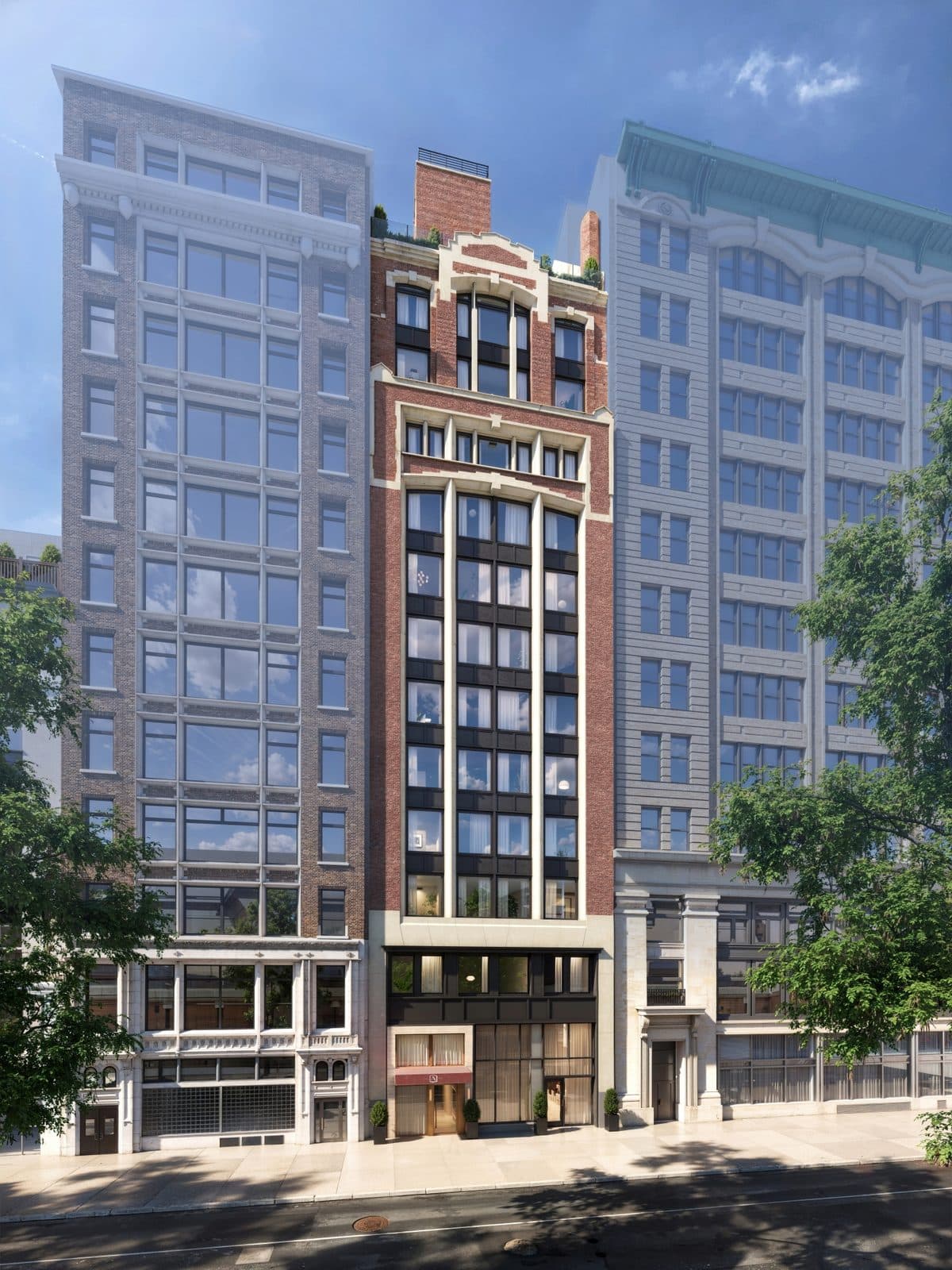


Tell us what you are looking for and the Roebling Research Desk will send building matches across Flatiron, with pricing and diligence on each.
Get building matches sent to you →Get the neighborhood read on your building.
See how your apartment compares with the rest of Flatiron, or get a market update tuned to this neighborhood — sent to you directly.
646.939.7375 · c.cohen@compass.com