
Midtown East
Midtown East is the east-side transition zone from Murray Hill through Turtle Bay and the East 50s, with postwar condos, pied-à-terre-oriented inventory, and residential buildings shaped by proximity to Midtown's commercial core.
What Midtown East is selling for
Movement of the annual median — not adjusted for transaction mix. Which apartments happened to trade (size, floor, condition, line) moves these as much as value does; the sample behind each is shown beneath it.
Two markets, one neighborhood. Since 2016, Midtown East condos are down 24% and co-ops down 2% on paper — but after inflation, −43.1% and −27.3% in real terms.
Movement of the annual median — not adjusted for transaction mix. Which apartments happened to trade (size, floor, condition, line) moves these as much as value does; the sample behind each is shown beneath it.
Method & coverage
Method. Condos are measured per square foot, co-ops per room (room counts from listing data; sales without a usable room count are excluded). The percentages are movement of the annual median — not a constant-quality or repeat-sale index — so transaction mix moves them as well as value. Real-terms figures deflate that same median by CPI.
Coverage. 8,061 recorded sales. Before the figures above, 61 non-arms-length transfers (nominal estate, gift, or intra-family deeds and mis-recorded bulk filings) and 23 duplicate records of the same deed (a combined apartment or penthouse recorded under more than one unit label) were removed. Corridors may overlap — a sale can appear in both a neighborhood set and a narrower avenue set. Recorded transfers via NYC Department of Finance, enriched by The Roebling Research Library.
Midtown East rents
Midtown East rents are up 5.4% in January–September 2026, against the same months of 2025. 2025 was +6.3%, 2024 +1.8%, 2023 +2.0%.
The same apartments, lease to lease, each year against the year before (3,636 lease-to-lease comparisons). 2026 compares January–September with January–September 2025. The latest months can move as late-reported leases arrive.
| Size | 2023 | 2024 | 2025 | 2026 YTD |
|---|---|---|---|---|
| All sizes | $75545 leases+3.2% | $75535 leases−0.4% | $79545 leases+6.1% | $84505 leases+5.4% |
| Studio | $8068 leases | $8072 leases | $8877 leases | $9087 leases |
| 1 bedroom | $75281 leases+3.0% | $75314 leases−0.3% | $79313 leases+6.1% | $83275 leases+4.3% |
| 2 bedroom | $72156 leases+1.1% | $73133 leases+0.6% | $76133 leases+4.4% | $83120 leases+9.0% |
| 3 bedroom+ | $8140 leases | $79*16 leases | $86*22 leases | $89*23 leases |
Median rent per square foot per year, from closed leases that report square footage. 2026 is January–September. * Fewer than 30 leases.
| Size | 2023 | 2024 | 2025 | 2026 YTD |
|---|---|---|---|---|
| All sizes | $1,19878 leases | $1,25588 leases | $1,35862 leases | $1,50053 leases |
| Studio | $1,248*27 leases | $1,298*25 leases | $1,500*23 leases | $1,479*20 leases |
| 1 bedroom | $1,16737 leases | $1,22546 leases | $1,332*28 leases | $1,66531 leases |
| 2 bedroom | $1,199*13 leases | $1,249*17 leases | $1,300*11 leases | — |
Median monthly rent per room, co-op sublets. 2026 is January–September. * Fewer than 30 leases.
Compiled by The Roebling Team at Compass from closed leases, through September 2026. Figures are indicative, not an appraisal. The Roebling Index
At a glance
Corridor: Midtown East, running from East 41st Street on the south to East 59th Street on the north, and from Park Avenue (or Fifth Avenue in the Plaza District flank) on the west to the East River on the east — encompassing the Plaza District, Turtle Bay, Sutton Place, Beekman Place, Tudor City, and the United Nations corridor Adjacent neighborhoods: Midtown West and the Theater District to the west, Murray Hill to the south, the Upper East Side to the north, Roosevelt Island and Long Island City across the East River Building stock: A mixed register anchored by the Plaza District tier-one cooperatives along Fifth and Park, the trophy postwar and prewar cooperative supply along Sutton Place and Beekman Place, Tudor City's 1928 medieval-revival residential complex, the United Nations-adjacent residential cluster (UN Plaza, 845 UN Plaza, 50 UN Plaza), the post-2000 architect-driven condominium concentration (Foster's 50 UN Plaza, Stern's 30 Park Place equivalent, Macklowe's 432 Park at Park and 57th), and the broader Third Avenue and Lexington Avenue prewar cooperative inventory Cultural anchors: Grand Central Terminal, the New York Public Library Main Branch (Stephen A. Schwarzman Building), Bryant Park, St. Patrick's Cathedral, the Seagram Building, Lever House, the Chrysler Building, the United Nations Headquarters, Rockefeller Center, Lincoln Center proximity Transit: Grand Central–42nd Street (4/5/6/7/S) — the system's second-largest hub; Lexington Avenue–53rd Street (E/M); Fifth Avenue–53rd Street (E/M); 51st Street (6); Lexington Avenue–59th Street (4/5/6/N/R/W); 57th Street–Sixth Avenue (F); Lexington Avenue–63rd Street (F) Source: The Roebling Team at Compass, verified against public records, the New York City Landmarks Preservation Commission, building offering plans, the 2025 Michelin Guide, NYC Department of Finance recorded transfers, and direct neighborhood transaction experience. June 2026.
Why Midtown East
Midtown East is the Manhattan residential neighborhood most explicitly oriented around the East River frontage and the dense institutional infrastructure that has clustered along the corridor's eastern flank for over a century. The corridor's residential identity rests on three structural facts. First, the East River waterfront residential register — Sutton Place (developed in stages between 1875 and 1929), Beekman Place (developed in the 1920s), Tudor City (Fred F. French Construction, 1928), and the United Nations-adjacent residential cluster — that produces a distinctive sub-character anchored to the water frontage rather than to the Park frontage that defines the East Side north of 59th. Second, the Grand Central Terminal and the Park Avenue Beaux-Arts spine — the 1913 Reed & Stem and Warren & Wetmore terminal complex, the New York Central Building / Helmsley Building (1929), the Waldorf Astoria (1931), the Seagram Building (1958), Lever House (1952), the Chrysler Building (1930), and the broader Park Avenue commercial-and-residential spine — that anchor the corridor's institutional and architectural identity. Third, the United Nations Headquarters at First Avenue and East 44th–48th, completed 1952 by Wallace K. Harrison and an international team, that anchors the diplomatic and institutional housing concentrated along the First Avenue and East River corridor.
For residential buyers, Midtown East offers a distinctive alternative to the Park-facing trophy corridors at Carnegie Hill and Central Park West. The corridor's residential register is more mixed — encompassing tier-one cooperative trophy buildings, postwar prewar-equivalent cooperative supply, the East River waterfront cooperative and condominium register, the post-2000 architect-driven condominium concentration, and the broader Third Avenue and Lexington Avenue mid-tier inventory. Demand is also more mixed — encompassing diplomatic and corporate housing, pied-à-terre and secondary-residence purchases, and primary residences for which the corridor's institutional and transit infrastructure aligns with work-and-home geography.
This guide is the orientation document we give buyers who are considering Midtown East for the first time. It covers what the corridor is, what its buildings are, what its institutional and cultural geography looks like, where its dining scene sits in 2025, and how its buyer market differs from the Upper East Side, Billionaires' Row, and the broader Manhattan trophy alternatives. It is not a market report; pricing on the corridor moves quarter to quarter. It is a structural guide intended to be useful in any market.
Boundaries and character
Midtown East's conventional boundaries run from East 41st Street on the south, to East 59th Street on the north, from Fifth Avenue (in the Plaza District flank) or Park Avenue (in the eastern flank) on the west to the East River on the east. Within those boundaries, sub-character varies meaningfully:
The Plaza District — the western flank, running from Fifth Avenue to Park Avenue between approximately East 49th and East 60th — operates as the corridor's most institutional cooperative tradition. The Park Avenue trophy cooperatives (660, 740 and 770 Park) sit north of the corridor on the Upper East Side; at the Plaza District's northern edge, the Plaza Hotel at 768 Fifth, the Pierre at 2 East 61st, the Sherry-Netherland at 781 Fifth, and the broader grand-hotel concentration anchor its residential identity.
Turtle Bay — the central residential register, running approximately from East 43rd to East 53rd Streets between Second and Third Avenues — operates as the corridor's mid-tier residential register. The Turtle Bay Gardens Historic District (LPC designation 1966) protects a row of 1860s rowhouses on East 48th and East 49th Streets between Second and Third Avenues, with the shared rear gardens that anchored the 1920s renovation by Charlotte Hunnewell Martin. The Turtle Bay residential register mixes the historic rowhouse inventory, prewar cooperative supply, and the broader postwar apartment inventory.
Sutton Place and Beekman Place — the East River waterfront sub-corridor, running from East 53rd to East 59th Streets along the river — operates as the corridor's most-cited East River-facing trophy register. Sutton Place was developed in stages between 1875 and 1929; the prewar cooperative inventory at 1 Sutton Place South, 25 Sutton Place South, and the broader Sutton trophy buildings anchors the East River residential identity. Beekman Place (East 49th to East 51st Streets, between First Avenue and the FDR Drive) operates as a quieter, smaller-scale variant of the Sutton register.
Tudor City — the 1928 medieval-revival residential complex by Fred F. French Construction, bounded approximately by East 40th to East 43rd Streets between First and Second Avenues — operates as a distinct residential micro-neighborhood. The 12-building complex contains approximately 3,000 apartments and was, at completion, the largest residential complex in the world. The Tudor City Historic District (LPC designation 1988) protects the architectural integrity of the complex.
The United Nations corridor — running from East 42nd to East 48th Streets along First Avenue and the East River — operates as the corridor's UN-adjacent register. The UN Headquarters at First Avenue and East 44th–48th, the adjacent residential cluster (860 and 870 United Nations Plaza, 845 United Nations Plaza, 50 United Nations Plaza, the Trump World Tower at 845 UN Plaza), and the broader First Avenue residential inventory anchor this sub-corridor.
What distinguishes Midtown East from the rest of Manhattan is the density of institutional layering combined with the East River waterfront residential register. Within a six-block radius, buyers encounter the Plaza District tier-one cooperative tradition, Grand Central and the Park Avenue Beaux-Arts spine, the United Nations and the UN-adjacent residential cluster, Sutton Place's East River trophy register, Beekman Place's quiet residential character, Tudor City's medieval-revival residential complex, and the broader Park Avenue trophy cooperative supply. The architectural inventory is layered across multiple building cycles and produces a residential geography distinct from any other Manhattan corridor.
The Midtown East skyline — an architectural inventory
The corridor's residential supply concentrates in five distinct cohorts: the Plaza District tier-one cooperative tradition; the Sutton Place and Beekman Place East River waterfront trophy register; the Tudor City medieval-revival residential complex; the United Nations-adjacent residential cluster; and the post-2000 architect-driven condominium concentration.
The tier-one cooperative inventory:
- 1 Sutton Place South — Rosario Candela with Cross & Cross, 1927. The corridor's flagship Sutton Place trophy cooperative.
- 25 Sutton Place — Rosario Candela, 1927. Among the most prestigious Sutton Place prewar cooperatives.
The Sutton Place and Beekman Place trophy register:
- 15 Sutton Place South — Rosario Candela, 1928.
- 1 Beekman Place — Sloan & Robertson, 1929. The flagship Beekman Place prewar cooperative.
- 2 Sutton Place and the broader Sutton Place prewar cooperative inventory.
- The Grand Beekman at 400 East 51st Street — Costas Kondylis & Partners, 2003 (2002 in city records). The trophy condominium at the Beekman Place flank.
- The Sovereign at 425 East 58th Street — Emery Roth & Sons, 1973. The trophy postwar cooperative on the Sutton flank.
The Tudor City medieval-revival residential complex:
- Prospect Tower at 45 Tudor City Place — Fred F. French Construction, 1928.
- Tudor Tower at 25 Tudor City Place — Fred F. French Construction, 1929.
- Hatfield House at 25 Tudor City Place — Fred F. French Construction, 1929.
- Hardwicke Hall at 314 East 41st Street and the broader Tudor City complex inventory.
The United Nations-adjacent residential cluster:
- 860 and 870 United Nations Plaza — Harrison, Abramovitz & Harris, 1966 (1967 in city records). Twin residential cooperative towers on a shared office base at First Avenue and East 49th Street; distinct from One and Two United Nations Plaza, the Kevin Roche John Dinkeloo hotel-and-office towers at First Avenue and East 44th Street.
- 845 United Nations Plaza / Trump World Tower — Costas Kondylis for the Trump Organization, completed 2001. 72 stories, 856 feet. At completion, the tallest residential building in the world. The supertall trophy sits adjacent to the UN Headquarters.
- 50 United Nations Plaza — Foster + Partners (Norman Foster) for Zeckendorf Development, completed 2014. 44 stories, 88 condominium residences. The corridor's signature-architect contemporary residential commission and a structural anchor of the UN-adjacent trophy register.
- 100 United Nations Plaza — Schuman, Lichtenstein, Claman & Efron, 1986. The condominium tower at First Avenue.
The Plaza District trophy supertall:
- 432 Park Avenue — Rafael Viñoly for CIM Group and Macklowe Properties, completed 2015. 96 stories, 1,396 feet. The supertall trophy at East 57th and Park, technically at the Plaza District northern boundary and structurally part of the Billionaires' Row corridor.
- 610 Park Avenue — J. E. R. Carpenter, 1925, built as Mayfair House. Now a condominium, at East 65th Street.
The broader inventory:
- 400 East 51st Street — The Grand Beekman.
- 322 East 57th Street — Harry M. Clawson of Caughey & Evans, 1929–30. Prewar cooperative studio building at the Sutton Place flank.
The cumulative architectural effect is uncommon: a corridor in which tier-one Park Avenue cooperative tradition coexists with the East River waterfront trophy register, the Tudor City medieval-revival residential complex, the UN-adjacent residential cluster, and the contemporary architect-driven condominium concentration. Buyers who choose Midtown East are choosing both the building and the corridor's structural identity as the institutional residential geography.
Grand Central, the United Nations, the Seagram Building, and the institutional anchor
The corridor's institutional and cultural concentration is one of the densest commercial-and-civic geographies in the United States. The institutions cluster within a walking radius of approximately fifteen minutes from any residential address.
Grand Central Terminal at 89 East 42nd Street — Reed and Stem and Warren and Wetmore, opened February 2, 1913 — is among the most architecturally consequential transit terminals in the world. The 49-acre site, the 44-platform terminal serving the Metro-North Railroad and the broader commuter rail infrastructure, the Beaux-Arts main concourse with the celestial ceiling, the Whispering Gallery, and the broader integrated transit-and-retail complex anchor the corridor's institutional identity. Grand Central was designated a National Historic Landmark in 1976 and a New York City landmark in 1967 — the LPC designation that triggered the 1978 Supreme Court Penn Central decision establishing the constitutional basis for U.S. historic preservation law.
The New York Public Library Main Branch (Stephen A. Schwarzman Building) at 476 Fifth Avenue at West 42nd Street — Carrère and Hastings, opened May 23, 1911 — is the corridor's most consequential library and research institution. The Beaux-Arts main building, the Rose Main Reading Room, and the broader research library system together produce one of the most consequential public libraries in the world. National Historic Landmark since 1965.
Bryant Park at 1065 Sixth Avenue (between Fifth and Sixth Avenues at West 40th–42nd Streets) — the 9.6-acre public park behind the NYPL Main Branch — operates as the corridor's largest open-space park and a primary corridor cultural anchor.
St. Patrick's Cathedral at 460 Fifth Avenue (East 51st Street) — James Renwick Jr., opened May 25, 1879 — is the corridor's most consequential Catholic cathedral and the seat of the Archdiocese of New York. The Gothic Revival structure was designated a National Historic Landmark in 1976 and dominates the Fifth Avenue corridor.
The Seagram Building at 375 Park Avenue (between East 52nd and East 53rd Streets) — Ludwig Mies van der Rohe and Philip Johnson, completed 1958 — is among the most architecturally consequential office buildings in the world and a defining example of the International Style residential and commercial vocabulary. National Historic Landmark since 2006. The integrated Four Seasons restaurant (1959, designed by Philip Johnson; closed at the original site in 2016) anchored the corridor's mid-century fine-dining register for nearly six decades.
Lever House at 390 Park Avenue (at East 53rd Street) — Skidmore, Owings & Merrill (Gordon Bunshaft), completed 1952 — is among the most consequential International Style commercial buildings in the United States. Designated a New York City landmark in 1982.
The Chrysler Building at 405 Lexington Avenue (East 42nd Street) — William Van Alen for Walter P. Chrysler, completed 1930 — is among the most-photographed buildings in the United States and a defining example of Art Deco skyscraper architecture. 1,046 feet at completion; the tallest building in the world for 11 months until the Empire State Building's 1931 completion. National Historic Landmark since 1976.
The United Nations Headquarters at First Avenue and East 44th–48th Streets — Wallace K. Harrison (lead architect) with an international advisory team including Le Corbusier, Oscar Niemeyer, Sven Markelius, and others, completed 1952 — is the corridor's most consequential institutional anchor. The 18-acre complex includes the General Assembly Building, the Secretariat Tower, the Conference Building, and the Dag Hammarskjöld Library. The UN's institutional presence anchors the diplomatic housing concentrated along the First Avenue corridor and the broader Sutton-Beekman flank.
Rockefeller Center at 30 Rockefeller Plaza (the 22-acre Art Deco commercial complex bounded by Fifth Avenue, Sixth Avenue, West 48th, and West 51st Streets) — Raymond Hood and Associated Architects, completed in stages between 1932 and 1939 — is the corridor's most consequential commercial-and-cultural complex at the western flank. The Rink at Rockefeller Center, the Top of the Rock observation deck, and Radio City Music Hall anchor the corridor's tourist-and-cultural geography.
The Waldorf Astoria at 301 Park Avenue (between East 49th and East 50th Streets) — Schultze & Weaver, completed 1931, closed for renovation in 2017, hotel reopened July 15, 2025 — is the most consequential pre-supertall-era luxury hotel on Park Avenue; the same restoration created a residential condominium in the upper floors.
Schools nearby
The corridor's private school inventory is concentrated along the Plaza District flank and at the broader Upper East Side school cluster immediately north of East 59th Street.
The Cathedral School at 1047 Amsterdam Avenue (Morningside Heights) and Trevor Day School (grades 6–12 at 312 East 95th Street; lower school at 1 West 88th Street on the Upper West Side) are within the corridor's commute radius. Saint David's School at 12 East 89th, Saint Bernard's School at 4 East 98th, Trinity School at 139 West 91st, Collegiate at 301 Freedom Place South, Buckley at 113 East 73rd, Dalton at 108 East 89th, Spence at 22 East 91st, Chapin at 100 East End, Nightingale-Bamford at 20 East 92nd, and Brearley at 610 East 83rd — together with the broader Upper East Side independent school cluster — form the corridor's primary K-12 independent school catchment.
The Beekman School at 220 East 50th Street is a small grades 9-12 independent school physically located within the corridor's footprint, with small classes and flexible scheduling.
The United Nations International School (UNIS) at 24-50 FDR Drive (technically Murray Hill at the corridor's southern flank) is an independent school with an international curriculum.
The Buckley School at 113 East 73rd, Stephen Gaynor School at 148 West 90th, and the broader independent school inventory are accessible from Midtown East by car or subway in 10-to-25 minutes depending on time of day.
Restaurants — Michelin and neighborhood cache
The corridor and its immediate flanks contain among the densest Michelin star concentrations in the United States. The 2025 Michelin Guide for New York, announced in November 2025, named multiple corridor restaurants among the city's starred inventory.
Le Bernardin at 155 West 51st Street — Eric Ripert's French seafood restaurant — holds three Michelin stars retained through 2025. Among the corridor's most consequential restaurants for the corporate-and-trophy entertainment register.
The Modern at 9 West 53rd Street (in the Museum of Modern Art) — Danny Meyer's Union Square Hospitality Group's contemporary American restaurant — holds two Michelin stars retained through 2025. The corridor's most consequential museum-anchored fine-dining restaurant.
Aquavit at 65 East 55th Street — contemporary Scandinavian restaurant under chef Emma Bengtsson — two Michelin stars in the 2025 Guide. One of the most consequential Nordic kitchens outside Scandinavia.
Le Pavillon at One Vanderbilt (Daniel Boulud's contemporary French seafood restaurant in the SOM tower adjacent to Grand Central) — one Michelin star retained through 2025. Among the most consequential restaurant openings of the post-2020 corridor cycle.
The Polo Bar at 1 East 55th Street (in the Ralph Lauren flagship building) — Ralph Lauren's American restaurant, opened 2015 — is among the most consequential celebrity-and-corporate dining venues in the city. Not Michelin-rated but operating at a near-Michelin price-and-service register.
Smith & Wollensky at 797 Third Avenue (East 49th Street, since 1977) — the founding text of the contemporary New York steakhouse and a Midtown East institution.
Sparks Steak House at 210 East 46th Street (since 1966) — the corridor's most-cited classic steakhouse and a continuing corporate-entertainment anchor.
Wolfgang's Steakhouse at 4 Park Avenue (East 33rd Street, technically Murray Hill at the corridor's southern flank) — anchored by the Wolfgang Zwiener tradition (formerly head waiter at Peter Luger's for 41 years).
The Grill at 99 East 52nd Street (in the Seagram Building, opened 2017 as Major Food Group's restoration of the former Four Seasons space) — the contemporary American restaurant in the iconic Philip Johnson-designed Grill Room, with the adjacent Pool Room now its events space. Among the most consequential mid-century-restaurant restoration projects in U.S. restaurant history.
The Pool at 99 East 52nd Street (Major Food Group, in the Seagram Building) — the former Pool Room, opened in 2017 as a seafood restaurant and now marketed as The Grill's events space.
Sant Ambroeus at 1000 Madison Avenue (technically Upper East Side at the corridor's northern flank, with multiple Manhattan locations including 259 West 4th in the West Village) — the Milan-founded Italian restaurant anchor.
Casa Lever at 390 Park Avenue (in Lever House, since 2009) — contemporary Italian.
Fasano at 60 East 49th Street and the broader corridor Italian fine-dining cohort.
Patroon at 160 East 46th Street — Ken Aretsky's American restaurant, anchored to the corporate-entertainment register.
Café Boulud at 100 East 63rd Street (Lenox Hill, north of the corridor) — Daniel Boulud's French restaurant.
Quality Meats at 57 West 58th Street (technically Midtown West at the corridor's western flank) — contemporary steakhouse.
P.J. Clarke's at 915 Third Avenue (East 55th Street, since 1884) — the corridor's most-cited historic Irish-American bar and restaurant.
The Russian Tea Room at 150 West 57th (technically Midtown West at the corridor's western flank, adjacent to Carnegie Hall, since 1927) — the most-photographed restaurant at the Carnegie Hall flank.
The corridor's broader special-occasion and corporate dining geography extends naturally west into Midtown West (Le Bernardin, The Russian Tea Room, Per Se at Columbus Circle), north into the Upper East Side, and south into Murray Hill and the broader Madison Square dining concentration.
The dining inventory, taken together, supports a Midtown East lifestyle that is dense in trophy-tier fine dining, well-served at the corporate-entertainment register, and broadly accessible at the casual-dining tier via the corridor's daily-life restaurant infrastructure. The corridor is one of the densest single-area Michelin star concentrations in the United States.
Transit and walkability
The corridor's transit position is the strongest in Manhattan. Grand Central Terminal anchors the corridor at East 42nd and Park Avenue; the broader subway system converges throughout the corridor's footprint.
- Grand Central–42nd Street (4/5/6/7/S) — the system's second-largest hub, with the IRT Lexington Avenue express, the IRT Flushing local-and-express, and the 42nd Street Shuttle converging. Metro-North Railroad service to Westchester County, Connecticut, and beyond.
- Lexington Avenue–53rd Street (E/M) — the IND Queens Boulevard line at the central corridor
- Fifth Avenue–53rd Street (E/M) — the IND Queens Boulevard line at the Plaza District flank
- 51st Street (6) — the IRT Lexington Avenue local at the Park Avenue Plaza District flank
- Lexington Avenue–59th Street (4/5/6/N/R/W) — the IRT Lexington express and BMT Broadway line convergence at the northern flank
- 57th Street–Sixth Avenue (F) — the IND Sixth Avenue express
- Lexington Avenue–63rd Street (F) — for Queens Boulevard line access
Penn Station at the corridor's western flank (a 10-15-minute walk or 5-minute subway ride) provides Amtrak, NJ Transit, and Long Island Rail Road service. JFK access by car is approximately 35–50 minutes; LaGuardia approximately 25–40 minutes; Newark approximately 30–45 minutes; Teterboro Airport approximately 30–40 minutes.
Walkability is excellent within the corridor. The retail-and-daily-life spine runs along Lexington Avenue (the central commercial spine), Third Avenue (residential service retail), and Madison Avenue (luxury retail at the Plaza District flank). The Sutton Place and Beekman Place flanks are residentially anchored with limited commercial activity, calibrated to the trophy residential register.
Who buys here, and how it differs from the rest of Manhattan
Midtown East demand is structurally distinct from the Upper East Side, Billionaires' Row, and broader Manhattan trophy alternatives. Purchases fall into five overlapping categories:
Diplomatic and institutional housing. The UN Headquarters, the UN-adjacent residential cluster, and the broader institutional concentration produce sustained demand for diplomatic and institutional housing, concentrated in the First Avenue corridor and the broader Sutton-Beekman flank.
Work-proximate primary residences and corporate housing. The Park Avenue commercial spine, the broader Plaza District office concentration, and the dense corporate-headquarters cluster produce a sustained pipeline of primary-residence and corporate-housing purchases where work and home geography align at the corridor.
Pied-à-terre and secondary-residence purchases. A substantial share of corridor units are held as pied-à-terre or secondary residences, particularly at the UN-adjacent towers (845 UN Plaza, 50 UN Plaza), the Plaza District trophy cooperatives, and the broader new-construction condominium inventory. The corridor's condominium structure permits pied-à-terre ownership; the cooperative tradition at the Plaza District tier-one buildings restricts it more heavily.
Downsizing purchases. Midtown East apartments bought as the downsized successor to a Park Avenue or Westchester primary residence, drawn by the integrated transit infrastructure, the proximity to Grand Central commuter rail, the elevator-and-doorman service model, and the institutional walking-radius infrastructure.
What the corridor is not: a Park-facing residential corridor in the structural sense (the corridor's relationship with Central Park is via crosstown transit and walking only).
For buyers who value the institutional-and-corporate proximity, the East River waterfront residential register, the integrated transit infrastructure, or proximity to the UN, Midtown East is the corridor that fits. For buyers who specifically want a Park-facing residential register or a downtown character, the corresponding alternatives are better fits.
Pricing tiers — orientation
Midtown East pricing operates on a wider range than the broader Upper East Side, because the corridor's building stock varies meaningfully across the Plaza District tier-one tradition, the Sutton-Beekman flank, the Tudor City complex, the UN-adjacent condominium register, and the broader mid-tier inventory.
The general orientation as of mid-2026:
- 1 Sutton Place South, 25 Sutton Place, 15 Sutton Place South, and the Sutton-Beekman trophy cooperative cluster transact at $5M–$30M for typical trophy configurations.
- 845 UN Plaza, 50 UN Plaza, the United Nations Plaza towers, and the post-2000 architect-driven condominium inventory transact at $2M–$15M for typical configurations and higher for trophy lines.
- The Grand Beekman, The Sovereign, 322 East 57th, and the broader prewar and postwar cooperative and condominium inventory transact at $1.5M–$8M for typical configurations.
- Tudor City, the broader Turtle Bay prewar cooperative inventory, and the mid-tier Lexington and Third Avenue supply transact at $700K–$3M for typical configurations.
Pricing within each tier varies significantly by line, by floor, by exposure, and by view. East River-facing exposure commands a substantial premium across the East River waterfront cohort. Park Avenue and Fifth Avenue-facing exposure commands tier-one premiums at the Plaza District cooperative cluster. Higher floors command per-floor premiums that compound at the upper-tier configurations.
For sellers, the practical reality is that pricing strategy must be calibrated to the specific apartment line, the building's tier, and the current absorption pattern. For buyers, the practical reality is that the corridor's price-tier separation is meaningful — a $5M purchase at 50 UN Plaza is structurally different from a $5M purchase at the Sutton Place flank or at Tudor City.
How to use this guide
If you're considering Midtown East for the first time, the right starting point is to clarify three structural questions: (1) which sub-corridor best matches your residential register — Plaza District tier-one cooperative, Sutton-Beekman East River trophy, Tudor City medieval-revival complex, UN-adjacent cluster, or broader Turtle Bay mid-tier; (2) which residential register your purchase fits — trophy cooperative, postwar trophy, architect-driven contemporary condominium, or mid-tier supply; and (3) which transit and work-and-home geography the residence will anchor.
Our building profiles (linked throughout this guide) cover architecture, sponsor history, board or condominium policy, financing rules, flip taxes, pet policy, pied-à-terre allowability, recent sales context, and the apartment-level realities that distinguish one building from another.
If you're selling on Midtown East, pricing strategy, marketing approach, and buyer matching are building-specific and apartment-specific. The corridor's price-tier separation requires apartment-level pricing intelligence calibrated to the specific line and the building's current absorption pattern.
The Roebling Team on Midtown East
The Roebling Team at Compass works the Midtown East corridor as part of our broader Park-facing Manhattan practice. We publish this neighborhood guide because corridor buyers and sellers deserve corridor-specific intelligence — architectural attribution, building-level policy and transactional mechanics, the diplomatic-ownership considerations specific to UN-adjacent buildings, and the realities of pricing at the apartment-line level — not generic Midtown market commentary.
If you're considering a purchase or sale on Midtown East, a 30-minute consultation is the right starting point. We'll bring the full corridor context this page provides plus the transactional specifics your situation requires — entity structuring, board approvability at the trophy cooperative cluster, comparable analysis at the building and line level, and the pacing strategy that fits your timeline.
Run the numbers
- Mansion Tax Calculator — at Midtown East trophy price points, the 1M, 2M, 5M, 10M, 15M, 20M, and 25M cliff effects routinely apply
- Buyer Closing Cost Calculator
- Seller Closing Cost Calculator
Related guides
- Manhattan Co-op Buying Guide — board approval mechanics in detail
- Co-op vs. Condo in Manhattan — how a condominium purchase differs from a co-op purchase
- NYC Real Estate Tax & Closing Cost Guide — closing costs on Midtown East transactions
- Billionaires' Row — adjacent neighborhood guide
- Sutton Place — adjacent neighborhood guide
This page reflects publicly available information and The Roebling Team transaction experience. The Roebling Team at Compass does not represent any specific building's management, board, or sponsor. Restaurant ratings reflect the 2025 Michelin Guide for New York, announced November 2025. Architectural attributions are drawn from the New York City Landmarks Preservation Commission, the National Park Service, city records and the architects' own materials; confirm a specific building's attribution on its profile. © 2026 The Roebling Team at Compass.
Buildings on Midtown East
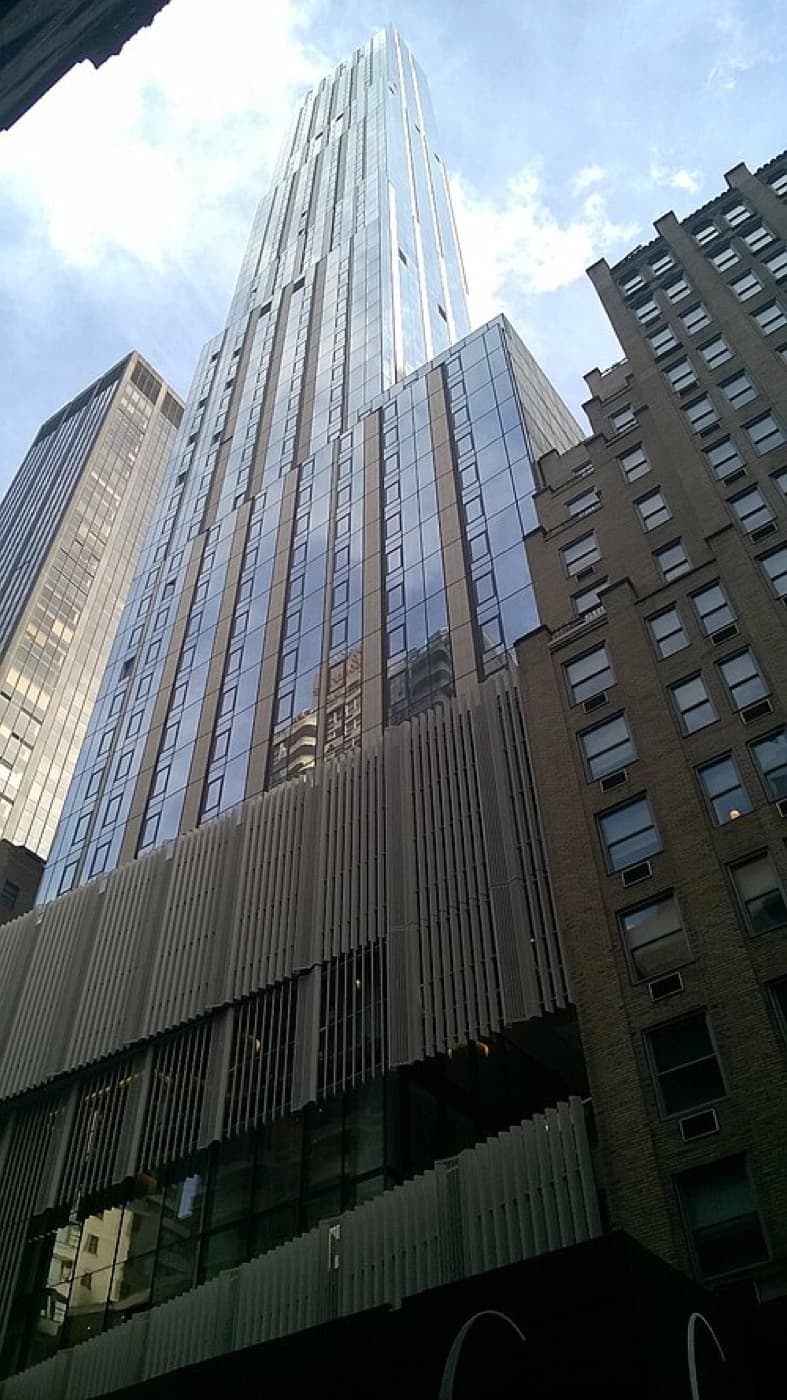


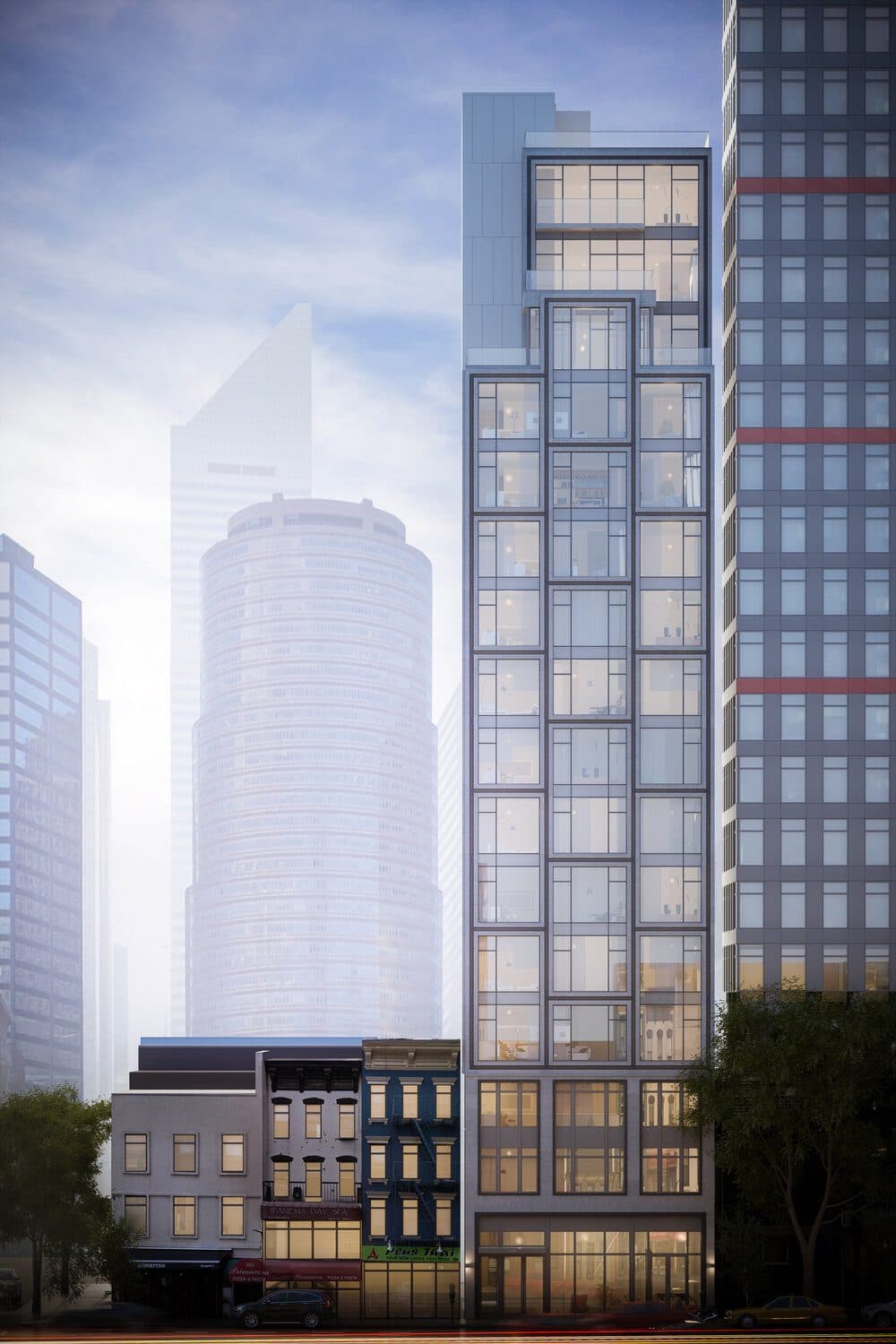
Tell us what you are looking for and the Roebling Research Desk will send building matches across Midtown East, with pricing and diligence on each.
Get building matches sent to you →Get the neighborhood read on your building.
See how your apartment compares with the rest of Midtown East, or get a market update tuned to this neighborhood — sent to you directly.
646.939.7375 · c.cohen@compass.com