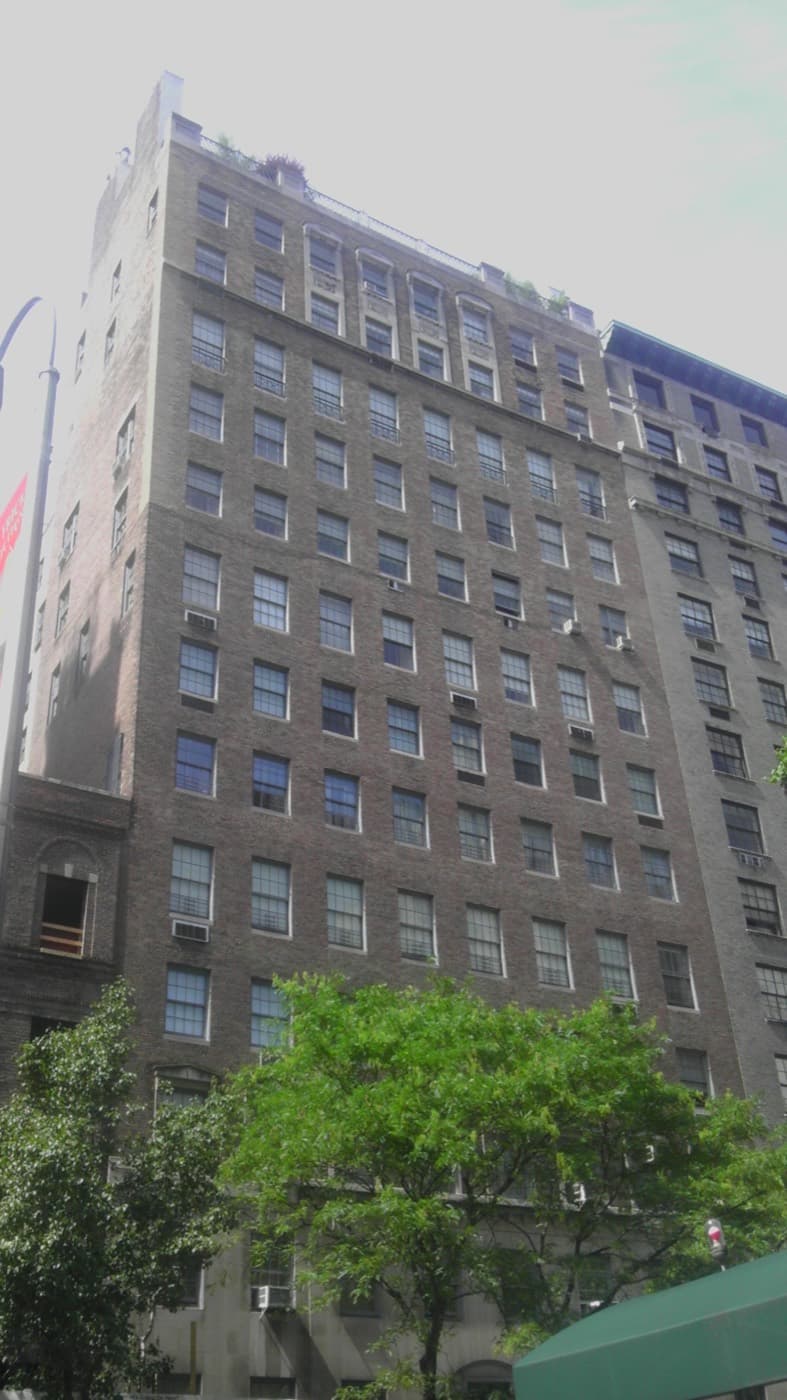
36 East 72nd Street
36 East 72nd Street, New York, NY 10021
Lenox Hill, Upper East Side
BBL 1013860046 · BIN 1041367
- Year built
- 1927
- Type
- Cooperative
- Landmark
- Designated
Every recorded sale at this building, 2004–2026
Bedroom-by-bedroom medians, the full transfer record, and how units trade against ask.
- Recent range
- $3.5M – $3.5M
- Listing discount
- 7.7%
- Recorded transfers
- 16
Own an apartment here? See what it would sell for.
A Private Pricing Opinion — what your apartment at 36 East 72nd Street would likely sell for today, what it costs to sell, and what you’d walk away with — reviewed personally against condition, exposures, renovation quality, and the competition actually on the market.
36 East 72nd Street belongs to the most rarefied tier of Upper East Side cooperatives. Fifteen stories, just seventeen apartments, and a position between Madison and Park on one of Lenox Hill's grandest blocks — this is a building where most floors are a single, full-floor residence, and where a sale is a genuine event. Its standing is not a matter of marketing: in 1995, The New Yorker ranked it among the top ten cooperative buildings in Manhattan, placing it in the company of the city's most exclusive addresses.
Designed in 1927 by Pleasants Pennington and Albert W. Lewis, the building is a model of late-pre-war luxury planning — large, gracious full-floor homes behind a dignified masonry elevation, built for a way of living that contemporary construction does not attempt. With only seventeen residences, it offers the privacy of a townhouse with the service of a white-glove apartment house, and it has remained one of the most quietly prestigious cooperatives in the city for nearly a century.
For buyers, the proposition is exceptional and exceedingly rare: a full-floor, white-glove pre-war home on a premier Lenox Hill block, in a building tightly held and seldom available.
Architecture and unit composition
Pennington and Lewis gave the building the restrained grandeur of the best late-1920s apartment houses — a substantial, well-detailed masonry elevation that reads as serious and discreet, the architectural register of a building that prizes privacy over display. The fifteen-story frame holding only seventeen apartments is itself the architectural statement: this is space deployed for scale, not density.
The homes are accordingly grand. Most floors are full-floor residences, with the entry galleries, separated entertaining and private wings, library and staff spaces, high ceilings, and fine millwork that define the period's top tier. The apartments were built for formal entertaining and full-time family living at a scale that has become almost impossible to reproduce. As at any building of this vintage, interiors range from preserved to fully renovated, but the proportions — and the privacy of a single home per floor — are the enduring assets that place 36 East 72nd in its class.
Building operations
36 East 72nd runs as a true white-glove cooperative. A full-time doorman and attended lobby, supported by a live-in resident manager, deliver the personal, anticipatory service this tier demands, dedicated to just seventeen households — a staff-to-resident ratio few buildings can match. Private storage rounds out the practical amenities; the real amenities here are the service, the address, and the absolute privacy of a near-full-floor building.
As with the most exclusive cooperatives, the building's financial posture and house rules are administered conservatively and are best reviewed directly as part of any purchase. What is durable and defining is the building's scale, its provenance, and the rarity of its homes — characteristics that have sustained its standing among Manhattan's premier cooperatives for generations.
Local Law 97
- 2024–2029 annual penalty
- $0 (under cap)
- 2030–2034 annual penalty
- $16,688/yr
- Per unit / month range
- $0 – $66
Source: NYC LL84 benchmarking and PLUTO · The Roebling Research Library. City record last verified September 2026.
See full Local Law 97 analysis — emissions history, scenarios, methodology →Facade safety — Local Law 11
The latest available FISP filing classified the facade as Safe — no repairs were required at that inspection. Facade inspections run on a fixed five-year cycle; future inspection, repair, and any assessment decisions remain building-specific.
How to read this, and where it comes from
QEWI = Qualified Exterior Wall Inspector — the licensed engineer the city requires to sign the report (the independent expert, not the managing agent).
Source: NYC DOB facade filings (FISP) · The Roebling Research Library. City record last verified September 2026.
Recent sales
Recent transfers at this building, curated by The Roebling Team research desk. Prices are the transfer amounts recorded with the NYC Department of Finance; apartment-level detail is checked against the building’s own file in The Roebling Research Library before publishing.
| Date | Unit | Apartment | Price | vs. Ask |
|---|---|---|---|---|
| Oct 1, 2025 | 3S | 3 BR · 3 BA | $3,550,000 | +7.7% |
| Dec 13, 2022 | 4N | 2 BR · 2.5 BA | $2,130,000 | -14.6% |
| Aug 27, 2020 | 5SOUTH | 3 BR · 3 BA | $1,995,000 | -19.4% |
| Jul 17, 2020 | 15S | 4 BR · 3 BA | $3,000,000 | -7.7% |
| Jul 31, 2019 | 2S | 3 BR · 4 BA | $1,750,000 | -10.3% |
| Sep 16, 2014 | 10N11S | 3 BR | $5,500,000 | -6.8% |
| May 1, 2013 | 5S | 3 BR | $2,750,000 | -8.2% |
| Feb 22, 2013 | 2N | 2 BR | $2,300,000 | -7.8% |
Market read. Median listing discount 7.8% from the last ask — a recurring negotiation gap worth pricing into any offer or listing strategy.
The retrade record
Lines that have traded more than once in the public record — the building’s appreciation arc, apartment by apartment.
Other recent transfers
| Date | Unit | Price |
|---|---|---|
| May 10, 2007 | 6 | $6,500,000 |
Full closing history with price-per-square-foot over time, the complete retrade record, and every line that has traded.
Sales sourced from NYC Department of Finance recorded transfers (BBL 1-01386-0046) and verified listing data. Apartment-level facts (line, condition, asking-price context) curated and cross-verified by The Roebling Team research desk. Not all transactions cross-verify with ACRIS records — sponsor and LLC purchases sometimes record at stipulated values rather than market price.
What to know if you’re buying
This is among the most exclusive cooperatives in the city, so expect a rigorous board process and the financial scrutiny that accompanies this tier — substantial post-closing liquidity and conservative financing are the norm at buildings of this standing. The reward is commensurate: a full-floor, white-glove pre-war home on a premier block, in a building whose scarcity and reputation are nearly impossible to replicate.
Availability is the binding constraint. Homes here come to market only occasionally, so a serious buyer should be positioned to act and prepared to evaluate the apartment on its specific floor, light, layout, and condition. We help buyers understand the building's standards and posture, underwrite the home, and navigate a board process that rewards thorough, credible preparation.
What to know if you’re selling
Provenance and scarcity define the selling story. A full-floor home in a seventeen-unit, white-glove pre-war cooperative ranked among Manhattan's finest, on a premier Lenox Hill block, is a trophy asset, and it should be marketed to the small, qualified pool of buyers who seek the city's most exclusive addresses. The building's reputation, its scale, and the rarity of any available home are the headline.
Position against the premier full-floor cooperative tier rather than the broader market, and recognize that each sale here effectively sets the building's record. Discretion, presentation, and disciplined pricing all carry outsized weight: the buyer for a home like this is specific and seldom shopping, and a thoughtfully run, well-targeted process is what brings that buyer to the table.
Comparable buildings
If you're considering 36 East 72nd Street, also evaluate these nearby Upper East Side cooperatives:
- 4 East 72nd Street — premier pre-war cooperative near Fifth
- 19 East 72nd Street — distinguished pre-war cooperative toward Madison
- 45 East 72nd Street — full-service cooperative on the same corridor
- 50 East 72nd Street — pre-war cooperative nearby
- 55 East 72nd Street — full-service cooperative toward Park
The neighborhood
For the full corridor — architecture, schools, transit, and pricing across Upper East Side — read The Roebling Team Guide to Upper East Side.
The full playbook — what goes in the package, how boards read your financials, the interview, and the timeline — plus sample cover, reference, and personal letters you can adapt.
How to read the facts on this page. Items attributed to an offering plan describe the building as it was offered at that filing — unit mix, square footage, the amenity program as planned. They are not a statement about how the building operates today. Tax and compliance figures are sourced separately to current City records and carry their own dates. House rules, staffing and fee policy can change by board resolution without any public filing: treat every policy line here as a starting point for diligence and confirm it with the managing agent. Where this page compares one building or neighborhood to another, that is our analysis of the recorded record — it names the measure, the period and the sample it rests on, and it is an observation about medians rather than a prediction about any particular apartment.
Considering a move at 36 East 72nd Street?
Request a private building brief with the relevant comparable sales, current and off-market availability, and an apartment-specific view of value.