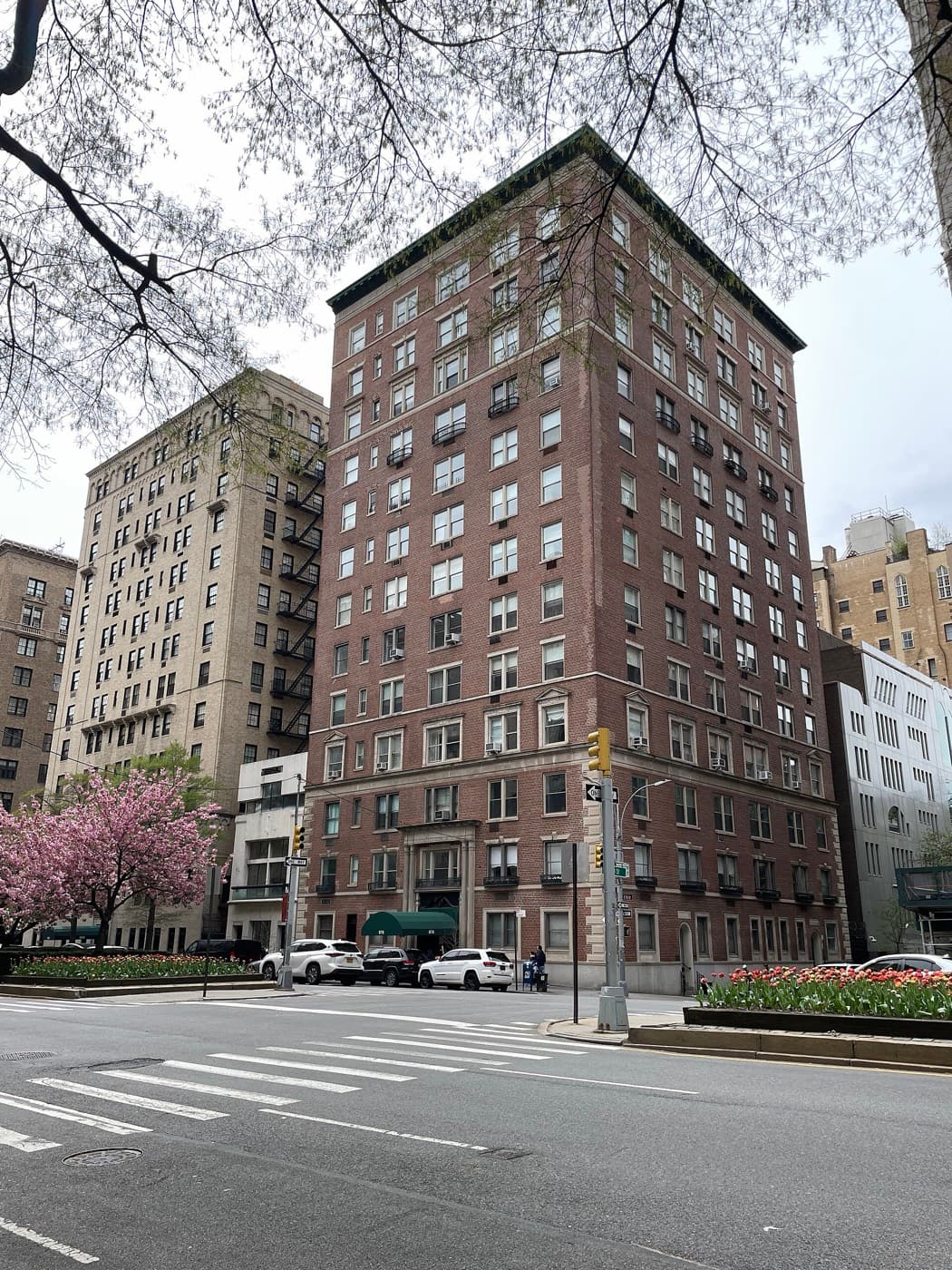
876 Park Avenue
876 Park Avenue, New York, NY 10075
Lenox Hill, Upper East Side
BBL 1013920040 · BIN 1041830
- Year built
- 1917
- Type
- Cooperative
- Landmark
- No
Every recorded sale at this building, 2003–2026
Bedroom-by-bedroom medians, the full transfer record, and how units trade against ask.
- 4BR+ median
- $6.5M
- Recent range
- $5.2M – $6.8M
- Listing discount
- 0.0%
- Recorded transfers
- 17
Own an apartment here? See what it would sell for.
A Private Pricing Opinion — what your apartment at The Goldstone would likely sell for today, what it costs to sell, and what you’d walk away with — reviewed personally against condition, exposures, renovation quality, and the competition actually on the market.
876 Park Avenue — often called the Goldstone, after its architect — is the kind of small, serious Park Avenue cooperative that the avenue's reputation is built on. Completed in 1917 to designs by W. K. Rouse and L. A. Goldstone, the same office whose work shaped a generation of Manhattan's best apartment houses, it holds the corner of East 78th Street with a red-brick-and-limestone dignity and a signature flourish: curved wrought-iron balconies that give the façade its character. At just 24 residences over thirteen stories, it is a genuinely intimate building.
The number that matters most is two: there are only two apartments per floor. That layout — a private landing shared with a single neighbor, light from multiple exposures, and rooms scaled to a vanished era — is the reason buyers seek out pre-war Park Avenue co-ops, and 876 delivers it in a building small enough that the resident manager knows every shareholder. It is the antithesis of the high-density tower: a quiet, owner-occupied house with the staffing of a much larger building and the privacy of a townhouse.
The building converted from rental to cooperative ownership in 1947, among the earlier wave of Park Avenue conversions, and it has operated as a stable, well-kept co-op ever since. For a buyer who wants a classic Park Avenue address without the scale of a 100-unit building, the Goldstone is a precise fit.
Architecture and unit composition
Rouse & Goldstone gave 876 Park the restrained, masonry-first vocabulary of the Park Avenue pre-war: a limestone base under a long red-brick shaft, a canopied entrance, and the curved wrought-iron balconies and flowerboxes that distinguish it from its plainer neighbors. It is architecture meant to read as permanent and well-bred rather than ostentatious — exactly the register the avenue prizes.
Inside, the two-per-floor plan yields large, light-filled apartments with the pre-war details collectors look for: wood-burning fireplaces, generous room proportions, real foyers, and high ceilings. With 24 homes across thirteen floors, the building is composed almost entirely of substantial classic layouts; turnover is correspondingly rare, and apartments here tend to trade among long-term owners rather than churn. The combination of corner light, wood-burning fireplaces, and full-floor-feeling proportions is the building's enduring draw.
Building operations
876 Park Avenue is a full-service cooperative. The lobby is attended around the clock by a doorman, and a resident manager oversees the building day to day. For a 24-unit building, the amenity package is notably complete: a fitness center, central laundry, a bicycle room, and an individual storage cage for each apartment — the kind of per-unit storage allotment that larger buildings rarely match.
The building is pet-friendly, a meaningful differentiator on a corridor where many co-ops are not. As with Park Avenue cooperatives generally, purchases are subject to a board application and interview, and the building is run as an owner-occupied house with primary-residence expectations and the conservative financing and sublet posture customary to the avenue's small pre-war co-ops. Buyers should review the building's specific financing and sublet terms with us as part of diligence.
Local Law 97
- 2024–2029 annual penalty
- $0 (under cap)
- 2030–2034 annual penalty
- $23,187/yr
- Per unit / month range
- $0 – $81
Source: NYC LL84 benchmarking and PLUTO · The Roebling Research Library. City record last verified September 2026.
See full Local Law 97 analysis — emissions history, scenarios, methodology →Facade safety — Local Law 11
The latest available filing classified the facade as SWARMP — Safe With A Repair and Maintenance Program: the engineer identified conditions requiring monitoring or repair before the next inspection cycle. The scope, timeline, and how the building funds the work are building-specific — we review the filings and board materials for you.
How to read this, and where it comes from
QEWI = Qualified Exterior Wall Inspector — the licensed engineer the city requires to sign the report (the independent expert, not the managing agent).
Penalties shown are amounts DOB assessed against filings on record across 2005–10 to 2020–25. The FISP dataset does not record whether they were paid, contested or remain open, so treat the figure as history rather than a current balance and confirm the building’s standing with the managing agent.
Source: NYC DOB facade filings (FISP) · The Roebling Research Library. City record last verified September 2026.
Management & transfer contacts
- Flip tax
- 3% of purchase price (paid by Buyer at closing)
- Sublet policy
- Permitted; App Processing Fee $300 shareholder + $300 subtenant
- Notable fees
- Max financing 30%; Closing Fee $800 ($850 w/o broker) + $0.05/share
Recent sales
Recent transfers at this building, curated by The Roebling Team research desk. Prices are the transfer amounts recorded with the NYC Department of Finance; apartment-level detail is checked against the building’s own file in The Roebling Research Library before publishing.
| Date | Unit | Apartment | Price | PPSF | vs. Ask |
|---|---|---|---|---|---|
| Apr 30, 2026 | 6S | 4 BR · 2.5 BA | $5,200,000 | +9.5% | |
| Apr 16, 2026 | 12S | 4 BR · 3 BA | $6,750,000 | +0.0% | |
| Nov 26, 2024 | 7N | 4 BR · 3 BA | $6,500,000 | +0.0% | |
| Oct 13, 2022 | 9S | 4 BR · 5 BA | $6,050,000 | +0.9% | |
| Jun 15, 2022 | 2S | 4 BR · 4 BA · 3,200 sf | $5,300,000 | $1,656/sf | -3.5% |
| Jun 28, 2021 | 11N | 3 BR · 2.5 BA | $5,706,250 | -18.2% | |
| Jun 18, 2021 | 11S | 4 BR · 4 BA | $6,200,000 | -10.8% | |
| Jun 7, 2017 | 12S | 4 BR · 4 BA | $5,200,000 | -3.7% |
Market read. $/sf is measured on the latest sales with reliable square footage (2022): a median $1,656/sf across 1 sale. The building has traded as recently as 2026. Median listing discount 0.6% from the last ask — a recurring negotiation gap worth pricing into any offer or listing strategy.
The retrade record
Lines that have traded more than once in the public record — the building’s appreciation arc, apartment by apartment.
Full closing history with price-per-square-foot over time, the complete retrade record, and every line that has traded.
Sales sourced from NYC Department of Finance recorded transfers (BBL 1-01392-0040) and verified listing data. Apartment-level facts (line, condition, asking-price context) curated and cross-verified by The Roebling Team research desk. Not all transactions cross-verify with ACRIS records — sponsor and LLC purchases sometimes record at stipulated values rather than market price; square footage on co-ops is not officially recorded, figures shown are approximate.
What to know if you’re buying
This is a buy-and-hold building. The appeal is the two-per-floor privacy, the wood-burning fireplaces and pre-war proportions, and a complete amenity package — including a per-apartment storage cage and a fitness center — in a building of only 24 homes. Pets are welcome, which broadens the building's appeal relative to stricter Park Avenue peers.
Practical diligence: expect a thorough co-op board package and interview, and confirm the building's current financing limit and sublet rules with us before bidding, as small pre-war Park Avenue co-ops tend toward the conservative end on both. Review the maintenance charge, any assessments, and the reserve fund, and weigh the building's capital obligations — façade and elevator work under New York's inspection cycles — against its reserves. In a 24-unit building, the financial condition is closely held among a few owners, which generally means careful stewardship; a well-run small co-op is among the most stable holdings on the avenue.
What to know if you’re selling
Scarcity is your strongest card. With two apartments per floor and only 24 in the building, available inventory is thin, and a well-presented classic layout with wood-burning fireplaces and corner light is exactly what the Park Avenue pre-war buyer is searching for. Lead with the architect (Rouse & Goldstone), the private-landing plan, the fireplaces, and the storage and fitness amenities — features a buyer cannot replicate by moving down the avenue.
Price against the Lenox Hill and Park Avenue pre-war co-op set, with weight given to the rarity of the line and the apartment's condition. Account for the customary co-op transfer costs in your net-proceeds modeling, and invest in presentation: in a building where each sale sets the benchmark for the next, a thoughtfully staged apartment that showcases the proportions and the fireplaces materially affects both price and speed.
Comparable buildings
If you're considering 876 Park Avenue, these nearby Park and Lexington pre-war cooperatives form the natural comparison set:
- 875 Park Avenue — pre-war Park Avenue co-op directly across the street
- 883 Park Avenue — pre-war Park Avenue co-op a half-block north
- 888 Park Avenue — pre-war Park Avenue peer
- 860 Park Avenue — pre-war Park Avenue co-op to the south
- 976 Lexington Avenue — pre-war Lenox Hill cooperative nearby
The neighborhood
For the full corridor — architecture, schools, transit, and pricing across Park Avenue — read The Roebling Team Guide to Park Avenue.
The full playbook — what goes in the package, how boards read your financials, the interview, and the timeline — plus sample cover, reference, and personal letters you can adapt.
How to read the facts on this page. Items attributed to an offering plan describe the building as it was offered at that filing — unit mix, square footage, the amenity program as planned. They are not a statement about how the building operates today. Tax and compliance figures are sourced separately to current City records and carry their own dates. House rules, staffing and fee policy can change by board resolution without any public filing: treat every policy line here as a starting point for diligence and confirm it with the managing agent. Where this page compares one building or neighborhood to another, that is our analysis of the recorded record — it names the measure, the period and the sample it rests on, and it is an observation about medians rather than a prediction about any particular apartment.
Considering a move at The Goldstone?
Request a private building brief with the relevant comparable sales, current and off-market availability, and an apartment-specific view of value.