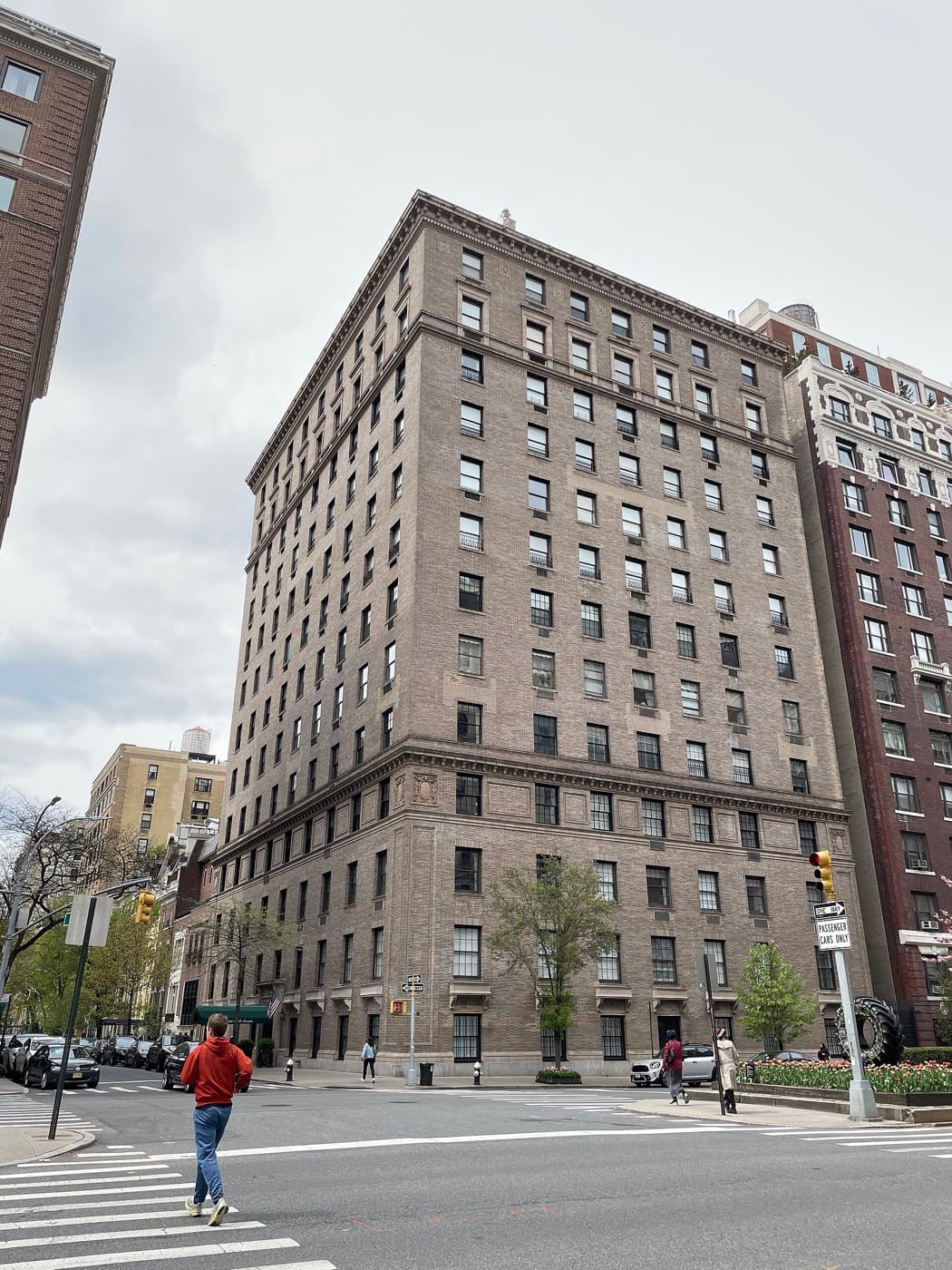
960 Park Avenue
960 Park Avenue, New York, NY 10028
Upper East Side
BBL 1014940032 · BIN 1046759
- Year built
- 1912
- Type
- Cooperative
- Landmark
- Designated
Every recorded sale at this building, 2005–2026
Bedroom-by-bedroom medians, the full transfer record, and how units trade against ask.
- Recent range
- $825K – $6M
- Listing discount
- 11.4%
- Recorded transfers
- 21
Own an apartment here? See what it would sell for.
A Private Pricing Opinion — what your apartment at The Norma would likely sell for today, what it costs to sell, and what you’d walk away with — reviewed personally against condition, exposures, renovation quality, and the competition actually on the market.
960 Park Avenue — the Norma — is a quietly distinguished pre-war cooperative on the northwest corner of Park Avenue and East 82nd Street, in the heart of Carnegie Hill and two blocks east of the main entrance to The Metropolitan Museum of Art. Erected in 1912 for the legendary developers Bing & Bing and designed by J.E.R. Carpenter with D. Everett Waid, it belongs to the first generation of grand Park Avenue apartment houses — the buildings that turned the avenue from a railroad cut into the most prestigious residential address in the city. It became a cooperative in 1958.
Carpenter, more than any single architect, defined the Park and Fifth Avenue apartment-house type, and 960 Park is a refined example: a finely detailed, light-beige masonry façade distinguished by brown brick and deeply recessed mortar joints, with a landscaped side-street entrance on 82nd Street and balconies overlooking both the avenue and the cross street. At just 35 apartments across thirteen stories, it is an intimate building of large, light-filled homes — the kind of low-density, high-pedigree cooperative that rarely trades.
Architecture and unit composition
The Norma's exterior is a study in restraint at the scale Park Avenue rewards: a strong masonry base, a quiet shaft of brown brick with recessed joints that lend the wall real depth, and a measured crown. Carpenter sited the residential entrance on East 82nd Street and gave it landscaping, a hallmark of his most desirable buildings — the avenue front reads as architecture, the side street as a residence.
Inside, the 35 apartments are generously proportioned pre-war homes, with the high ceilings, gracious foyers, separate service areas, and hardwood floors of the period; balconies on both exposures bring light and air to the better lines, and rooms are described as flooded with light. With so few units in the building, layouts run large — full- and near-full-floor scale on the upper floors — and turnover is correspondingly scarce, which is much of the building's appeal to the Carnegie Hill buyer.
Building operations
The Norma is a white-glove cooperative. There is a full-time doorman and concierge and a live-in resident manager, with a fitness center, bike storage, and private storage on site. The cooperative is pet-friendly. In keeping with its tier, the board sets a conservative financing posture — 40% financing permitted — and a 3% flip tax is payable by the purchaser on transfer. This is a traditional Park Avenue ownership structure: a deliberate, lower-leverage building designed for committed owner-occupants, with the staffing and stewardship that profile expects.
Local Law 97
- 2024–2029 annual penalty
- $0 (under cap)
- 2030–2034 annual penalty
- $15,244/yr
- Per unit / month range
- $0 – $36
Source: NYC LL84 benchmarking and PLUTO · The Roebling Research Library. City record last verified September 2026.
See full Local Law 97 analysis — emissions history, scenarios, methodology →Facade safety — Local Law 11
The latest available FISP filing classified the facade as Safe — no repairs were required at that inspection. Facade inspections run on a fixed five-year cycle; future inspection, repair, and any assessment decisions remain building-specific.
How to read this, and where it comes from
QEWI = Qualified Exterior Wall Inspector — the licensed engineer the city requires to sign the report (the independent expert, not the managing agent).
Penalties shown are amounts DOB assessed against filings on record across 2005–10 to 2020–25. The FISP dataset does not record whether they were paid, contested or remain open, so treat the figure as history rather than a current balance and confirm the building’s standing with the managing agent.
Source: NYC DOB facade filings (FISP) · The Roebling Research Library. City record last verified September 2026.
Management & transfer contacts
- Flip tax
- 3% of purchase price paid by seller
- Sublet policy
- Not allowed
- Notable fees
- Max financing 40%
Recent sales
Recent transfers at this building, curated by The Roebling Team research desk. Prices are the transfer amounts recorded with the NYC Department of Finance; apartment-level detail is checked against the building’s own file in The Roebling Research Library before publishing.
| Date | Unit | Apartment | Price | PPSF | vs. Ask |
|---|---|---|---|---|---|
| Mar 4, 2026 | 4B | 2 BR · 1 BA · 1,100 sf | $825,000 | $750/sf | -17.1% |
| Apr 28, 2025 | 3W | 4 BR · 5.5 BA · 4,531 sf | $6,022,425 | $1,329/sf | -33.1% |
| Nov 3, 2021 | 2W | 4 BR · 3.5 BA · 4,229 sf | $5,600,000 | $1,324/sf | -6.6% |
| Jul 21, 2021 | MAISNE | 3 BR · 1.5 BA | $2,150,000 | -27.1% | |
| Jun 7, 2021 | 5W | 3 BR · 2.5 BA · 4,000 sf | $8,000,000 | $2,000/sf | -3.0% |
| Oct 26, 2020 | 3E | 6 BR · 5.5 BA · 4,900 sf | $11,000,000 | $2,245/sf | -13.7% |
| May 13, 2019 | 2E | 6 BR · 6.5 BA | $12,000,000 | -17.2% | |
| May 30, 2018 | 6E | 5 BR · 4,500 sf | $14,500,000 | $3,222/sf | -9.1% |
Market read. Most recent trades (2026) cleared a median $786/sf across 1 sale. Median listing discount 13.7% from the last ask — a recurring negotiation gap worth pricing into any offer or listing strategy.
The retrade record
Lines that have traded more than once in the public record — the building’s appreciation arc, apartment by apartment.
Full closing history with price-per-square-foot over time, the complete retrade record, and every line that has traded.
Sales sourced from NYC Department of Finance recorded transfers (BBL 1-01494-0032) and verified listing data. Apartment-level facts (line, condition, asking-price context) curated and cross-verified by The Roebling Team research desk. Not all transactions cross-verify with ACRIS records — sponsor and LLC purchases sometimes record at stipulated values rather than market price; square footage on co-ops is not officially recorded, figures shown are approximate.
What to know if you’re buying
This is a low-density, high-pedigree cooperative, and inventory is genuinely scarce — when a good apartment appears, the analysis has to move quickly and precisely. Confirm exposure and balcony access by line; the homes with both Park and 82nd Street light, or with balconies, are the most sought after.
Underwrite to the building's traditional terms. With financing capped at 40%, buyers should plan for a substantial cash position, and the 3% purchaser-paid flip tax belongs in your closing math. The board package and interview are rigorous, as on this stretch of the avenue — we help buyers present a clean, well-documented file and benchmark the price against the right Carnegie Hill comparable set.
What to know if you’re selling
Scarcity is your strongest card. With 35 apartments and rare turnover, a well-presented home at the Norma meets thin competing supply — lead with the Bing & Bing provenance, the Carpenter design, the balconies and light, and the two-block walk to the Met.
Comp to the Carnegie Hill pre-war tier and to like layouts, not to volume data. The building's large floor plates mean per-unit pricing is driven by floor, exposure, and condition; renovated high-floor homes reward staging and a disciplined launch. Be candid with buyers about the 40% financing cap and the purchaser-paid flip tax up front — qualifying the buyer pool early keeps a deal clean and on schedule.
Comparable buildings
If you're considering the Norma, also evaluate nearby Carnegie Hill and Park Avenue cooperatives:
- 950 Park Avenue — pre-war cooperative one block south
- 969 Park Avenue — Park Avenue co-op nearby
- 970 Park Avenue — pre-war Park Avenue peer
- 975 Park Avenue — Carnegie Hill cooperative to the north
- 940 Park Avenue — pre-war Park Avenue cooperative
The neighborhood
For the full corridor — architecture, schools, transit, and pricing across Park Avenue — read The Roebling Team Guide to Park Avenue.
The full playbook — what goes in the package, how boards read your financials, the interview, and the timeline — plus sample cover, reference, and personal letters you can adapt.
How to read the facts on this page. Items attributed to an offering plan describe the building as it was offered at that filing — unit mix, square footage, the amenity program as planned. They are not a statement about how the building operates today. Tax and compliance figures are sourced separately to current City records and carry their own dates. House rules, staffing and fee policy can change by board resolution without any public filing: treat every policy line here as a starting point for diligence and confirm it with the managing agent. Where this page compares one building or neighborhood to another, that is our analysis of the recorded record — it names the measure, the period and the sample it rests on, and it is an observation about medians rather than a prediction about any particular apartment.
Considering a move at The Norma?
Request a private building brief with the relevant comparable sales, current and off-market availability, and an apartment-specific view of value.