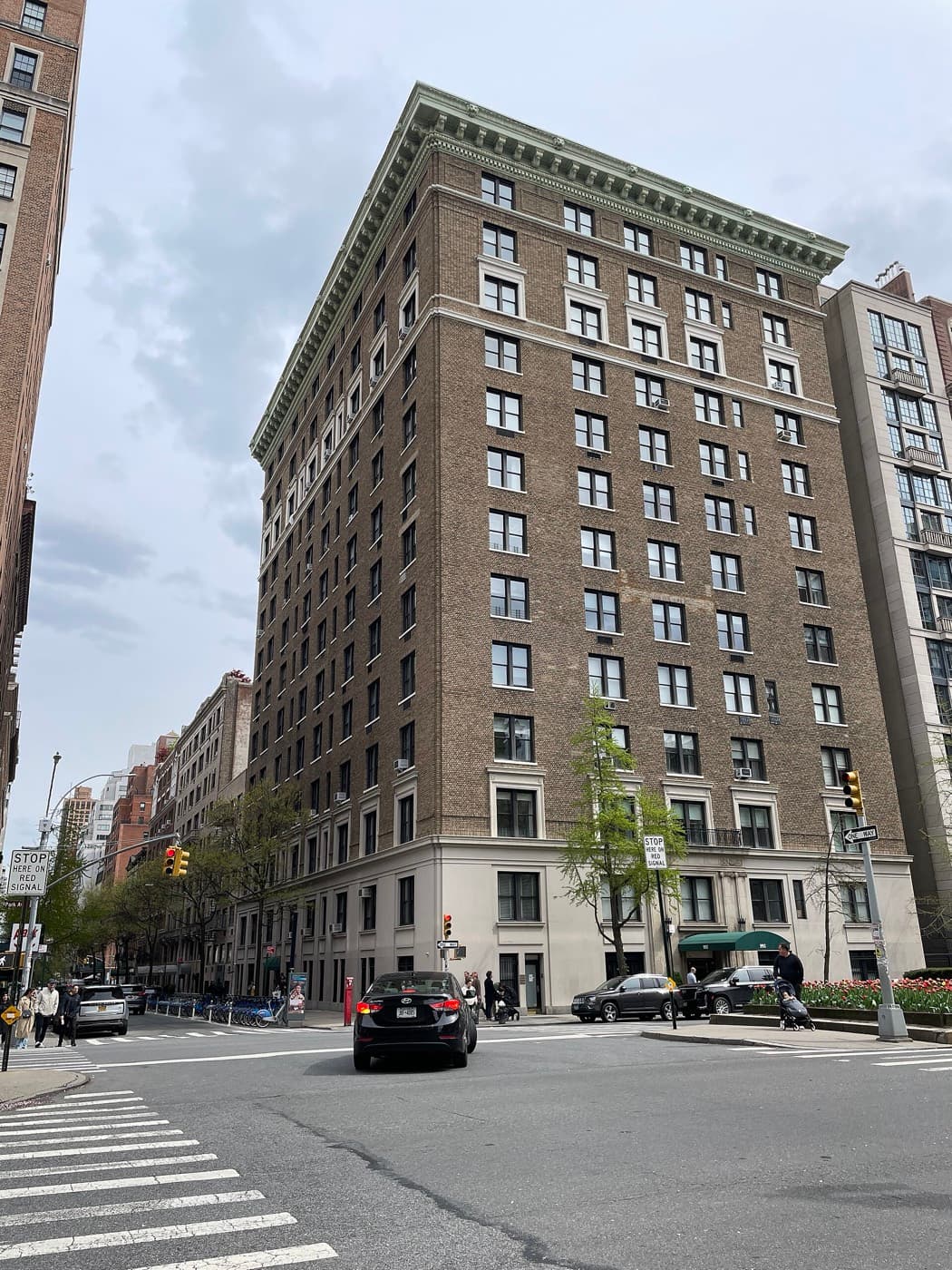
993 Park Avenue
993 Park Avenue, New York, NY 10028
Upper East Side
BBL 1015120070 · BIN 1047665
- Year built
- 1915
- Type
- Cooperative
- Units
- 51
- Landmark
- No
Every recorded sale at this building, 2003–2026
Bedroom-by-bedroom medians, the full transfer record, and how units trade against ask.
- 4BR+ median
- $5.3M
- Recent range
- $1.4M – $9.8M
- Listing discount
- -0.2%
- Recorded transfers
- 43
Own an apartment here? See what it would sell for.
A Private Pricing Opinion — what your apartment at 993 Park Avenue would likely sell for today, what it costs to sell, and what you’d walk away with — reviewed personally against condition, exposures, renovation quality, and the competition actually on the market.
993 Park Avenue is a 1915 Italian Renaissance cooperative on the southeast corner of East 84th Street, in the heart of Carnegie Hill's stretch of Park. It was designed by Robert T. Lyons — the architect of 955 and 1155 Park as well — and developed by Bing & Bing, the firm whose name remains shorthand for well-built, well-proportioned pre-war apartment houses across Manhattan. That pedigree shows: the building reads as a confident palazzo, the kind of restrained, masonry-clad pre-war that defines the avenue.
The architecture is its own argument. A two-story limestone base anchors the corner with a canopied entrance flanked by sconces; the third and eleventh floors carry handsome stone window surrounds; a double stringcourse runs at the eleventh floor with another above the twelfth, all crowned by a large bracketed cornice. It is one of the few buildings on Park with a revolving-door entrance — a small period signature. At 13 stories and 51 apartments, the building is intimate, and its open eastern light is protected by its position across the avenue from the low-rise Church of St. Ignatius Loyola and its school.
For a buyer, 993 Park offers the full pre-war Park Avenue proposition — Lyons-and-Bing architecture, large light-filled layouts, and a white-glove operation — paired with a more modern amenity package than many of its vintage peers.
Architecture and unit composition
Lyons designed 993 Park in the Italian Renaissance palazzo idiom: limestone at the base, brick above, and the layered stonework — surrounds, stringcourses, cornice — that gives the building its weight on the avenue. The canopied, revolving-door entrance and lobby carry the formal vocabulary of 1915 construction.
The 51 apartments are the substance. Many feature high ceilings, herringbone hardwood floors, wood-burning fireplaces, and the oversized windows that flood the homes with light — a benefit of the building's open exposures toward St. Ignatius across the avenue. Layouts run large and family-scaled in the pre-war Park Avenue manner. Apartments have been individually renovated over the building's cooperative life; the specific home's floor, exposure, and condition drive value, with higher and east-facing lines capturing the best light.
Building operations
993 Park Avenue operates as a full-service pre-war cooperative with the white-glove staffing the avenue expects: doorman service paired with an elevator operator, supported by building staff. Residents have a fitness room, a bicycle room, and private basement storage, including cage storage — a fuller amenity set than many 1915-vintage buildings offer.
On board policy, the building is accommodating within Park Avenue norms. Pets are welcome. In-unit washer/dryers are permitted with board approval. Financing and primary-residence expectations follow prime Park Avenue cooperative practice, where boards favor strong, well-documented financial profiles and end-use buyers; a clean package and substantial post-closing liquidity carry an application here.
Local Law 97
- 2024–2029 annual penalty
- $0 (under cap)
- 2030–2034 annual penalty
- $87,234/yr
- Per unit / month range
- $0 – $145
Source: NYC LL84 benchmarking and PLUTO · The Roebling Research Library. City record last verified September 2026.
See full Local Law 97 analysis — emissions history, scenarios, methodology →Facade safety — Local Law 11
The latest available FISP filing classified the facade as Safe — no repairs were required at that inspection. Facade inspections run on a fixed five-year cycle; future inspection, repair, and any assessment decisions remain building-specific.
How to read this, and where it comes from
QEWI = Qualified Exterior Wall Inspector — the licensed engineer the city requires to sign the report (the independent expert, not the managing agent).
Source: NYC DOB facade filings (FISP) · The Roebling Research Library. City record last verified September 2026.
Management & transfer contacts
- Flip tax
- 2% of purchase price, paid by Seller
- Notable fees
- 50% max financing; Managing Agent Fee $900/$1000; Recognition Agreement $300 if financing
Recent sales
Recent transfers at this building, curated by The Roebling Team research desk. Prices are the transfer amounts recorded with the NYC Department of Finance; apartment-level detail is checked against the building’s own file in The Roebling Research Library before publishing.
| Date | Unit | Apartment | Price | PPSF | vs. Ask |
|---|---|---|---|---|---|
| Mar 16, 2026 | 4C | 2 BR · 2 BA · 1,385 sf | $1,375,000 | $993/sf | +0.0% |
| Mar 4, 2026 | 8E | 2 BR · 2 BA | $1,500,000 | +3.4% | |
| Apr 22, 2025 | 1E | 5 BR · 3 BA | $4,500,000 | +5.9% | |
| Aug 6, 2024 | 6S | 4 BR · 3.5 BA | $9,750,000 | -9.3% | |
| Dec 14, 2023 | 12D | 2 BR · 2 BA | $1,500,000 | +0.3% | |
| Oct 11, 2023 | 9E | 6 BR · 7 BA | $5,300,000 | -1.9% | |
| Sep 29, 2022 | 2E | 2 BR · 2 BA | $2,200,000 | +5.0% | |
| Feb 14, 2022 | 7E | 3 BR · 4.5 BA | $5,000,000 | -3.8% |
Market read. Most recent trades (2026) cleared a median $993/sf across 1 sale. Median listing discount 3.0% from the last ask — a recurring negotiation gap worth pricing into any offer or listing strategy.
The retrade record
Lines that have traded more than once in the public record — the building’s appreciation arc, apartment by apartment.
Other recent transfers
| Date | Unit | Price |
|---|---|---|
| Mar 19, 2010 | 1A | $875,000 |
Full closing history with price-per-square-foot over time, the complete retrade record, and every line that has traded.
Sales sourced from NYC Department of Finance recorded transfers (BBL 1-01512-0070) and verified listing data. Apartment-level facts (line, condition, asking-price context) curated and cross-verified by The Roebling Team research desk. Not all transactions cross-verify with ACRIS records — sponsor and LLC purchases sometimes record at stipulated values rather than market price; square footage on co-ops is not officially recorded, figures shown are approximate.
What to know if you’re buying
You're buying a Lyons-and-Bing pre-war on prime Park. Italian Renaissance architecture, large light-filled layouts, and a Carnegie Hill corner are the building's defining assets.
The light is a real differentiator. Open exposures across the avenue toward low-rise St. Ignatius give upper and east lines exceptional natural light for the avenue.
The amenities and rules are modern for the vintage. A fitness room, bike room, and storage, plus a pet-friendly board and permitted in-unit laundry, set it apart from stricter 1915-era peers.
Prepare a strong board package. Prime Park Avenue boards expect documented financial strength and primary-residence intent; build the application accordingly.
What to know if you’re selling
Lead with the pedigree and the light. Robert T. Lyons architecture, the Bing & Bing development, and the open eastern exposures are the marketing core.
The amenity set helps. A fitness room, bike room, and pet-friendliness broaden appeal among today's pre-war buyers.
Price to the apartment. Size, floor, light, and renovation level drive value across a varied, large-layout unit mix; comparable analysis should be line-specific.
Closing timelines are co-op standard. Plan for roughly 6–10 weeks from contract to closing, subject to board scheduling.
Comparable buildings
If you're considering 993 Park Avenue, also evaluate:
- 985 Park Avenue — pre-war Park Avenue cooperative nearby
- 983 Park Avenue — adjacent Park Avenue co-op
- 975 Park Avenue — comparable Carnegie Hill Park Avenue building
- 970 Park Avenue — pre-war Park Avenue peer
- 1000 Park Avenue — Park Avenue cooperative a block north
- 1010 Park Avenue — comparable pre-war Park Avenue co-op
The neighborhood
For the full corridor — architecture, schools, transit, and pricing across Park Avenue — read The Roebling Team Guide to Park Avenue.
The full playbook — what goes in the package, how boards read your financials, the interview, and the timeline — plus sample cover, reference, and personal letters you can adapt.
How to read the facts on this page. Items attributed to an offering plan describe the building as it was offered at that filing — unit mix, square footage, the amenity program as planned. They are not a statement about how the building operates today. Tax and compliance figures are sourced separately to current City records and carry their own dates. House rules, staffing and fee policy can change by board resolution without any public filing: treat every policy line here as a starting point for diligence and confirm it with the managing agent. Where this page compares one building or neighborhood to another, that is our analysis of the recorded record — it names the measure, the period and the sample it rests on, and it is an observation about medians rather than a prediction about any particular apartment.
Considering a move at 993 Park Avenue?
Request a private building brief with the relevant comparable sales, current and off-market availability, and an apartment-specific view of value.