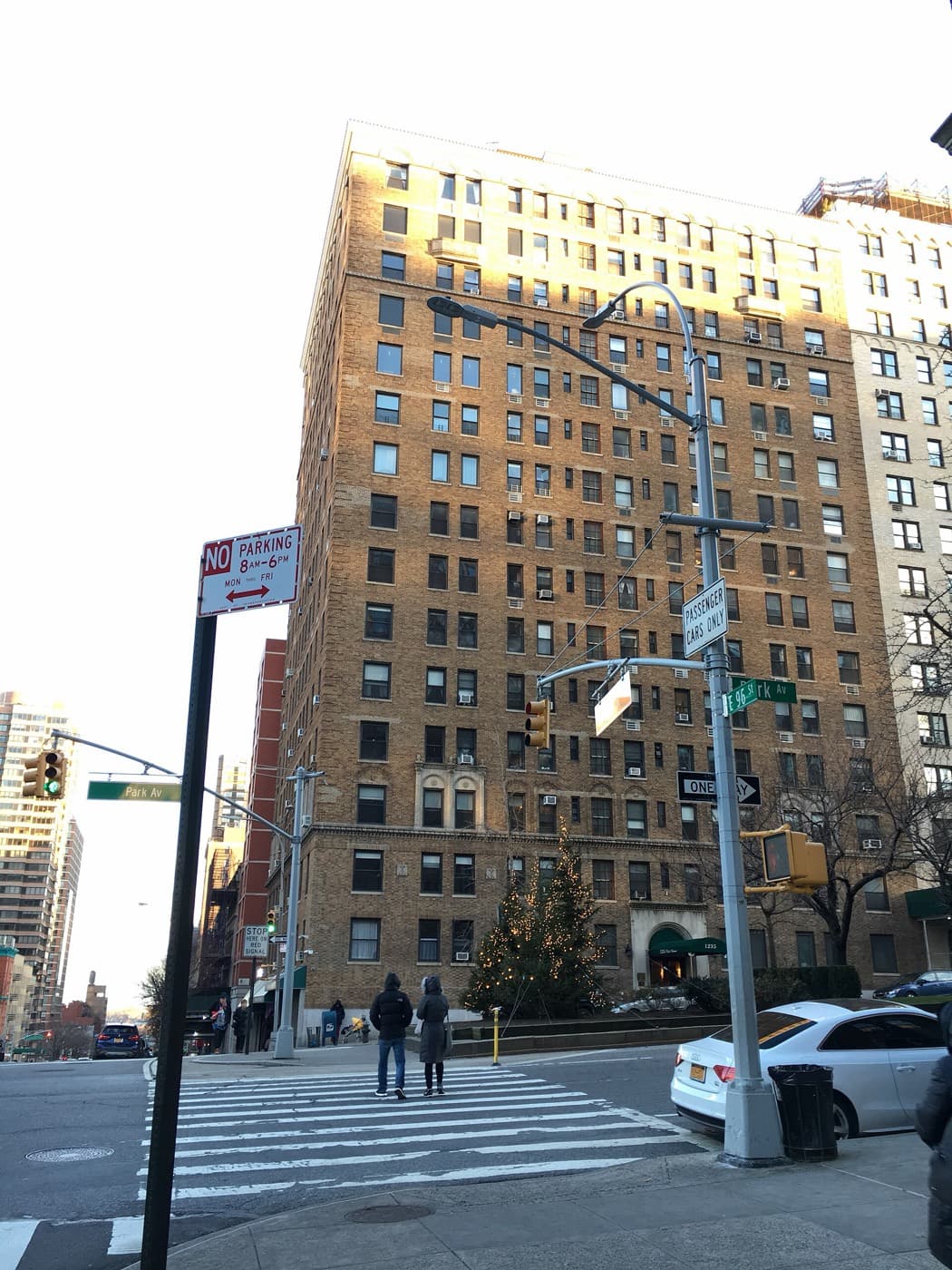
1235 Park Avenue
1235 Park Avenue, New York, NY 10128
Carnegie Hill, Upper East Side
BBL 1015247501 · BIN 1073155
- Year built
- 1927
- Type
- Condominium
- Units
- 60
- Floors
- 16
- Pets
- Pets permitted (subject to condominium approval)
- Financing
- Condominium — flexible; up to 80% permitted
- Flip tax
- 1.75%
Every recorded sale at this building, 2003–2026
Price-per-square-foot over time, the line- and floor-premium curves, and every recorded sale.
- Median $/sf (floor-adjusted)
- $738
- Listing discount
- 4.6%
- Recorded sales
- 60
- On record
- 2003–2026
Own an apartment here? See what it would sell for.
A Private Pricing Opinion — what your apartment at 1235 Park Avenue would likely sell for today, what it costs to sell, and what you’d walk away with — reviewed personally against condition, exposures, renovation quality, and the competition actually on the market.
1235 Park Avenue is that rare thing on Park Avenue: a prewar condominium. A 1927 neo-Renaissance building designed by Gronenberg & Leuchtag on the southeast corner of 96th Street, it delivers the prewar architecture and Park Avenue address that the corridor is known for — but in an ownership structure that almost every neighboring building lacks. On a boulevard defined by exacting prewar cooperatives, condominium ownership here is the differentiator.
The building's defining feature is prewar bones with condominium flexibility. The overwhelming majority of Park Avenue's prewar apartment houses are cooperatives with strict boards, financing caps, and approval processes. 1235 Park offers the same beamed-ceiling, decorative-fireplace, hardwood-floor prewar interior program — but with condominium financing latitude, permissive subletting, and pied-à-terre ownership. For buyers who want Park Avenue and prewar without the co-op board gauntlet, that combination is genuinely scarce.
Its Carnegie Hill positioning anchors it in one of the Upper East Side's most sought-after residential pockets, with its sister building at 1230 Park Avenue (same architects, opposite corner) completing the intersection's prewar composition.
Architecture and unit composition
1235 Park Avenue is a 16-story prewar condominium of roughly 60 residences, designed by Gronenberg & Leuchtag and completed in 1927. The neo-Renaissance brown-brick facade carries masonry quoins, iron lanterns flanking a canopied entrance, arched third-floor window surrounds, and decorative twin-bird panels at the second story. The lobby has been renovated in marble. Apartments feature beamed ceilings, hardwood floors, and decorative fireplaces — the full prewar interior vocabulary.
The mix runs from two-bedrooms through larger combined and penthouse units, with two penthouses at the top of the building. The building was built as a rental in 1927 and later converted to condominium ownership; the conversion year is cited inconsistently across records and should be confirmed at offer stage.
Building operations
1235 Park operates as a prewar condominium with a full-time doorman, live-in resident manager, elevator, renovated marble lobby, bike room, storage, and laundry in the building. Consistent with a prewar building of its size, it does not offer a gym, garage, or roof deck.
As a condominium, the building offers standard condo flexibility: financing up to 80% permitted, subletting allowed (with a sublet fee equal to two months of common charges per year as of September 2023), and pied-à-terre ownership permitted. A flip tax of 1.75% applies. These flexible terms are characteristic of a condominium and are precisely what distinguish the building from its cooperative neighbors. Pets are permitted subject to condominium approval.
Local Law 97
- 2024–2029 annual penalty
- $0 (under cap)
- 2030–2034 annual penalty
- $0 (under cap)
- Per unit / month range
- —
Source: NYC LL84 benchmarking and PLUTO · The Roebling Research Library. City record last verified September 2026.
See full Local Law 97 analysis — emissions history, scenarios, methodology →Facade safety — Local Law 11
The latest available filing classified the facade as SWARMP — Safe With A Repair and Maintenance Program: the engineer identified conditions requiring monitoring or repair, with repairs due by the deadline stated in the filing. The scope, timeline, and how the building funds the work are building-specific — we review the filings and board materials for you.
How to read this, and where it comes from
QEWI = Qualified Exterior Wall Inspector — the licensed engineer the city requires to sign the report (the independent expert, not the managing agent).
Source: NYC DOB facade filings (FISP) · The Roebling Research Library. City record last verified September 2026.
Recent sales
1235 Park trades as a prewar Carnegie Hill condominium, with value expressed on a per-square-foot basis. Pricing reflects the scarcity of prewar condominium product on Park Avenue: the combination of 1927 architecture, a corner Park Avenue address, and condominium flexibility supports demand across two-bedroom through combined and penthouse inventory. Larger and higher-floor units command premiums, and value is best read within a unit's specific floor, exposure, and renovation level rather than a single building average.
Unit-level transaction history is maintained in The Roebling Research Library and shared with clients during diligence.
Recent closings at this building, from The Roebling Research Library. Prices are the transfer amounts recorded with the NYC Department of Finance; apartment-level detail is checked against the building’s own file in The Roebling Research Library before publishing.
| Date | Unit | Apartment | Price | PPSF | vs. Ask |
|---|---|---|---|---|---|
| Jul 16, 2026 | 6D | 1,130 sf | $870,087 | $770/sf | off-mkt |
| Sep 26, 2025 | 3A | 3 BR · 2 BA · 1,500 sf | $1,385,000 | $923/sf | +2.6% |
| Jul 25, 2025 | 3B | 2 BR · 3 BA · 1,538 sf | $2,250,000 | $1,463/sf | -4.3% |
| Jul 18, 2025 | 6C | 2 BR · 3 BA · 1,728 sf | $2,175,000 | $1,259/sf | -17.0% |
| May 9, 2025 | 1A | 2 BR · 2 BA · 1,462 sf | $1,600,000 | $1,094/sf | +0.0% |
| Jan 13, 2025 | 9B | 3 BR · 2.5 BA · 1,537 sf | $2,350,000 | $1,529/sf | off-mkt |
| Jul 25, 2024 | 9A | 2 BR · 2 BA · 1,462 sf | $1,780,000 | $1,218/sf | -10.8% |
| May 16, 2024 | 1CD | 3 BR · 3 BA · 2,091 sf | $1,925,000 | $921/sf | -1.3% |
Market read. Most recent trades (2026) cleared a median $738/sf (floor-adjusted) across 1 sale. Floor-adjusted means each sale is restated to a constant mix of floors, so the figure can differ from the plain median of the sales listed above. Median listing discount 4.6% from the last ask — a recurring negotiation gap worth pricing into any offer or listing strategy.
The retrade record
Lines that have traded more than once in the public record — the building’s appreciation arc, apartment by apartment.
Full closing history with price-per-square-foot over time, the complete retrade record, and every line that has traded.
Sales sourced from NYC Department of Finance recorded transfers (BBL 1-01524-7501). Apartment-level facts (line, condition, asking-price context) curated and cross-verified in The Roebling Research Library. Not all transactions cross-verify with ACRIS records — sponsor and LLC purchases sometimes record at stipulated values rather than market price; square footage from recorded condo declarations and offering plans.
Closed rents at 1235 Park Avenue, last 36 months
| Size | Leases | Median / month |
|---|---|---|
| 3 bedroom | 2 | $9,750 |
3 closed leases, October 2023 to September 2026. Most recent lease July 2026. Based on few leases. Sizes with fewer than 2 leases are not shown. Compiled by The Roebling Team at Compass from closed leases.
At the recent median sale of $2.17M (6 sales since 2024), a buyer putting 25% down would pay about $91,757 to close, or 4.2% of the price.
- Mansion tax: $27,188
- Mortgage recording tax: $31,402
- Title insurance: $9,788
- Attorneys, lender, building fees, reserves and filings: $23,380
Assumes a resale (the seller pays transfer taxes), a $4,500 attorney fee and a mortgage on the rest.
Keep up with 1235 Park Avenue and its market
The Roebling Report, monthly: Manhattan sales data and analysis, including buildings like 1235 Park Avenue. Unsubscribe anytime.
We’ll use your email for The Roebling Report and note your interest in this building. See our privacy policy.
What to know if you’re buying
Prewar condominium on Park Avenue is genuinely scarce. The same prewar interior program as the corridor's cooperatives, with condominium flexibility that almost no neighboring building offers.
The flexibility is real. Up to 80% financing, permissive subletting (with a fee), and pied-à-terre ownership — latitude the surrounding co-ops do not provide.
Note the flip tax. A 1.75% flip tax applies; model it into resale economics.
Confirm the conversion year and current sublet terms. The condominium conversion date is cited inconsistently; verify it and current house rules at offer stage.
Model the full monthly carry. Common charges plus property taxes plus utilities at a prewar Park Avenue condominium are material.
What to know if you’re selling
Lead with the scarcity. A prewar condominium on Park Avenue is a differentiated story — the flexibility versus co-op neighbors is the headline.
Reach the flexibility buyer. International, pied-à-terre, and financing-sensitive buyers value the condo structure; marketing should reach those pools.
Price against the closest match. Floor, exposure, line, and renovation level drive per-square-foot variation.
Closings are condo-fast. Condominium transactions move on a shorter timeline than the surrounding Park Avenue cooperatives.
Comparable buildings
If you're considering 1235 Park, also evaluate:
- 1150 Park Avenue — nearby Carnegie Hill building
- 1160 Park Avenue — nearby Carnegie Hill building
- 1125 Park Avenue — nearby Carnegie Hill cooperative
- 1327 Madison Avenue — nearby Carnegie Hill building
More Upper East Side buildings
- 1223 Lexington Avenue — 1961 co-op
- 1225 Madison Avenue — 1930 co-op
- Tower East (1230 Third Avenue) — 1962 co-op by Emery Roth & Sons
- 1250 Third Avenue — 1960 co-op
- 1261 Madison Avenue — 1901 co-op
- 1270 Third Avenue — 1958 co-op
The neighborhood
For the full corridor — architecture, transit, and pricing across Upper East Side — read The Roebling Team Guide to Upper East Side.
How to read the facts on this page. Items attributed to an offering plan describe the building as it was offered at that filing — unit mix, square footage, the amenity program as planned. They are not a statement about how the building operates today. Tax and compliance figures are sourced separately to current City records and carry their own dates. House rules, staffing and fee policy can change by board resolution without any public filing: treat every policy line here as a starting point for diligence and confirm it with the managing agent. Where this page compares one building or neighborhood to another, that is our analysis of the recorded record — it names the measure, the period and the sample it rests on, and it is an observation about medians rather than a prediction about any particular apartment.
Considering a move at 1235 Park Avenue?
Request a private building brief with the relevant comparable sales, current and off-market availability, and an apartment-specific view of value.