Handel Architects was founded in New York in 1994 by Gary Handel, who trained at Cornell and worked on office towers at Kohn Pedersen Fox. The firm now runs past 200 people across five offices, and its partners include Michael Arad, who won the World Trade Center memorial competition in 2003 and joined the office the following year. Five buildings in our catalog carry the credit, from the Ritz-Carlton at Battery Park City to the 62-story Madison House. The name signals institutional-scale delivery for well-capitalized sponsors rather than a pricing premium.
Who they are
Gary Handel opened his New York office in 1994. He holds a Bachelor of Architecture from Cornell and had spent the previous years at Kohn Pedersen Fox working on office towers. The practice now runs past 200 people across five offices — New York, Boston, San Francisco, Denver, and Hong Kong — and the partner group includes Blake Middleton, Glenn Rescalvo, Frank Fusaro, and Michael Arad.
One naming note for anyone reading old documents. The firm's 1990s work appears in our records as Gary Edward Handel + Associates and Gary Edward Handel & Associates, and shows up that way on Lincoln Square buildings from 1995 and 1996. The firm's own materials date the practice to 1994 and use the current name throughout, without reference to the earlier one. Treat the two as the same office.
Michael Arad is the partner most people have heard of, for work that has nothing to do with housing. He won the World Trade Center memorial competition in 2003 with "Reflecting Absence," chosen from more than 5,000 entries, while employed in the design department of the New York City Housing Authority; he had worked at Kohn Pedersen Fox before that. He joined Handel Architects as a partner in April 2004 and the firm carried the memorial through to construction, with Peter Walker on the landscape. Arad holds a B.A. from Dartmouth and a March from Georgia Tech.
Five buildings in our catalog carry the firm's credit, spanning 2002 to 2021.
The work
The Battery Park City pair came first and came from the same developer, Millennium Partners.
10 Little West Street is the Ritz-Carlton New York, Battery Park — a 38-story mixed-use building with a hotel occupying the base and residential floors above, clad in variegated brick over a granite-and-glass podium, with the Skyscraper Museum at the ground floor and a restaurant terrace on the thirteenth. Dates differ: our building records carry 2002; the firm's own project page gives 2001.
Millennium Tower Residences, 30 Little West Street followed — 35 stories, 236 condominium residences, oriented to the Hudson and the harbor. The firm describes it as New York City's first LEED Gold residential condominium. The engineering behind that claim is specific and checkable: rooftop photovoltaics rated at 27.1 kW, rainwater capture through a roof garden, an on-site wastewater treatment facility, low-VOC interior finishes, and filtration rated to remove 85 percent of airborne particles. Here too the dates differ — our records give 2006, the firm gives 2007.
450 West 17th Street (The Caledonia), 2008, was the first luxury condominium built directly on the High Line, with interiors by Clodagh and direct access to the park. The development contributed roughly $28 million toward High Line public-access infrastructure. The through-block lobby was built around a Richard Serra reference, with a concierge desk of solid walnut on a corten steel base.
200 West 72nd Street (The Corner), 2010, sits at the southwest angle of Broadway and 72nd Street, a block from Verdi Square and on top of the express subway. It opened as a high-end rental, with a stepped, rounded corner that gave it immediate presence on the avenue. It changed hands in 2019 and was converted to a condominium in 2020, so its recorded sales history begins at the conversion rather than at construction.
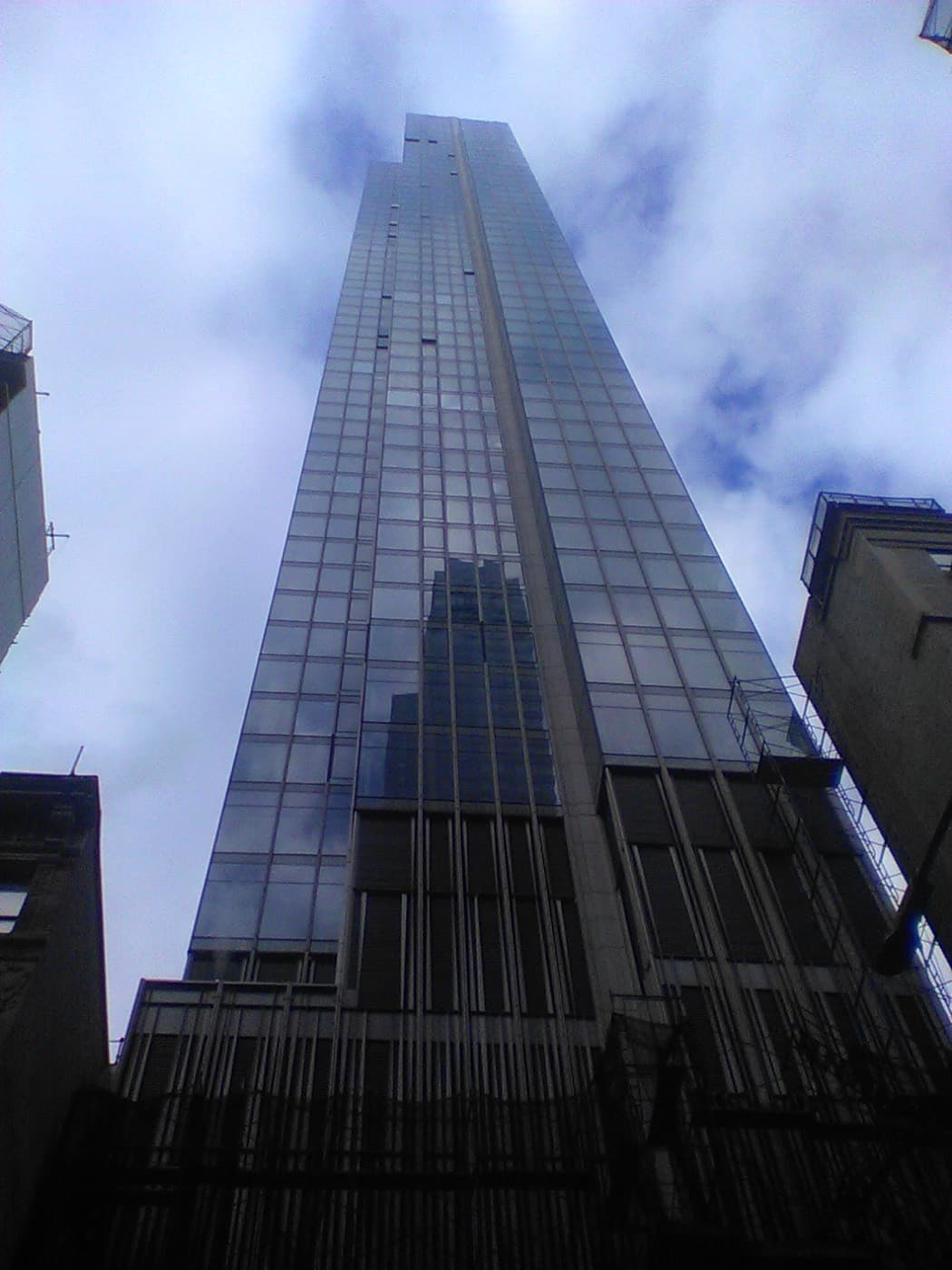
Madison House at 15 East 30th Street, 2021, is the tallest of the group: 62 stories, 805 feet, 199 residences, developed by Fosun Group and JD Carlisle with club interiors by Gachot Studios. The plan is decagonal — ten sides — which is what produces the column-free corners in the residences. One widely circulated summary of the firm's work lists Madison House at 53 stories and 140 units; the construction and occupancy coverage from 2021 and 2022 consistently gives 62 stories and 199 residences.
Across the five, the common thread is scale and delivery: hotel-branded residences, waterfront towers built to a public authority's environmental standards, a High Line pioneer, an avenue rental later converted, and a slender concrete condominium tower.
How the work is regarded
The firm is well regarded within the profession and lightly covered as architecture. It claims more than 250 design awards, including AIA Honor Awards and Urban Land Institute Global Awards for Excellence, and Gary Handel is a Fellow of the AIA. Trade rankings have placed the office among the better-known large American practices.
The memorial is the project that has been argued about, at length and in public, and that debate ran through design, cost, and construction rather than settling on a verdict about the firm.
The residential buildings have drawn much less critical attention. They are covered in the press as developments — amenity programs, sales launches, absorption — more than as design. That is normal for buildings of this type and it should not be read as a negative judgment. None of the five is landmarked or in a historic district.
What the credit means for value
The credit does not carry a premium. It tells you the building was designed and delivered by a large office working for a well-capitalized sponsor, to institutional standards. Price still comes from location, program, and condition.
At the Ritz-Carlton, the brand is the priced item. Hotel-branded residences trade on the service contract and the shared facilities agreement. Read those documents. They govern what residents get, what they pay for it, and what happens if the flag changes.
Battery Park City sits on ground-leased land. Both 10 and 30 Little West Street are in a district where the Battery Park City Authority holds the land and buildings operate under long-term ground leases with PILOT payments in place of ordinary property tax. Lease term, PILOT schedule, and any scheduled resets belong in your diligence before you underwrite carrying cost.
The green credentials at 30 Little West Street are real and worth verifying today. LEED Gold was awarded on 2000s criteria. What matters now is measured energy performance against Local Law 97 caps. Ask for the building's benchmarking data and any compliance plan; our Local Law tools check a specific building's exposure.
A conversion and a new condominium are different products. The Corner was built as a rental in 2010 and converted in 2020. Layouts, closet counts, kitchen sizing, and sound attenuation follow rental construction. The sales record starts in 2020, which makes comparables thinner than the building's age suggests.
Interiors are frequently by another hand. Clodagh at The Caledonia, Gachot at Madison House. If a listing sells you on the interior designer, confirm which parts of the building that name actually covers.
Buying one today
Underwrite the operating budget, not the amenity list. These buildings run pools, staffed lobbies, and large amenity floors. Common charges reflect that. Ask for three years of budgets and the reserve balance.
Read the shared-facilities and retail agreements. Hotel bases, museums, and large ground-floor retail all appear in this group, and each brings a cost-allocation document that shapes what owners pay.
Match the era to the diligence. A 2002 building and a 2021 building differ in facade assembly, glazing, mechanicals, and elevator technology. The newer towers are early in their capital cycle; the Battery Park City pair are not.
Location does most of the pricing work here. High Line frontage, a Broadway-and-72nd corner, a harbor view, and a NoMad supertall are four different markets. Compare within the block, not within the architect's portfolio.
Working with The Roebling Team
This group spans branded residences, ground-leased land, a rental conversion, and a new supertall — four different sets of documents and four different ways to get the underwriting wrong. If you are buying or selling in one of them, a thirty-minute consultation is the right starting point.
Corey Cohen, Principal The Roebling Team at Compass 646.939.7375 · c.cohen@compass.com
Run the numbers
Related architect spotlights
- Kohn Pedersen Fox — where Gary Handel worked on office towers before opening his own office in 1994
- SLCE Architects — the other large office delivering New York residential development at this scale
- Robert A.M. Stern Architects — the design-led comparison for buildings in this price band
Handel Architects buildings with Roebling building pages
| Building | Completed |
|---|---|
| 10 Little West Street | 2002 |
| Madison House | 2021 |
| 200 West 72nd Street (The Corner) | 2010 |
| Millennium Tower Residences, 30 Little West Street | 2006 |
| 450 West 17th Street (The Caledonia) | 2008 |
This page reflects publicly available information and The Roebling Team transaction experience, compiled by The Roebling Research Desk from public records and the offering plans held in The Roebling Research Library. The Roebling Team at Compass does not represent any individual building's management, board, or sponsor. Where sources disagree on attribution or biography, the disagreement is noted rather than resolved. © 2026 The Roebling Team at Compass.
Buildings designed by Handel Architects
The drawings are public. The rest isn't.
How these buildings have actually traded, which lines deliver what the plans promise, and how each board handles financing and approvals.