Windsor Terrace
Windsor Terrace is a narrow strip between Prospect Park and Green-Wood Cemetery, subdivided by William Bell from 1849 and split down the middle by the Prospect Expressway, built in an open cut between 1953 and 1962. What trades is largely resale house stock — frame cottages from the early subdivision and brick row houses with flat or bay fronts — plus a thin apartment tier that followed the IND's 1933 arrival at Fort Hamilton Parkway. No part of the neighborhood sits in a city historic district, so house exteriors answer to zoning rather than Landmarks; check the lot's zoning district, and how close the house sits to the expressway cut.
What the index shows for Windsor Terrace
Median condominium price per square foot and cooperative price per room, January–August 2026, with the change from the same months of last year, over the last full year, and since 2022 and 2016. Condos are measured by the foot, co-ops by the room. Rents are the median annual rent per square foot, with the same-apartment change.
2025 median: Windsor Terrace $964 · Brooklyn $1,352
2025 median: Windsor Terrace $200K · Brooklyn $250K
Medians of recorded, index-eligible sales. The headline price is January–August 2026, where at least 50 sales back it; otherwise the last complete year's. The charts show every complete year, and a year with too few sales is left as a gap rather than estimated; the hollow point is 2026 to date (the headline figure, where there is one), not a full year, and * means fewer than 30 sales behind it, so read it as directional. Like the annual medians it includes new-development first sales; the change from the same months of last year uses resales only, and appears only where at least 150 resales back each period. The longer changes run between complete years. The inflation-adjusted view deflates each year's median by the consumer price index to the last complete year's dollars (the current year uses an estimated index). Manhattan is below 96th Street. Each figure carries the mix of what happened to trade, not the like-for-like change of a single apartment. The count beside each change is the sample backing that comparison, which is smaller than the scope’s all-time total. Rents are medians of closed leases that report square footage, for condo and rental buildings; * means few leases. Compiled by The Roebling Team at Compass from public records. Figures are indicative, not an appraisal.
Latest closings in Windsor Terrace
The 10 most recent arms-length resales recorded across the buildings profiled here, newest first. Open a building for its full sales record.
| Closed | Building | Unit | Size | Price | $/sf |
|---|---|---|---|---|---|
| Sep 8, 2026 | Park Vanderbilt | 7B | 2 BR | $899,999 | — |
| Aug 13, 2026 | The Lakeview, after the cooperative corporation | 306307 | 3 BR | $1,925,000 | — |
| Aug 12, 2026 | 250 Seeley Street | 4 | 2 BR | $825,000 | — |
| Aug 10, 2026 | The Lakeview, after the cooperative corporation | 301 | 2 BR | $1,225,000 | — |
| Aug 6, 2026 | Park Circle at Prospect Park | 602 | 2 BR | $950,000 | $803 |
| Jul 28, 2026 | The Continental | A6 | 2 BR | $920,000 | — |
| Jul 23, 2026 | 202 Seeley Street | 1G | — | $425,000 | — |
| Jul 15, 2026 | Hamilton House, per historical records of its original marketing | 4R | 1 BR | $625,000 | — |
| Jul 14, 2026 | 82 East 5th Street | 3A | 2 BR | $761,889 | $866 |
| Jul 7, 2026 | The Algonquin | 1C | 1 BR | $520,000 | — |
Recorded deeds and transfer filings, compiled by The Roebling Team at Compass from public records. $/sf is shown for condominiums with a reported square footage. Sponsor first sales are not listed.
Windsor Terrace rents
Windsor Terrace rents are up 8.4% in January–September 2026, against the same months of 2025. 2025 was +1.4%, 2024 +1.2%, 2023 +10.3%.
Directional: fewer repeat leases here, so read the direction rather than the precise figure.
The same apartments, lease to lease, each year against the year before (88 lease-to-lease comparisons). 2026 compares January–September with January–September 2025. * Few repeat leases that year. The latest months can move as late-reported leases arrive.
| Size | 2023 | 2024 | 2025 | 2026 YTD |
|---|---|---|---|---|
| All sizes | $55*18 leases | $6133 leases | $58*23 leases | $69*12 leases |
| 1 bedroom | — | $65*11 leases | — | — |
| 2 bedroom | — | $59*16 leases | $56*11 leases | — |
Median rent per square foot per year, from closed leases that report square footage. 2026 is January–September. * Fewer than 30 leases.
Median monthly rent per room, co-op sublets. 2026 is January–September.
Compiled by The Roebling Team at Compass from closed leases, through September 2026. Figures are indicative, not an appraisal. The Roebling Index
How Windsor Terrace clears
What closings across Windsor Terrace look like at the table, shown against the Brooklyn baseline so each figure reads as a comparison.
- Typical closing vs asking price
- +0.4%
- Share selling above ask
- 52%
- Monthly charges
- $1,159
- Median rooms
- 4.0
At a glance
Where it is: a narrow strip between Prospect Park and Green-Wood Cemetery, from the park's southwestern edge down to Caton Avenue — Park Slope beyond Bartel-Pritchard Square, Gowanus down the slope to the west Share of recorded sales: cooperative 40 percent · townhouse 23 percent · condominium 23 percent · small multifamily 13 percent Market character: 2,918 recorded sales across 917 addresses — one of the smallest markets we publish, and the only one of the four newest Index additions published without a caveat. Arm's-length runs 89.3 percent: a resale market, trading between households Defining control: the Prospect Expressway, built in an open cut through the neighborhood's middle between 1953 and 1962. No part of the neighborhood sits in a historic district Transit: F and G at 15th Street–Prospect Park and Fort Hamilton Parkway Watch for: the expressway cut. It severed the street grid, and proximity to it is the sharpest internal price variable in the neighborhood — establish exactly where a house sits relative to it before comparing anything
Why Windsor Terrace trades the way it does
Windsor Terrace is a small, quiet, owner-to-owner market — 89.3 percent arm's-length, no sponsor pipeline of any consequence, fewer than a thousand addresses trading at all in three decades of record. What distinguishes it from the row-house markets to its north and east is the tenure split: cooperatives are the single largest share of the sale record at 40 percent, an inheritance of the apartment tier that followed the IND's arrival at Fort Hamilton Parkway in 1933 and settled along the park and Ocean Parkway edges. The houses — frame cottages from William Bell's 1849 subdivision and the brick rows that followed — make up most of the rest, trading infrequently and holding tightly.
Small has consequences. The published 2025 samples are 40 cooperative sales and 27 condominium sales, which is enough to publish honestly and not enough to overread: a single quarter's mix can tilt a year's median. The nine-year series are the steadier signal — cooperatives up 19.0 percent since 2016, condominiums up 26.0 percent, both trailing inflation in real terms — and they describe a market that holds value without speculating on it. People buy here to stay; the record's defining feature is how rarely anything comes up.
The stock
The cooperative tier is concentrated in a handful of elevator buildings on the neighborhood's park and parkway edges, and the sale record shows it plainly: 140 East 2nd Street carries 162 recorded sales — the most-traded address in the neighborhood by a wide margin — with 346 Coney Island Avenue at 106, 651 Vanderbilt Street at 87, 81 Ocean Parkway at 83, 30 Ocean Parkway at 71 and 135 Prospect Park Southwest at 70 behind it. This is room-count, board-package stock; price it per room against this specific cohort, and expect board terms to vary meaningfully building to building.
The houses are the fabric — frame cottages and porch-fronted rows from the early subdivision alongside flat- and bay-fronted brick, on blocks scaled smaller than brownstone Brooklyn's. They were built modestly and many remain so; the renovation spread matters, but the scarcer variable is simply availability. With 917 addresses and a population of owners who stay, the comparable set for any given house is short and often dated — expect to reach back further in time, and adjust, rather than finding three fresh comps on the block.
The condominium tier is small and mostly modest in scale — 23 percent of the sale record, a thin 2025 sample, and buildings that trade infrequently. Comp it across the neighborhood and the Park Slope border rather than within any single address.
The expressway cut is the neighborhood's dividing fact
Robert Moses's Prospect Expressway went through between 1953 and 1962 in an open cut, and it did to Windsor Terrace what the BQE trench did to the Columbia Waterfront: severed a coherent grid into two sides connected at limited crossing points. Seventy years on, the severance is the neighborhood's principal internal boundary — it determines walking routes to the park and the subway, it puts traffic noise and air into the blocks that face the cut, and it is the difference between otherwise similar houses that price notably apart.
There is no landmarks overlay anywhere in the neighborhood to complicate the picture — exteriors answer to zoning, and the protection question that dominates diligence in the districted markets simply does not arise here. The diligence question that replaces it is locational and specific: which side of the cut, how many blocks from it, and which crossing serves the commute. Walk the actual route to the F before pricing the house.
Daily life and getting around
The neighborhood's daily life runs at Bartel-Pritchard Square, where it meets the park and Park Slope, and along Prospect Park Southwest and Prospect Avenue — with Farrell's, the corner institution at 16th Street pouring since 1933, as the informal town hall. Fort Hamilton Parkway carries a second, quieter strip. The park is the eastern border and the cemetery the western one, which is the geography that gives Windsor Terrace its shape: two long green walls, no through-traffic destination between them, and a residential quiet that is the neighborhood's actual product. The F and G at 15th Street–Prospect Park and Fort Hamilton Parkway are the transit story in full; the F's express pattern, when running, is the commute variable worth checking in its current form.
What to know if you're buying here
Price the cut first. Two similar houses on either side of the expressway are not the same purchase. Establish the block's relationship to the cut — facing, adjacent, buffered — and comp within that band.
In the co-op tier, the building is the market. With trading concentrated in a few addresses, your comparable set is the building's own history plus its two or three genuine peers. Get the board package requirements, sublet policy and any flip tax from the managing agent early; in buildings this size, terms differ more than prices do.
Expect thin, dated comps for houses — and underwrite accordingly. A short sale record is a scarcity signal, but it also means appraisal risk on a financed purchase. Build the adjustment case for older comps rather than stretching for weak recent ones.
Move quickly, diligence slowly. Inventory here is scarce and well-watched; the houses that surface trade fast. Have financing and inspection lined up in advance so speed at offer does not become haste at contract.
What to know if you're selling here
Scarcity is your position — document it. Years can pass between sales on a block. Present the long ownership tenures and the short supply plainly; the buyer who understands how rarely the neighborhood comes up prices differently than one reading a borough-wide feed.
Get ahead of the appraisal. Thin recent comps cut both ways. Assemble the best supportable set — including your own building's or block's history — and provide it, rather than letting a short appraisal file set the ceiling.
If you face the cut, price for it honestly. The discount is real and buyers know it; a listing priced as if the expressway were not there sits, and sitting costs more than the discount does.
Where it sits in the Index
Windsor Terrace is the smallest of the Brooklyn Index's newest additions and the only one published without a caveat — a clean, thin, resale record with cooperatives up 19.0 percent and condominiums up 26.0 percent since 2016, both trailing inflation, in a market that trades on scarcity rather than momentum. Read it beside Park Slope, whose southern blocks are its direct comparable and its price ceiling, and Gowanus, the new-development counterpoint down the slope. The full parent-market read sits on The Roebling Index.
Run the numbers
Related guides
- Park Slope — A Buyer's Guide — the neighbor across Bartel-Pritchard Square, and the price ceiling
- Gowanus — A Buyer's Guide — the new-development counterpoint to the west
- Columbia Waterfront — A Buyer's Guide — Brooklyn's other highway-severed market, for the structural rhyme
- NYC Real Estate Tax & Closing Cost Guide
Buildings in Windsor Terrace
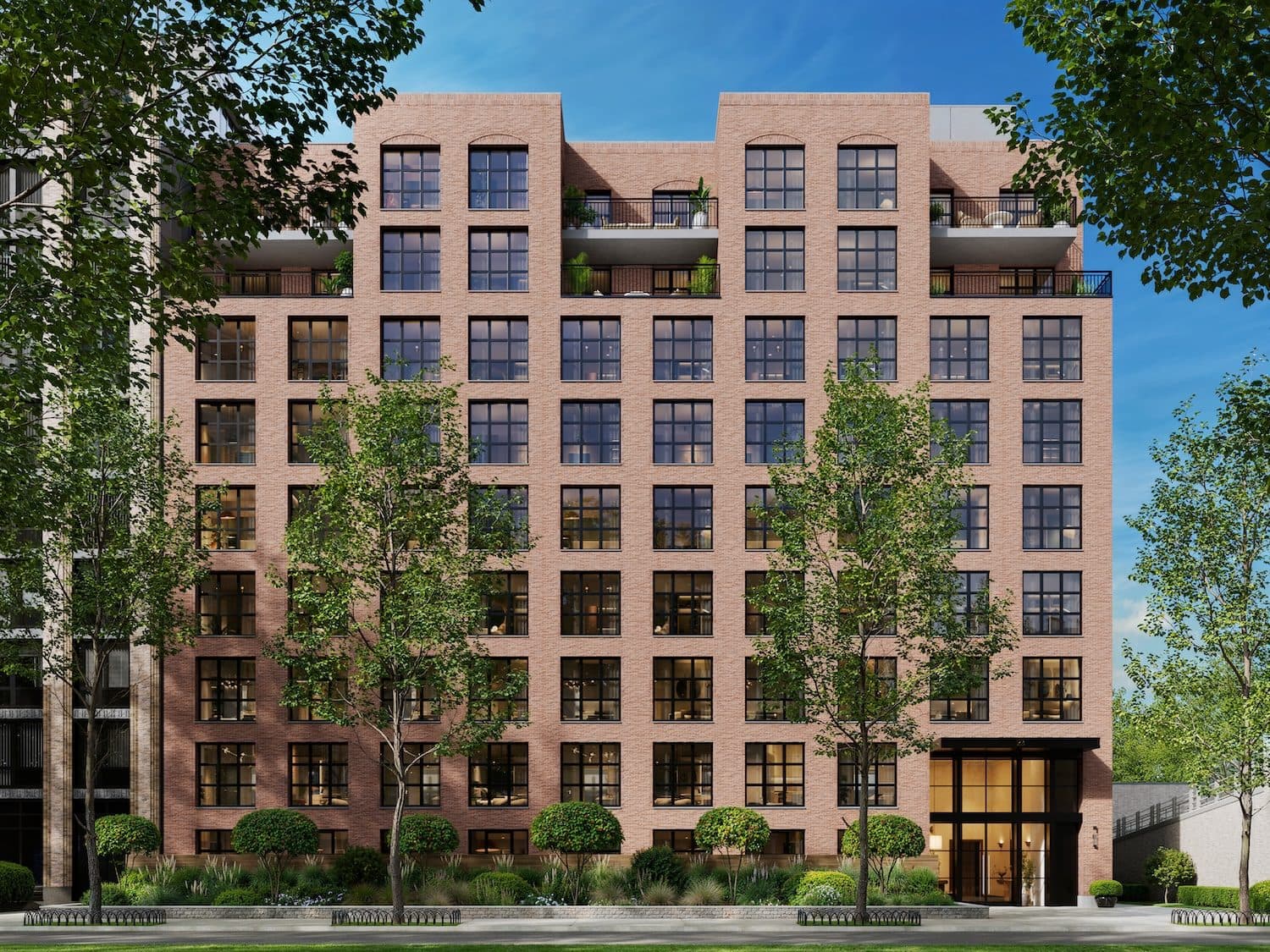
Get the neighborhood read on your building.
See how your apartment compares with the rest of Windsor Terrace, or get a market update tuned to this neighborhood — sent to you directly.
646.939.7375 · c.cohen@compass.com
The same research for the markets NYC owners most often weigh against an apartment: town guides, closing costs and the monthly cost of owning a house.
- Moving between NYC and the suburbs →
- Long Island →
- Westchester →
- Connecticut →
- New Jersey →
- South Florida →
Carrying-cost calculators (mortgage, property tax by town, insurance, upkeep): Long Island · Westchester · Connecticut · New Jersey · Boca Raton & Delray Beach