NoMad
NoMad covers the blocks north of Madison Square Park, where turn-of-the-century loft and commercial buildings have been converted to residential use and joined by a run of new towers. The neighborhood's identity is more hotel-and-restaurant than residential, and apartment inventory is newer, smaller in count, and condominium-weighted. Ownership skews toward people who want a central, amenity-heavy building rather than a residential neighborhood, and much of it is non-primary. It is among the most expensive neighborhoods in Manhattan to carry month to month.
What the index shows for NoMad
Median condominium price per square foot and cooperative price per room, with the change over the past year and since 2022 and 2016. Condos are measured by the foot, co-ops by the room.
Medians of recorded, index-eligible sales, measured to the last complete year — each figure carries the mix of what happened to trade, not the like-for-like change of a single apartment. The count beside each change is the sample backing that comparison, which is smaller than the scope’s all-time total. Compiled by The Roebling Team at Compass from public records. Figures are indicative, not an appraisal.
How NoMad clears
What closings across NoMad look like at the table, shown against the Manhattan baseline so each figure reads as a comparison.
- Typical closing vs asking price
- −4.1%
- Share selling above ask
- 11%
- Monthly charges
- $4,682
- Median rooms
- 4.0
At a glance
Where it is: The blocks north of Madison Square Park, roughly 25th Street to the low 30s, Sixth Avenue east to Lexington, with Murray Hill above and Midtown South to the northwest Share of recorded sales: condominium 76 percent · cooperative 21 percent · townhouse 1 percent · commercial 1 percent Market character: 73.2 percent arm's-length across 4,115 recorded sales at 117 addresses, with sponsor-flagged activity at 20.3 percent — roughly one sale in five is a sponsor closing Defining control: the Madison Square North Historic District, designated June 26, 2001 over approximately 96 buildings; the Landmarks Preservation Commission has twice declined to extend it above 29th Street Zoning: the blocks west of Fifth Avenue between 23rd and 31st Streets were mapped manufacturing until the Midtown South Mixed-Use Plan was approved in August 2025 — which is why nearly everything residential there is a conversion Transit: 6 at 28th and 23rd on Park Avenue South; N, R and W at 28th and 23rd on Broadway; F and M at 23rd on Sixth; PATH at 23rd and 33rd; Herald Square a few blocks north Watch for: the non-residential share of the condominium. Commercial, office and hotel floor area inside the same declaration can push a building past the 35 percent threshold conforming lenders apply, which is a financing problem first
Daily life and getting around
NoMad reads as a commercial district with apartments in it. The building line is ten to fifteen stories of brick, limestone and terra cotta put up between the 1890s and the 1920s for offices, showrooms and lofts, and at street level most of it is still doing commercial work: the Broadway frontage between the park and Herald Square carries a long run of wholesale storefronts — perfume, luggage, costume jewelry, printed shirts — with roll-down gates and a weekday rhythm that empties out on Sunday. Residential entrances are narrow, set between those storefronts, easy to walk past. Two blocks change the register: Lexington Avenue in the high 20s is a dense run of South Asian restaurants and grocers, and West 28th Street between Sixth and Seventh is the remainder of the wholesale flower market, unloading before dawn.
The hotels are the evening economy: the Ace opened in 2009 in the 1904 Breslin and the NoMad Hotel in 2012 in the 1900 Johnston Building at 1170 Broadway, and the restaurant density they anchor runs far ahead of the resident population. The ordinary residential apparatus is thinner — supermarkets and dry cleaners are scarce, and most households shop south into Flatiron or north into Murray Hill.
Madison Square Park is the whole of the green space and does a great deal of work. The land has been public since 1686; the park held its first public art exhibition in 2001, the Conservancy was formed in 2002, and Shake Shack opened its original stand there in 2004. The restoration of the park and the designation of the historic district around it fell within a year of each other, and the neighborhood's residential turn dates from about that moment. Transit is the other practical argument: the 6, N, R and W all stop within two blocks of the park, and Herald Square sits a short walk off the northern edge.
Why NoMad trades the way it does
The number that organizes this market is 20.3 percent — the share of the recorded sale history carrying a sponsor flag, against 73.2 percent arm's-length, among the highest sponsor shares of any Manhattan neighborhood we publish. It follows from how the residential stock came into being. NoMad did not accumulate owner-occupied apartments over a century the way the Upper East Side did; it manufactured them in waves, out of buildings that had been doing something else, and each wave ran through a sponsor selling a whole building at once. A comparable set drawn here without filtering is substantially a record of absorption schedules rather than of resale prices.
The tenure split follows from the same mechanism. Conversion and ground-up construction both produce condominiums, which is why 76 percent of the sale record is condominium; the 21 percent cooperative share is the earlier, smaller wave, loft and office buildings taken to cooperative ownership before the condominium became the default instrument. The two should not be read as one market: the condominium tier is newer, larger and more heavily non-primary; the cooperative tier is older, board-governed and much thinner in the record. As of the last complete year both have lost ground against inflation since 2016, and the condominium series has held its nominal level far better. Treat the 2025 cooperative reading with care — it rests on sixteen recorded sales, and in a market of 117 addresses one building's closings can move a year's median on their own.
The stock
Three products, separated by how the apartment was made rather than by where it sits.
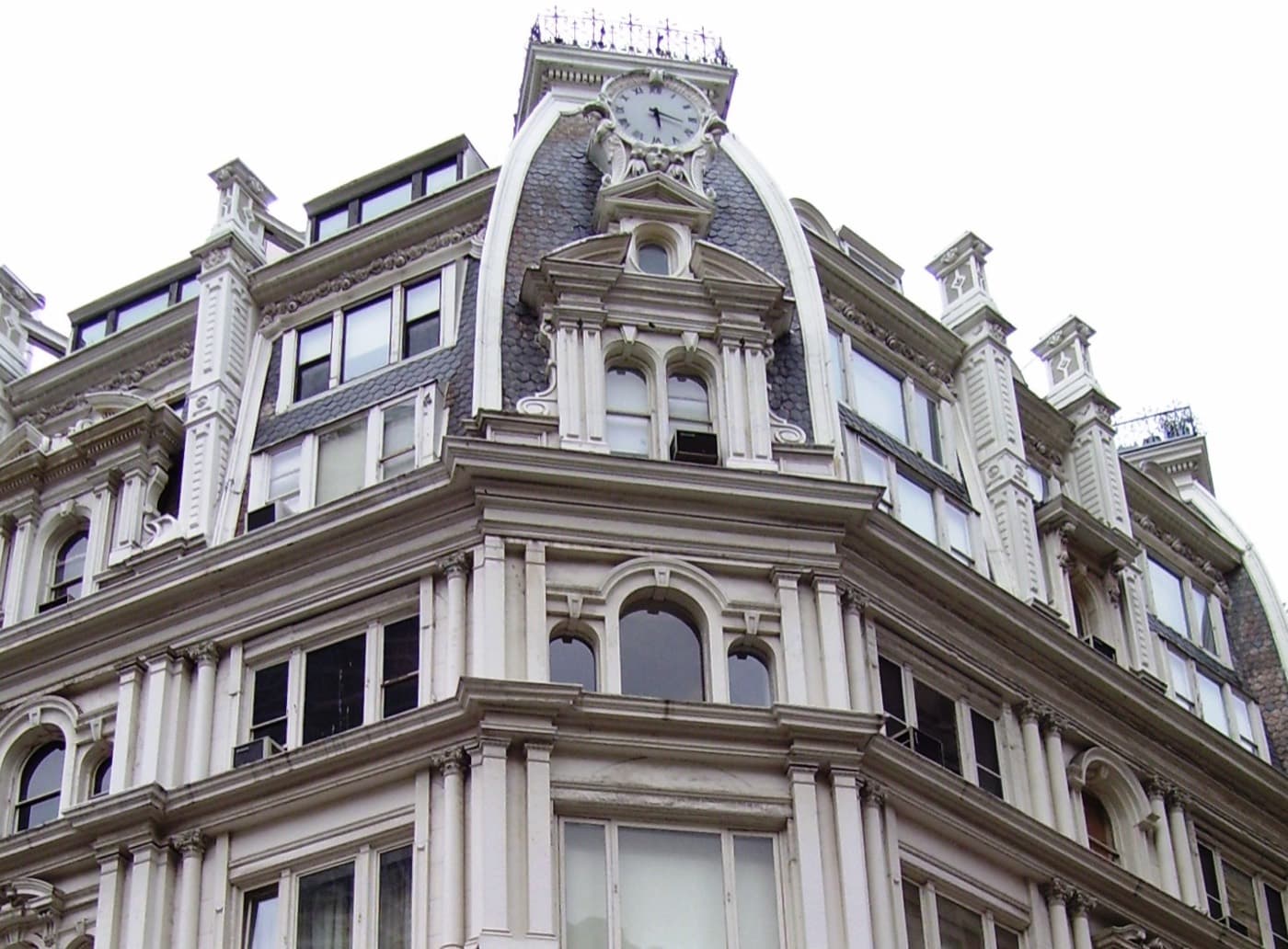
The pre-1930 loft and office conversions are the largest tier and the architectural argument. 225 Fifth Avenue — the Brunswick Building of 1907, Francis H. Kimball and Harry E. Donnell, converted to roughly 195 apartments in the late 2000s — is the most-traded address in the neighborhood at 464 recorded sales. 212 Fifth Avenue, Schwartz & Gross, 1912–13, converted to 48 apartments in the mid-2010s, is the smaller and dearer version, and 11 East 29th Street at 319 recorded sales, 39 East 29th Street at 240 and 15 East 30th Street at 235 are the side-street depth behind them.
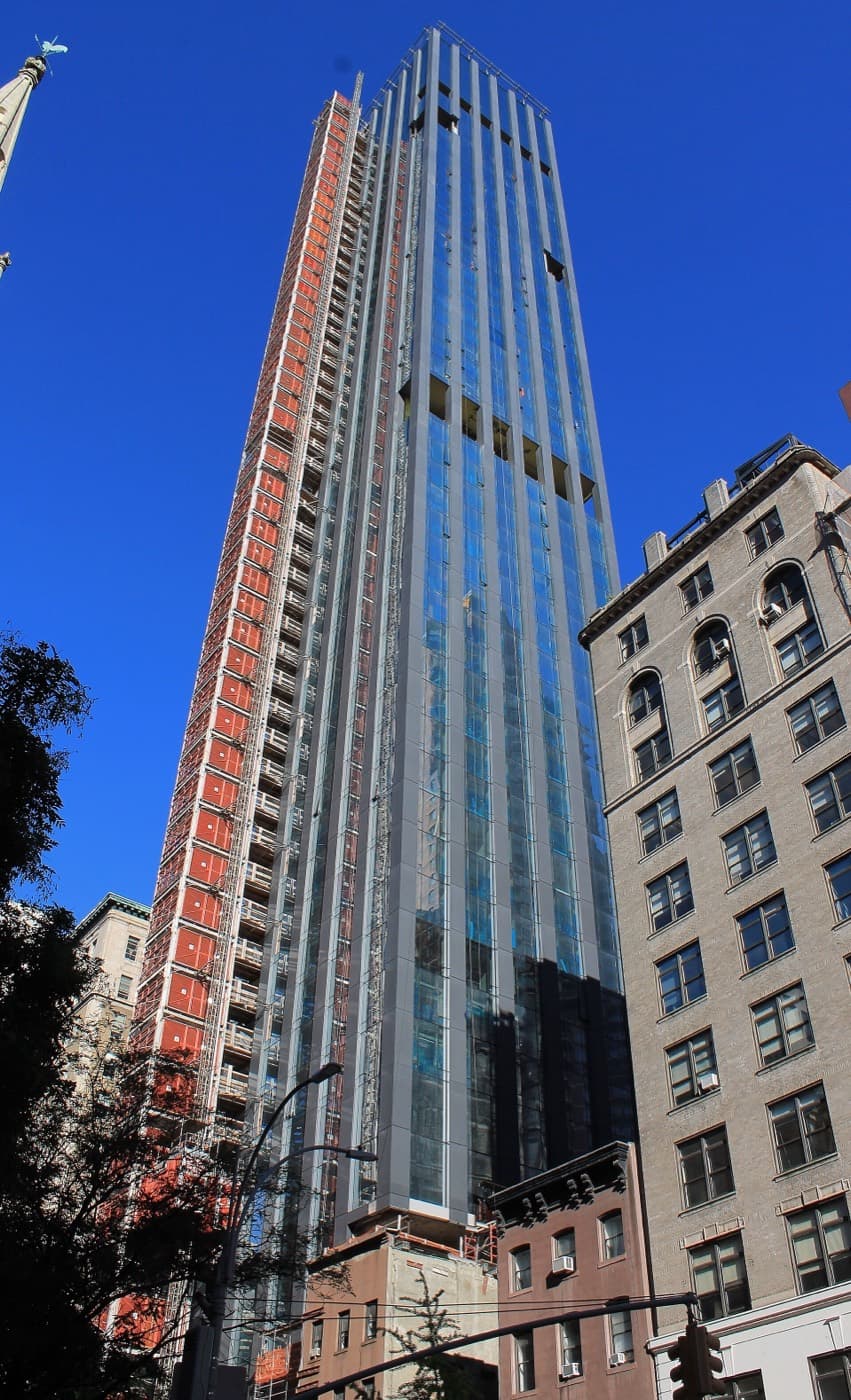
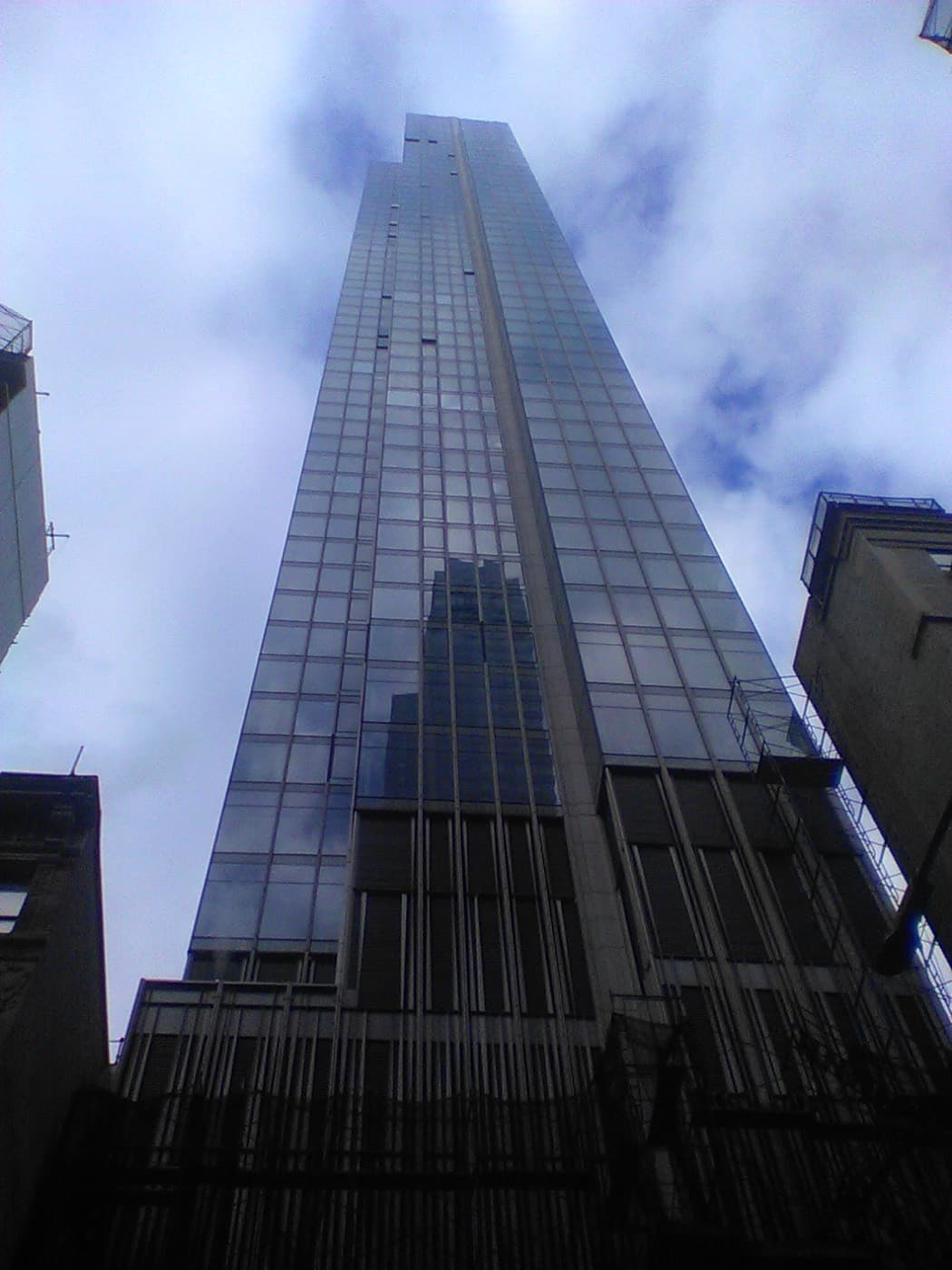
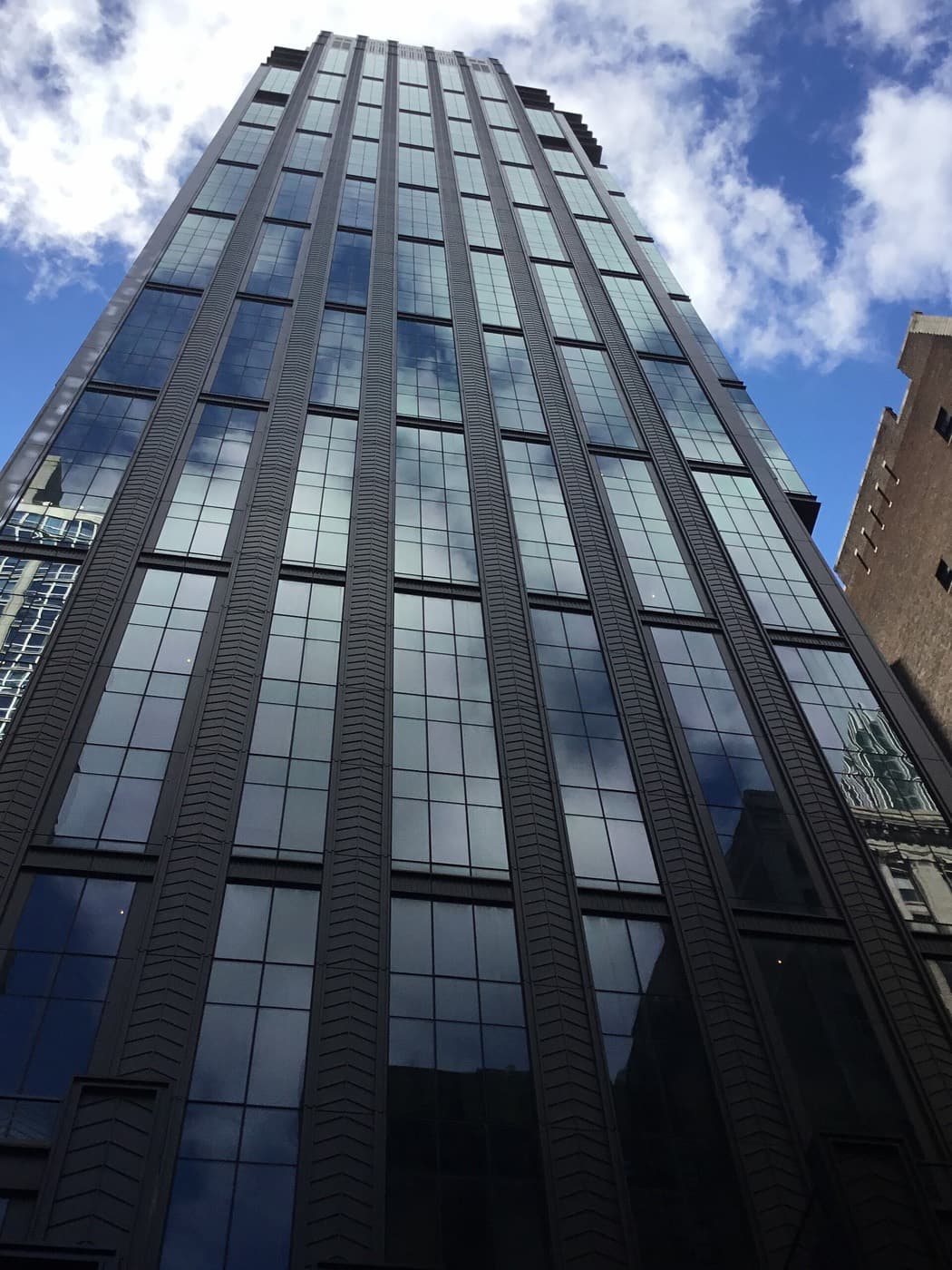
The new towers are the second tier and the top of the price range. 277 Fifth Avenue — Rafael Viñoly, 55 stories, 130 apartments, completed in 2018 — is the type specimen, with 241 Fifth Avenue and 30 East 31st Street the same product at smaller scale. This is where sponsor closings sit thickest. The cooperative tier is the third and least visible: 66 Madison Avenue at 202 recorded sales is the deepest of them, with 88 Lexington Avenue and 90 Lexington Avenue on the eastern edge.
Price the condominium stock per square foot and the cooperative stock per room with the board terms attached — but expect the room count to behave badly, because loft floor plates are deep and a converted apartment often carries interior rooms and divisions reflecting a carpenter's decision rather than an original plan. Per-room comparisons between two conversions on one block can be close to meaningless.
The historic district, and where it stops
The Landmarks Preservation Commission designated the Madison Square North Historic District on June 26, 2001 — approximately 96 buildings north and west of Madison Square Park, concentrated along Fifth Avenue and Broadway, running roughly from 25th to 29th Street between Sixth and Madison Avenues, and it reads the area through its commercial history from the 1870s to the 1930s: hotels, clubs and theaters first, then the office and loft towers that replaced them.
The boundary has held, and it has been tested. In 2015 and again in 2016 the 29th Street Neighborhood Association asked the Commission to extend the district north to 34th Street; the Commission declined both times, finding the area above 29th lacked the architectural and historic cohesion designation requires. In December 2019 it designated five Italianate row houses at 47–55 West 28th Street — the surviving core of Tin Pan Alley — as individual landmarks instead — an instrument that protects five buildings and nothing around them.
For a buyer this is an operational line rather than a plaque. Inside the district, exterior work — windows, storefronts, façade repair, anything visible from the street — requires a Certificate of Appropriateness, with the timeline and cost premium that follow, and a converted loft building's façade cycle is expensive. Outside it, the same work is a contractor and a permit, and the lot is a development site. That asymmetry explains most of where the new towers went.
The zoning underneath the conversions
The other control is the zoning map, and until last year it was doing something most buyers would not guess. From Fifth Avenue west to Sixth, between 23rd and 31st Streets, the blocks were mapped M1-6 — a manufacturing district, where new residential buildings are not permitted. Conversion was: under Article I, Chapter 5 of the Zoning Resolution, non-residential floor area in an existing building may be changed to residences, and that provision is the legal basis for much of what trades here. City of Yes for Housing Opportunity, adopted by the City Council in December 2024, moved the eligibility line to buildings existing on December 31, 1990.
Then in August 2025 the Council approved the Midtown South Mixed-Use Plan, rezoning 42 blocks between roughly West 23rd and West 40th Streets from Fifth to Eighth Avenues. The M1-6 mapping gives way to paired M1-8A/R11 and M1-8A/R12 districts under a new Special Midtown South Mixed-Use District, with Mandatory Inclusionary Housing where residential use is newly permitted. Its southeast quadrant — Fifth Avenue to Sixth, West 23rd to West 31st — is NoMad's entire western flank, and City Planning's own review found roughly half of it already inside an LPC historic district, with all or parts of 62 tax lots within Madison Square North. The pipeline those blocks now carry will land unevenly: a landmarked lot and an unprotected one on the same block are very different assets. Establish which is next door before paying for a view.
What to know if you're buying here
Filter the sponsor closings out before the comparable set means anything. At 20.3 percent sponsor-flagged, roughly one in five recorded sales here is a first sale from a developer, priced against an absorption schedule and often carrying concessions that never reach the recorded number. Pull the building's own history, separate the sponsor closings from the resales, and draw your conclusion from the second set only.
Read the condominium's non-residential percentage before the floor plan. In a district of conversions and mixed-use buildings, commercial, office and hotel floor area routinely sits inside the same declaration as the apartments — and conforming lenders treat a project as ineligible where non-residential space exceeds 35 percent of the building or project by square footage. Ask for the number, how it was calculated, and which lenders have closed loans there in the past year.
Confirm the certificate of occupancy and the legal use of the unit. Where residential stock was made by converting commercial buildings, the paperwork is the asset. Verify against Department of Buildings records that a residential certificate of occupancy covers your floor, that any alteration was signed off, and that you are buying a dwelling unit rather than a commercial space someone has been sleeping in.
Underwrite the carrying cost, and check the tax position unit by unit. This is among the most expensive neighborhoods in Manhattan to hold month to month, and a large share of the ownership is non-primary, which changes a building's reserve position and resale pool. The new construction went up across the era of the 421-a exemption and its successors, and whether a building carries an active benefit, on what start year and term, varies address by address. Do not take an abatement claim from a listing sheet: confirm the exemption code, start year and term against the current Department of Finance record, ask what share of units are owner-occupied, and model the monthly number after the benefit steps down.
What to know if you're selling here
Your competition may include a sponsor. Where a nearby building is still selling out, a resale competes with a developer who has a marketing budget, a model unit and a reason to close on schedule. Know what the new inventory is offering, concessions included, before you set a number — and if there is no active sell-out in your immediate radius, say so, because here that is a real advantage.
Answer the structure questions on day one. Non-residential percentage, certificate of occupancy, alteration sign-offs, exemption status, and the lenders who have recently closed in the building. In converted and mixed-use stock these are the questions that re-trade deals in week six, and having the documents ready before the first showing removes the most common cause of a renegotiation.
Price against your own line and plan for a longer marketing period. With 117 addresses across the whole history, this is a shallow market by Manhattan standards, and the set that actually prices your apartment may be a handful of trades in your own building. Build it from your line and exposure rather than a neighborhood average, and treat time on market as structural rather than as a pricing failure.
Where it sits in the Index
NoMad publishes without a caveat, but it is one of the smaller Manhattan series we carry — 3,534 index-eligible sales across 29 building profiles, with a recorded history running from 2002. The condominium line stands on its own and is the one to read; the cooperative line is thin enough in the most recent year to be treated as a direction rather than a level. See the Roebling Index for the current position.
Run the numbers
Related guides
- Murray Hill — A Buyer's Guide — the neighborhood directly north, and the most common mis-comp
- Midtown South — A Buyer's Guide — the other side of the Midtown South rezoning
- Manhattan Apartment Buying Guide — Pillar 2
- NYC Real Estate Tax & Closing Cost Guide
Buildings in NoMad


Get the neighborhood read on your building.
See how your apartment compares with the rest of NoMad, or get a market update tuned to this neighborhood — sent to you directly.