Yorkville
Yorkville runs east of Lexington Avenue from the 70s into the 90s, historically the Upper East Side's more affordable half and materially better connected since the Second Avenue subway opened. Pre-war walk-ups and small elevator buildings sit on the side streets, large postwar co-ops and newer condominiums on the avenues. It is more competitive than its reputation suggests: closings run closer to ask than the Manhattan norm, roughly one in six clears above it, and monthly charges sit well below Lenox Hill's and Carnegie Hill's.
What the index shows for Yorkville
Median condominium price per square foot and cooperative price per room, with the change over the past year and since 2022 and 2016. Condos are measured by the foot, co-ops by the room.
Medians of recorded, index-eligible sales, measured to the last complete year — each figure carries the mix of what happened to trade, not the like-for-like change of a single apartment. The count beside each change is the sample backing that comparison, which is smaller than the scope’s all-time total. Compiled by The Roebling Team at Compass from public records. Figures are indicative, not an appraisal.
How Yorkville clears
What closings across Yorkville look like at the table, shown against the Manhattan baseline so each figure reads as a comparison.
- Typical closing vs asking price
- −2.7%
- Share selling above ask
- 17%
- Monthly charges
- $2,502
- Median rooms
- 4.0
At a glance
Where it is: The Upper East Side east of Lexington Avenue, from the 70s into the 90s, with Lenox Hill below it, Carnegie Hill across Lexington, and East Harlem above 96th Share of recorded sales: cooperative 58 percent · condominium 36 percent · condop 4 percent · townhouse 2 percent Market character: 87.5 percent arm's-length across 18,737 recorded sales, with sponsor-flagged activity at 4.8 percent — a resale market carrying a small but live new-development tier Defining control: almost none. The Upper East Side and Carnegie Hill historic districts both stop at Lexington Avenue; inside Yorkville the only landmarked district is Henderson Place, half an acre designated in 1969 Transit: 4, 5 and 6 at 77th and 86th on Lexington; Q at 86th and 96th on Second Avenue, since January 1, 2017 Watch for: carrying cost rather than price. The monthly number is the neighborhood's central argument and its main variable — tax exemptions on the newer condominium tier and capital cycles in the postwar cooperative towers both step up on schedules you can establish before you bid
Daily life and getting around
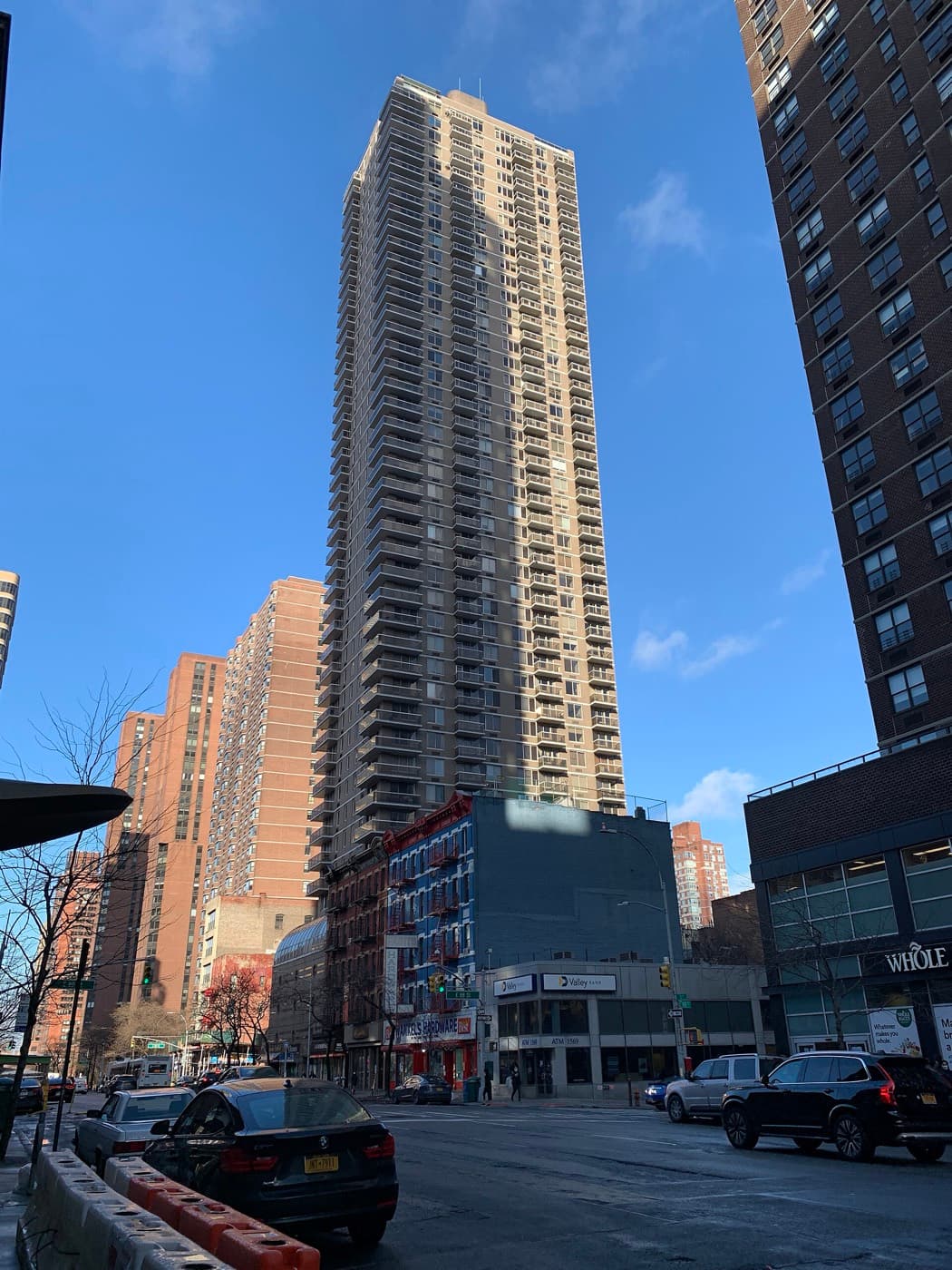
Yorkville is built to a different grain than the Upper East Side west of it. The side streets run as lines of five- and six-story brick walk-ups with fire escapes on the front, put up as tenements and now holding small cooperatives and rentals, broken every block or two by a postwar elevator building that replaced three or four of them. The avenues carry the height: Second, Third, First and York run as walls of brick and glass towers, most from the 1960s through the 1980s. The pattern breaks at the eastern edge, where East End Avenue is ten quiet blocks of prewar cooperatives facing Carl Schurz Park and the buildings on Gracie Square — the private stub of East 84th Street between East End Avenue and the river — belong to a market the rest of the neighborhood does not touch.
East 86th Street is the commercial spine and the busiest crosstown street above 79th. Second and Third Avenues hold the day-to-day trade and most of the restaurant density, including what survives of the German commercial fabric the neighborhood is known for — Schaller & Weber, the butcher at 1654 Second Avenue, has been in that shop since 1937.
The parks are the strongest non-price argument the neighborhood makes. Carl Schurz Park sits on the bluff above Hell Gate with its esplanade decked over the FDR Drive, and Gracie Mansion — Archibald Gracie's 1799 country house, the mayor's official residence since Fiorello La Guardia moved in during 1942 — stands at its northern end at 88th Street. Asphalt Green, on York Avenue at 91st, occupies the former Municipal Asphalt Plant, a parabolic-arched concrete structure of 1944 landmarked in 1976.
Transit is where the neighborhood changed. The Lexington line stops at 77th and 86th, and 86th runs express; since January 1, 2017 the Q has served 86th and 96th on Second Avenue, with Select Bus Service on First and Second and the M86 crosstown. The residual constraint is the east–west walk: an address on York or East End Avenue is a genuine distance from any train, and that distance is the most reliable value gradient here.
Why Yorkville trades the way it does
Yorkville is where the Upper East Side put its apartment supply, and the reason is regulatory. The landmark districts that govern the blocks west of Lexington Avenue do not reach across it. That left this neighborhood buildable through the postwar decades and leaves it buildable now, which is why 18,737 recorded sales sit across only 625 addresses, and why the cooperative stock here is overwhelmingly postwar rather than prewar. The discount Yorkville carries to its neighbors is a supply and regulation discount before it is anything else, and it persists because the supply condition persists.
Read the decade record against that. Between 2016 and 2025 the cooperative series moved 1.8 percent lower in nominal terms and gave back 26.8 percent in real terms; the condominium series moved 1.2 percent lower nominally and 26.4 percent in real terms. Two products, two buyer pools, effectively one result — nominally flat, about a quarter surrendered to inflation — across a span that contains the largest transit improvement in the neighborhood's history.
Yorkville also holds two inventories under one name. The East End Avenue and Gracie Square cooperatives are a small, low-turnover, board-governed enclave with the price level and approval standards to match; everything west of them is the avenue-and-side-street fabric that generates almost all of the volume. The neighborhood medians describe the second market, and almost every pricing error we see here comes from a comparable set that crossed between the two without saying so.
The stock
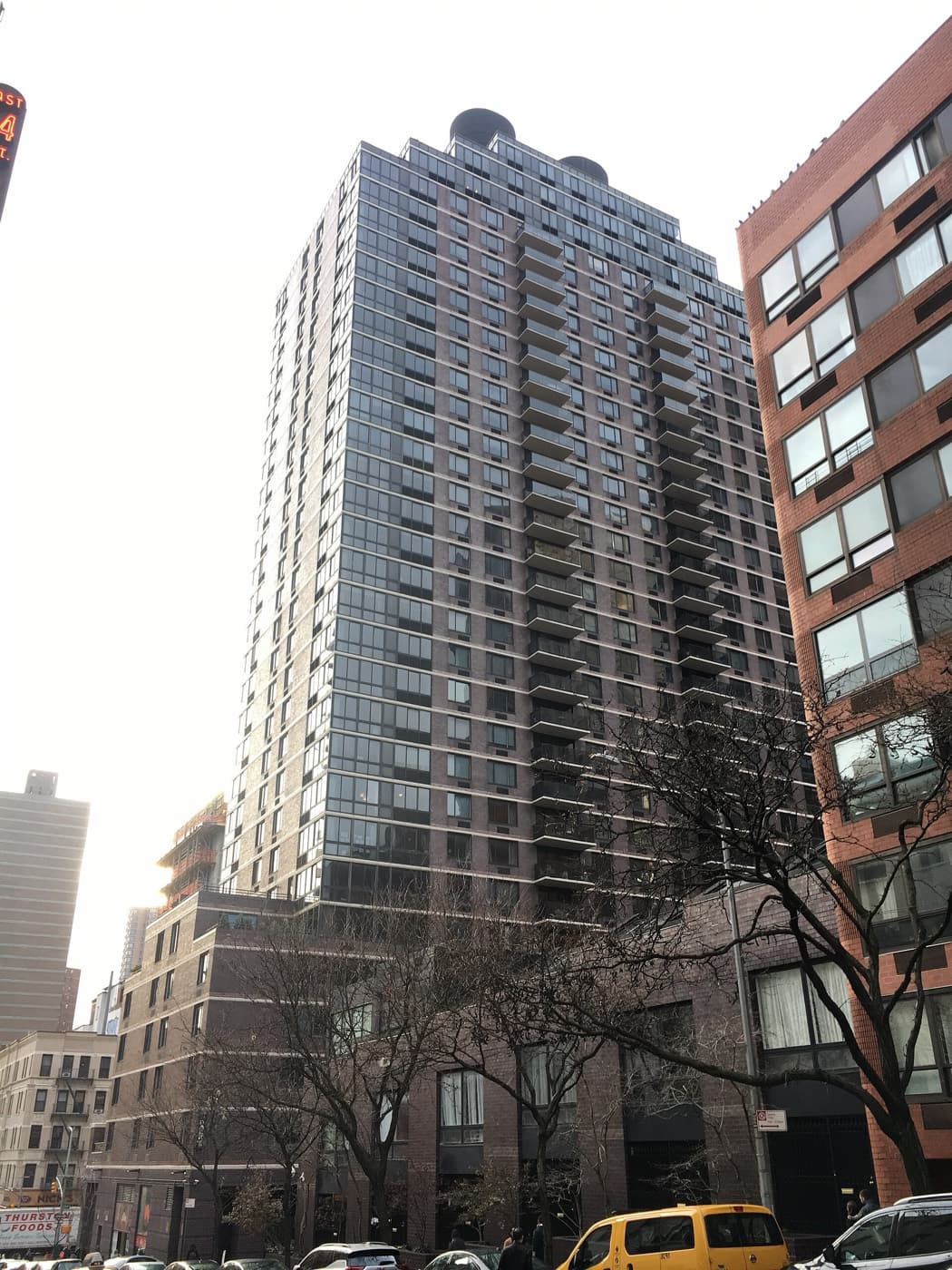
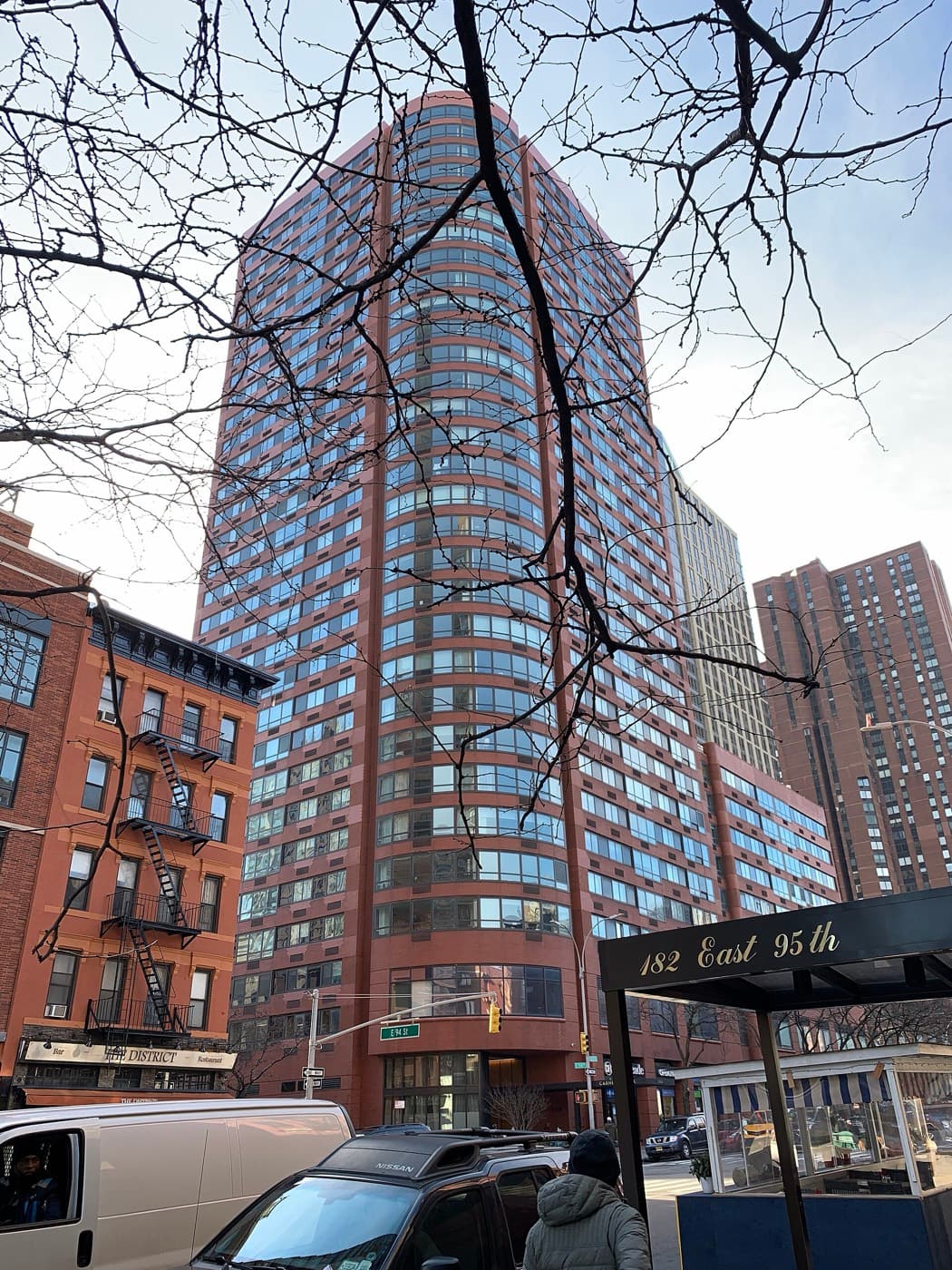
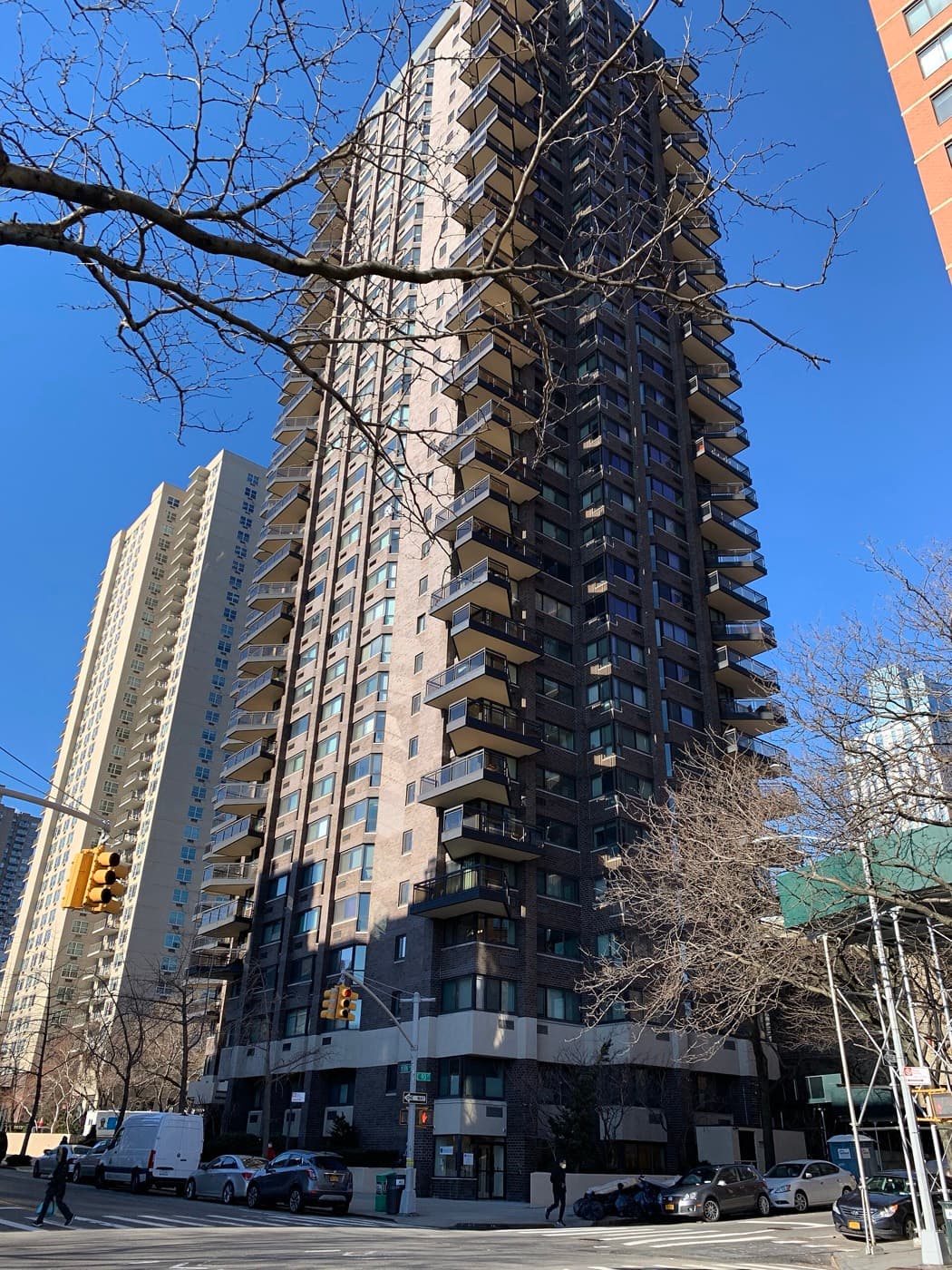
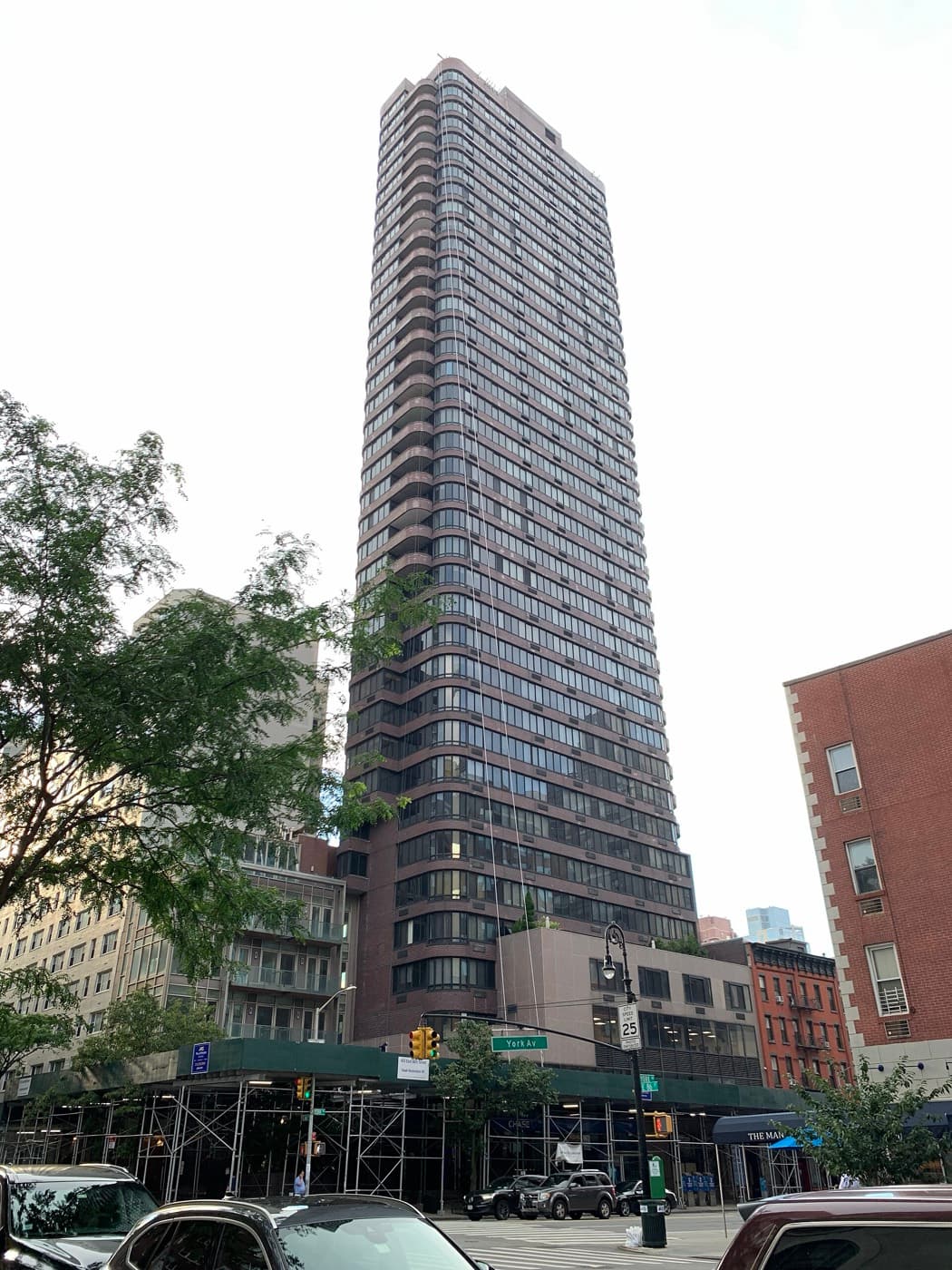
Four products and a thin new-construction tier, easy to tell apart on the street. The postwar and late-century avenue towers are the working market and the source of the deep records: 301 East 79th Street carries 464 recorded sales, 200 East 94th Street 436, 340 East 93rd Street 388, 350 East 82nd Street 386 and 345 East 93rd Street 353. Full-service buildings with comparable sets deep enough to price against with confidence, and the reason a buyer can transact here on a schedule. The prewar walk-ups and small elevator buildings on the side streets are the other half of the cooperative record — low monthlies, little or no staff, and capital positions that depend on how many units share the bill.
The Ruppert and Yorkville Towers group — roughly 2,600 apartments completed in 1974 and 1975 on the Jacob Ruppert brewery site between 90th and 92nd Streets — is a market of its own. It was built under the Mitchell-Lama program; Ruppert and Yorkville Towers left in January 2003 and converted to condominium ownership, Knickerbocker Plaza followed in 2007, and Ruppert House remained. That history changes what the documents say and what a given unit is, and none of it appears in a tenure column.
The East End Avenue and Gracie Square cooperatives are the prewar tier — 1 East End Avenue, 10 Gracie Square, built in 1930 and 1931 close enough to the water that it once kept a residents' yacht mooring on the East River, 120 East End Avenue and 180 East End Avenue. Small buildings, rare turnover, the most restrictive boards on this map. Newer condominium construction sits mostly at the northern end near the Second Avenue stations; The Kent at 200 East 95th Street is the type.
Price the cooperative stock per room with the board terms attached and the condominium stock per square foot. The 4 percent condop share is small and it is the tenure most often mislabeled: shares held inside a condominium wrapper trade with proprietary leases and full board approval, and pricing one as a condominium prices the wrong asset.
The landmark line, and where Yorkville sits on it
The Landmarks Preservation Commission designated the Upper East Side Historic District in 1981 and extended it on March 23, 2010, adding 74 properties in two segments along Lexington Avenue. The Carnegie Hill Historic District, designated in 1974 and expanded in 1993, runs from East 86th to East 98th Street between Fifth and Lexington. Both boundaries stop at Lexington. Yorkville begins where they end.
Inside the neighborhood the only landmarked district is Henderson Place, designated February 11, 1969 as the eleventh historic district the Commission ever created: twenty-four surviving houses of an original thirty-two, built in 1882 to designs by Lamb & Rich, on half an acre off East End Avenue between 86th and 87th Streets. Gracie Mansion and the former Municipal Asphalt Plant carry individual designations on their own account. Everything else here sits outside Commission jurisdiction.
For a buyer that cuts both ways. Exterior work on an unlandmarked building is a permit and a contractor rather than a Certificate of Appropriateness, which makes façade and window cycles cheaper and faster to plan than the same work three avenues west — an advantage in a stock that is mostly postwar and now old enough to need it. The cost is that nothing protects the block from what comes next: a building can rise as-of-right across the street with no public process and no hearing. Views, light and air here are a function of what is built rather than of what is permitted, which is the sharpest difference between a Yorkville sightline and a Carnegie Hill one.
The Second Avenue subway, nine years on
Excavation for Phase 1 of the Second Avenue Subway began on April 15, 2007, and the line opened on January 1, 2017 — 1.8 miles and roughly $4.45 billion for three stations, at 72nd, 86th and 96th Streets, two of them in Yorkville. Before that, every block east of Third fed the Lexington Avenue line, and the eastern end of this neighborhood was among the furthest from a subway in Manhattan.
The point that costs money is this: the accessibility gain is real, it is already in the record, and the record shows a nominally flat decade. The opening changed how fast and how cleanly the eastern blocks clear rather than what they clear at, so treat the subway as a liquidity argument rather than a price argument, and treat a pitch built on a coming repricing as a forecast rather than a finding. A second consequence is concrete: nearly a decade of street-level construction sat on Second Avenue between excavation and opening, and it fell hardest on the retail frontage, so the corridor's tenant mix reflects a market that turned over in those years.
Phase 2 remains ahead. Its tunneling contract was approved on August 18, 2025 for the extension from 96th Street to Harlem–125th Street, with stations at 106th, 116th and 125th — construction on Second Avenue immediately above this neighborhood's northern boundary. Buyers in the low and mid 90s should ask about staging and haul routes rather than assume twenty years of work is finished.
What to know if you're buying here
Price the walk before you price the apartment. The east–west gradient is the most consistent value variable here. An address near 86th and Second or 86th and Lexington sits on two lines; one on East End Avenue is a long walk from either, and buyers viewing on a Saturday afternoon under-weight what that means on a February morning.
Underwrite the board and the capital plan together. With cooperatives at 58 percent of the sale record, the binding constraint is approval rather than price. Get the financing cap, post-closing liquidity standard, sublet policy and flip tax from the managing agent in writing before you offer, then ask what the building has spent and plans to spend. Much of this stock is postwar and now old enough that façade cycles, window replacement and elevator modernization come due, and none of that shows in the maintenance figure until it does.
Verify the tax position on anything recently built, and the program history on anything older. The newer condominium tier is where Yorkville's carrying-cost advantage is most likely to be temporary: confirm the exemption code, start year and term against the current Department of Finance record, and underwrite the monthly number after the step-up rather than the one you would pay in year one. At the former Mitchell-Lama buildings on Second and Third Avenues, ask what the exit documents say — a building that left a public program carries unit histories and occupancy conditions an ordinary conversion does not.
Find out what can be built next to you. Outside a historic district the neighboring lot is governed by zoning alone. Before paying a premium for a view, an exposure or a terrace, establish what the adjacent sites permit as-of-right and whether any of them are assembled or in the market.
What to know if you're selling here
Your line is your comparable set, not your building. At an address carrying several hundred recorded trades, a buyer's agent can assemble comparables in an afternoon and no scarcity argument is available to you. Price against your own line, exposure and floor, and be specific about what distinguishes the apartment.
Lead with the monthly number. Yorkville's argument against Lenox Hill and Carnegie Hill is carrying cost, and buyers here shop it directly. A seller who can put maintenance or common charges, the assessment history, the capital plan, the underlying mortgage and any abatement schedule in front of a buyer on day one is selling the strongest thing the neighborhood has, and removing the most common cause of a re-trade.
Do not price a subway premium the record does not carry. Indexed to 2025, both tenures are roughly flat in nominal terms across the decade that included the line's opening. Price against your building's own recent closings; an asking price built on where the neighborhood is supposedly headed will sit, and a listing that sits gives back more than the premium was worth.
Where it sits in the Index
Yorkville is one of the deepest series we publish — 15,366 index-eligible sales across 625 addresses, with 89 building profiles behind it — and it carries no publication caveat. Both lines are thick enough in 2025, at 375 cooperative and 226 condominium observations, to stand on their own rather than lean on the parent market, which makes Yorkville a useful reference point when a smaller Upper East Side leaf moves on a handful of trades. Read it beside Lenox Hill and Carnegie Hill: the three are one market at three price levels and three regulatory conditions. See the Roebling Index for the current position.
Run the numbers
Related guides
- Lenox Hill — A Buyer's Guide — the neighborhood directly south, and the comparison most often made without adjustment
- Carnegie Hill — A Buyer's Guide — the landmarked prewar market on the other side of Lexington
- Manhattan Apartment Buying Guide — Pillar 2
- NYC Real Estate Tax & Closing Cost Guide
Buildings in Yorkville

Get the neighborhood read on your building.
See how your apartment compares with the rest of Yorkville, or get a market update tuned to this neighborhood — sent to you directly.